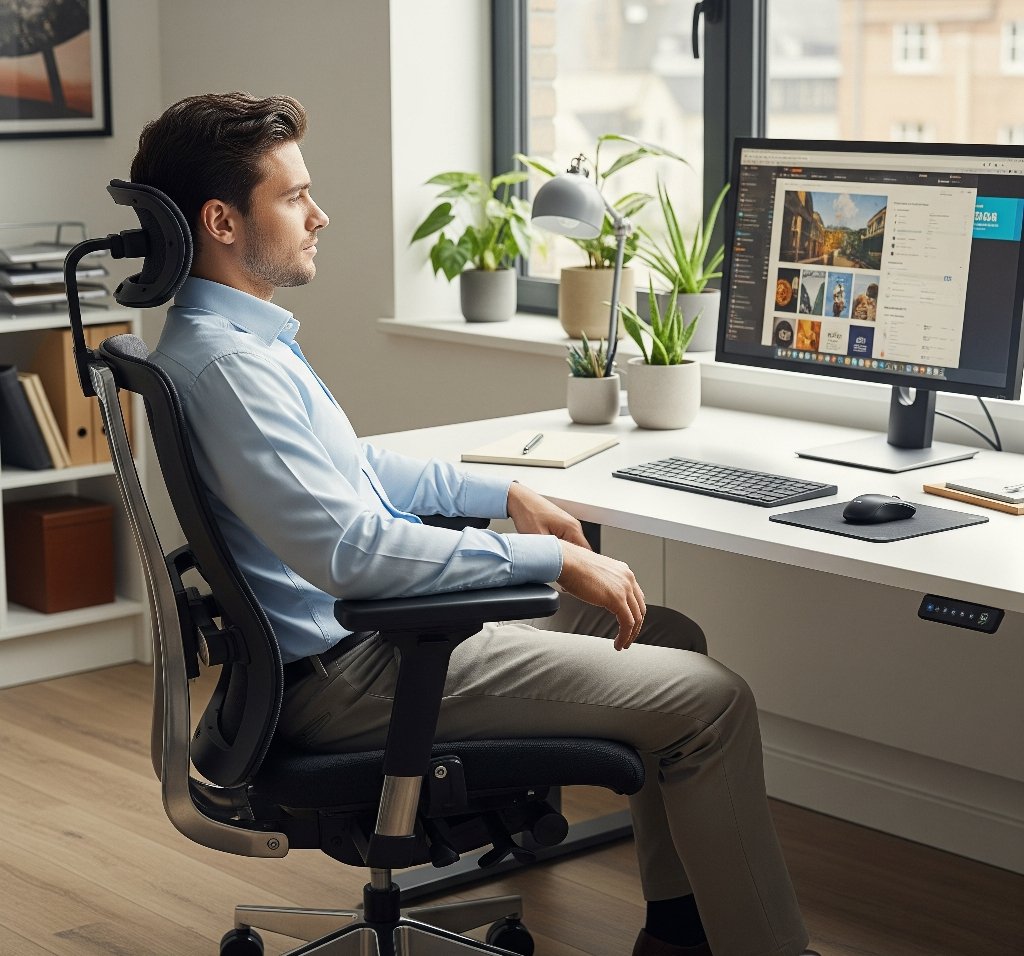
Have you ever paused to think about that one piece of furniture you work in or spend a great deal of your life in? To most people, the office chair is a familiar companion that we never think much about its design and how it affects our health.
The nagging pain in your lower back, the crick in your neck, or the overall tired feeling at the end of a long workday, is it possible that your chair is causing it? The answer to many is a loud yes. An inappropriate chair is not merely an inconvenience but a silent assassin of your spine health that may cause chronic pain and lifelong musculoskeletal issues.
The science of sitting is evident: a good ergonomic chair is not a luxury, but a must-have of every person who has to spend significant amounts of time at the desk.
This article will introduce you to the key characteristics of an ergonomic chair, explain the science behind them and enable you to make a wise decision that will preserve your spine and enhance your general condition.
The Costs of Poor Seating
The human spine is a work of natural engineering, a moveable and adaptable column of bones, discs and nerves, not made to sit down and stay still. By sitting in a chair which is not properly supportive, we tend to put our bodies into unnatural and straining positions. This is most often due to the absence of lumbar support which causes the normal curve of the lower back to straighten out.
This exerts an enormous strain on your intervertebral discs, the shock-absorbing pads between your vertebrae. This may eventually cause disc compression, herniation, and the back pain that many people live with.
However, that is not the end of the damage. A chair that is either too high or low may impede the flow of your blood to your legs and feet, which causes pain and swelling. Poorly placed armrests may leave you shrugging your shoulders, which brings about tension headaches, neck pain, and even a condition referred to as tech neck.
All these little, everyday stresses can add up to a series of long-term issues such as poor posture, muscle imbalances and limited mobility. A good ergonomic chair however, works not against you but with you. It encourages neutral posture, decreasing the load on your spine and enables you to sit comfortably and healthily during long periods of time.
The Anatomy of an Ergonomic Chair: Essential Features Explained
Choosing an ergonomic chair is not about picking the most costly and blingy one; it is about learning and knowing the features that will offer the most individual support. This is a closer look at the major elements that make a good chair a great chair.
1. Lumbar Support: The anchor of your spine
The lumbar support of an ergonomic chair is the most important feature. This is that section of the chair that supports the natural inward curve of your lower back, which is referred to as the lumbar region. An effective lumbar support will assist you in keeping the spine in a natural S-shape that ensures you do not slouch and it lowers the strain on the spinal discs. When assessing a chair, seek a chair that has adjustable lumbar support in height and depth.

This way you can place the support where your body requires it most, taking into consideration your individual spinal curvature. Other high-tech chairs have dynamic lumbar support that moves with you so that you have constant support as you move and recline. Consider lumbar support as the key to your sitting position- without it, the whole thing is weakened.
2. Adjustable Seat Height: The Secret of proper Leg and Foot Positioning
The seat height of a chair needs to be adjustable so that your feet are kept flat on the floor or a footrest. This minor change is essential when it comes to creating a 90-degree bend in your hips and knees, which is important in ensuring that there is a good circulation and that pressure is not placed on the back of your thighs. Too high of a chair will cut off your circulation whereas too low of a chair will cause undue stress on your knees and hips. Most of the bodies fit between 16 and 21 inches above the floor, which is the industry standard of seat height adjustability.
3. Seat Depth: Finding the Perfect Fit for Your Thighs
Seat depth is the distance between the front of the seat and the backrest. The perfect seat depth should allow you to sit with your back as far back on the backrest as possible with a little space (approximately two to four fingers) between the edge of the seat and the back of your knees. A seat that is excessively deep may press against the back of your knees and constrict the flow of blood. When it is too shallow it will not support your thighs properly and you will be forced to slouch. Seek a chair that has a sliding seat pan so that you can adjust the level of depth to correspond with the length of your legs.
4. Armrests: Relieving the Upper Body Stress
Armrests are not just the place where you can rest your arms, but they are an important element that helps to get rid of the tension in your shoulders, neck, and the upper back. Adjusted correctly, armrests enable you to put your elbows at a 90-degree angle, relieving your shoulders of the weight of your arms. Adjustable armrests are best and most high-end models are even pivotable to give the ideal angle in accomplishing various tasks. You should also make sure that the armrests are broad enough so that they fit your body and do not make you hunch your shoulders.
5. Reclining Backrest and Tilt Tension: The Importance of Movement
Although a straight, standing posture is best when it comes to concentration, the human body was not designed to remain stationary throughout the course of several hours. A reclining chair with the backrest and the ability to adjust the tension of the tilt will make you change the posture during the day. It can be slightly reclined to help alleviate pressure on the spinal discs and the tilt tension feature will enable you to adjust the resistance of the recline so that the chair does not accidentally snap back to an upright position. This active movement keeps your muscles moving and blood circulating so you don’t feel the fatigue of sitting in the same position all the time.
6. Headrest and Neck Support: The Finishing Touch
A headrest can also be an excellent feature to people who spend much time lying or talking on the phone. The headrest you sit on should support your neck and head and ensure you rest without putting a strain on your upper spine. It must also be adjustable in the height as well as angle to support you where you want it to. A headrest is not as important as lumbar support but can make a huge difference in people who need to rest and lean back to relax their eyes and get away from the screen.
A Comprehensive Guide to Choosing Your Chair
Navigating the vast market of ergonomic chairs can be overwhelming, yet being strategic will help you get the right chair.

1. Be Specific about Your Needs: Before you even begin to shop, evaluate your own needs. How much do you sit per day? Have you any back, neck, or shoulder pain? How much do you have to spend? These questions will give you a direction to reduce your search.
2. Prioritize Adjustability: This is the rule of thumb in ergonomic chairs. Do not go with a chair that is just adjustable in height. Seek models which provide as many of the above features as possible. Nothing will ever beat a customizable chair to fit your body, compared to a model that fits all.
3. Test Drive a Chair (Where Possible): Where you can, sit on a possible chair a minimum of 15-20 minutes. Be mindful of the way you feel in your body. Is the lumbar support at the right place? Do you have flat feet on the ground? Is the depth of the seat comfortable? This practical knowledge cannot be overestimated.
4. Research and Read Reviews: The internet can be a useful thing. Read reviews made by individuals with the same body type and working habits as yours. Seek reviews whereby the life span and durability of the chair is mentioned. The warranty of a chair is also a good gauge of quality and confidence by the manufacturer on the product.
5. Consider the Materials: Comfort and durability are influenced by the materials. Chairs with mesh or good quality foam padding are breathable. The frame and the base must be strong and built of materials such as steel or aluminum.
Popular Models and Their Strengths
The market is flooded with great products when it comes to the ergonomic chair. Although the ideal chair is subjective, there are several models that are more durable in terms of features and that have received widespread acclaim.
Herman Miller Aeron: An ergonomic design icon, the Aeron has a breathable mesh back and a patented PostureFit SL design that ensures exceptional lumbar and sacral support. It is a high-end investment with quality and iconic design.
Steelcase Leap V2: Leap is one of the most adjustable chairs that has been lauded because of its LiveBack technology that bends with your back to keep on supporting you as you move. There is also an extensive variety of tailoring to give a highly customized fit.
Secretlab Titan Evo: Secretlab Titan Evo was originally a gamer-focused chair, but it has gained popularity among office workers because of its adjustable lumbar support, high-density foam, and the sheer amount of adjustments. It has a top notch combination of comfort and more of a supporting aggressive feel.
Humanscale Freedom: The Freedom chair was created by Niels Diffrient and features an intelligent and weight-sensitive recline and no manual adjustments. It fits your body automatically, thus it is an excellent option to use in shared offices or people that like to keep things simple.
Sihoo M57: The Sihoo M57 is a highly rated and affordable chair that has a decent set of ergonomic features such as the adjustable lumbar support, headrest, and armrests. It is an excellent introduction to the ergonomic seating world without having to spend a fortune.
Final Thoughts: Investing in Your Health
Your ergonomic chair is more than just a piece of furniture; it’s a vital tool for protecting your health and enhancing your productivity. By understanding the science behind sitting and prioritizing key features like adjustable lumbar support, seat depth, and armrests, you can make a choice that will pay dividends for years to come.
Remember, the goal is not to find a chair that just feels comfortable for a few minutes, but one that promotes a healthy, neutral posture and reduces the risk of chronic pain. Your spine is the pillar of your body, and giving it the support it deserves is one of the best investments you can make in your own well-being.