Introduction
Oral tradition has been one of the most potent sources of African culture of communication. The African societies came up with very advanced means of passing knowledge, keeping history, and enhancing communal identity through spoken word and performance before the introduction of the modern mass media and formal literacy systems.
In all generations, there were storytellers, elders, poets, and culture keepers, and they ensured that wisdom, values, beliefs, and collective memory were not destroyed. This cultural tradition had not merely social and educational roles; it created identity, unity, and continuity among the African communities.
To comprehend the extent to which oral tradition is both embedded and powerful, it is impossible to put it out of context of more general African patterns of communication. The oral heritage is a crucial part of African communication systems since it is an orderly system of sharing and maintaining ideas, histories, and ethical principles over time.
The Oral Tradition as Center of African Culture Speech
Oral tradition is not just the process of speaking, but it is a performance of culture, social institution, and the moral guide. It includes narrative, proverbs, folktales, legends, myths, chants, riddles, and praise poetry. Both these forms have a different role in society, but altogether they influence the perception of society, behaviour, and identity.
Oral tradition is a living thing as opposed to written communication. It gives emotion, gesture, tone, rhythm, and involvement in the communication process, so it becomes not only informative but also memorable and interesting. These vibrant interactions help communities to strengthen common knowledge, cultural values, and heritage continuity between generations.
Storytelling: To Teach Prudence
Storytelling as a Historical Archive
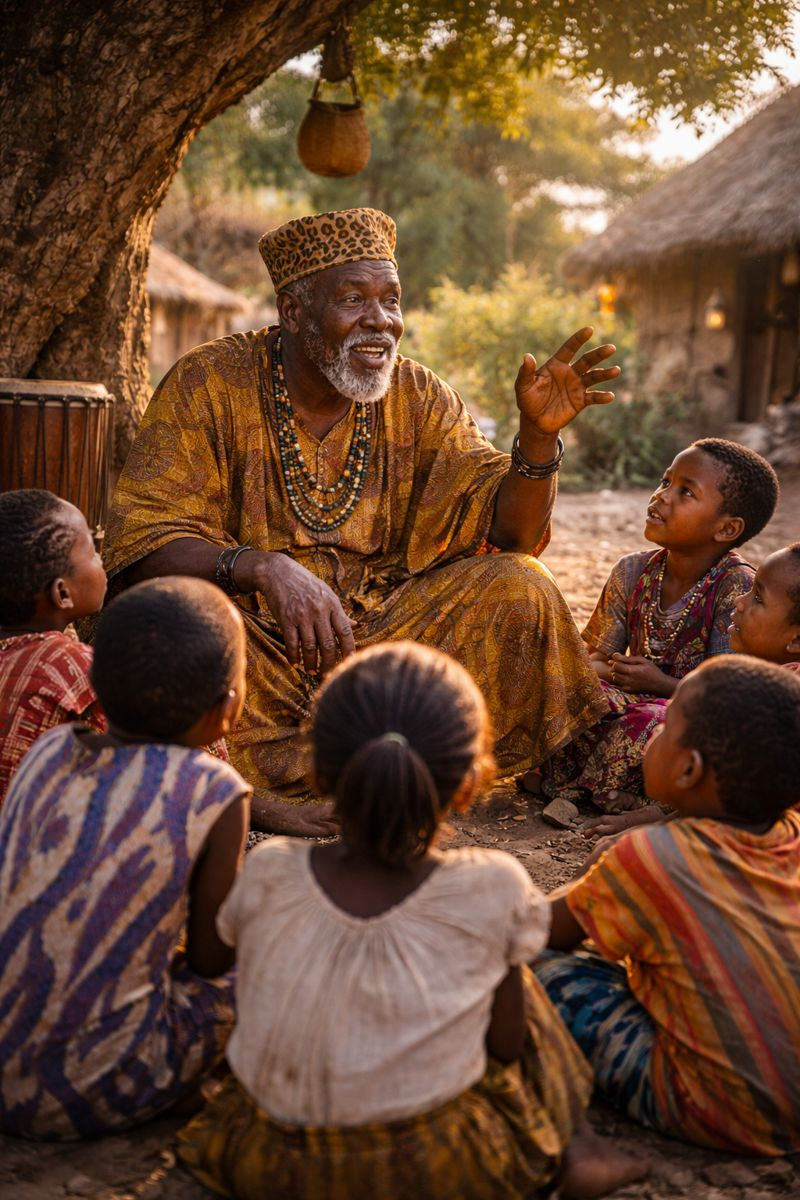
One of the most important instruments of oral tradition in Africa is storytelling. Prior to the invention of modern record-keeping, communities relied on storytellers to maintain a record of what had happened to them, who their ancestors were, where they migrated, what wars, victories, and struggles they had, and so forth. These stories were accurately and respectfully handed down by skilled narrators, usually the elders of the community or designated custodians, to the next generation.
These narratives exist as a living archive. They can make younger generations realize their background, identity, and how their people paved the way. History is not an abstract and far-off concept, but rather through storytelling, it comes alive, becomes familiar, and significant. Experiences of the ancestors are internalized by both children and adults; hence, continuity of communal memory.
Educational and Moral Functions of Storytelling
African narrations are not always entertaining. The majority of the stories are full of moral lessons, warnings, or guidelines which are aimed at influencing character and behavior. Honesty, hard work, obedience, generosity, respect, and community responsibility are taught using stories about intelligent animals, intelligent kings, or foolish ones. Children acquire social expectations in an easy but effective manner due to narrative.
Listening, imagination, and critical thinking are other cognitive skills that are enhanced through storytelling. There is a lot of meaning that needs interpretation in many stories, and this is an aspect that makes audiences take time and think of what is beyond the story and find the deeper meaning. Therefore, storytelling is an informal education system that has been in operation way before the classroom was established.
Folktales: Learning Social Rules and Social Values
Another important medium of transmission of knowledge and values in African societies is the folktales. These stories are usually fantastical, figurative, and full of cultural knowledge. The lessons are easily understood since the animal characters are mostly used to describe the strengths, weaknesses, and behavior of human beings.
Folktales as Social Mirrors
The folktales indicate the expectations and norms of the society. They emphasize the after-effects of bad habits (greed, selfishness, disobedience, betrayal, or laziness), whereas glorifying positive ones (patience, intelligence, kindness, and bravery). The repetition over generations strengthens the society of morals and shapes social behavior.
There is also collective entertainment and relaxation through folktales. They are traditionally told in the evenings or at the collective events, promoting togetherness, happiness, and shared activities. The folktales are a collective experience through reactions and responses, as well as the chanting of the audience, which strengthens the unity of the community.
Proverbs: Wisdom in Few Words
Proverbs as Intellectual Property
African communication highly regards proverbs. They are brief sayings that are packed with wisdom, philosophical, and moral advice. The art of proverbs is a sign of culture, intelligence, and maturity, especially in most cultures.
Proverbs demystify things, solve problems, and provide guidance. They are common in meetings, quarrels, counseling, and even in day-to-day talks where the elders tend to convey deep meaning in rather oblique yet strong manner. A proverb can tell the truth in a non-antagonistic and non-confrontational way and still maintain respect and peace.
Principles in Education and Leadership
African societies rely heavily on proverbs in their leadership and governance. They are used to legitimize decisions and justify judgment by traditional rulers, elders, and community leaders as well as provide good advice. Proverbs are also used by parents and other elders in the learning institutions to correct, guide, and train the younger generations towards various responsibilities of adulthood.
Proverbs thus serve as moral compasses, in terms of individual behavior as well as joint decision making.
Myths and Legends: Theory of Belief and Identity
Myths as Explanations of Existence
Myths are the key factors in the narration of how the world, humanity, natural elements, and spiritual order of life came into existence. They relate individuals to nature, their ancestors, and religion. The African communities know their connection with the world and their association with the gods and the unseen world through myths.
Respect towards the sacred traditions, rituals, and spiritual authority is also supported by myths. They legitimize cultural practices, rituals, and taboos, and as a result, the social order is guaranteed.
Legends and Epic Plots
Legends glorify warriors, transformational heroes, rulers, and great leaders in the history of Africa. They are taken to inspire bravery, patriotism, power, and endurance. Legends inspire young people to pursue things with integrity, courage, and commitment to the development of society by remembering the heroic accomplishments.
These stories also reinstate identity and pride. They make communities remember that they are great, have something to achieve, and have a unique culture.
Oral Tradition as an Educational Instrument
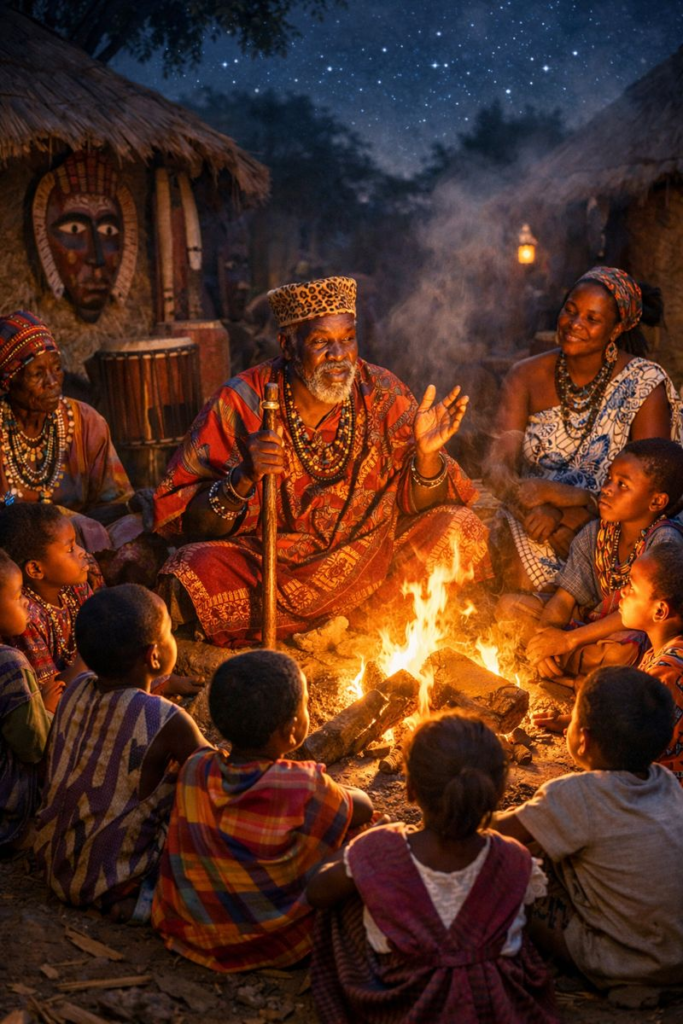
Prior to the development of formal systems of Western education, oral tradition served as a viable educational system in Africa. Children were taught history, ethics, survival techniques, the roles and duties of various people to society through stories, proverbs, songs, myths, and conversation.
Primary but Informal Learning
This educational structure is very structured even though not written. The transmission of knowledge is done in an age-related manner. The younger kids are told simple moral stories, and the older children are taught more historical stories, cultural norms, and leadership values. The elders observe, participate, and perform to monitor learning.
Experience and Knowledge Acquisition
Practical skills are also taught in oral tradition. Normally, farming methods, hunting skills, craftsmanship, medical expertise, and conventional technologies were transmitted orally. This knowledge was maintained and passed correctly in families and communities.
Oral communication is therefore not just cultural entertainment, and it is a lifelong learning system which maintains intellectual growth and survival knowledge.
Enhancing the cohesion and Social Compact
The ability to reinforce the collective identity is one of the strongest functions of oral tradition. Stories, proverbs, myths, and legends are shared stories that tie people to a specific cultural heritage. They make the people of the community understand that they are a part of something bigger than themselves.
Establishing a Sense of Belonging
People feel united through frequent storytelling, common rituals as well as traditional meetings. Oral performances promote group performances by singing, chanting answers, applauding, and emotional involvement. This makes them cohesive and united.
Cultural Continuity preservation
Oral tradition makes sure that culture is not lost with the transition of the times. Each generation carries on knowledge, values, beliefs, and identity of the previous generation. To this day, though the globe has been globalized and people communicate through digital means, there are still many societies in Africa that still strongly stand behind oral heritage as it is the foundation of cultural continuity.
Oral Tradition as a Contemporary Phenomenon
Even though the world has become more connected because of modern communication technologies and official educational systems, oral tradition is not irrelevant. It continues to influence the communal life, culture, and social interaction in Africa. Several modern African media, literature, music, and films still find the traditional oral forms as inspiration.
Oral heritage is still being revived and maintained in radio dramas, cultural festivals, spoken-word poetry, community storytelling programmes, and educational initiatives. Oral tradition is transformed and exists alongside contemporary communication systems in this manner.
Conclusion
Oral tradition is one of the key pillars of the African culture of communication. By means of narration, folktales, proverbs, myths, and legends, African societies have conserved history, passed moral principles, educated younger generations, and enhanced unity. Contrary to being primitive and out of date, these oral practices are a smart, well-organized, and profound structure of cultural communication.
They uphold historical memory, instil ethical behavior, promote cohesiveness, and continuity of cultural heritage. Oral tradition is still present even in the modernized world, reminding Africans of their identity, their origin, and even their values that connect them.