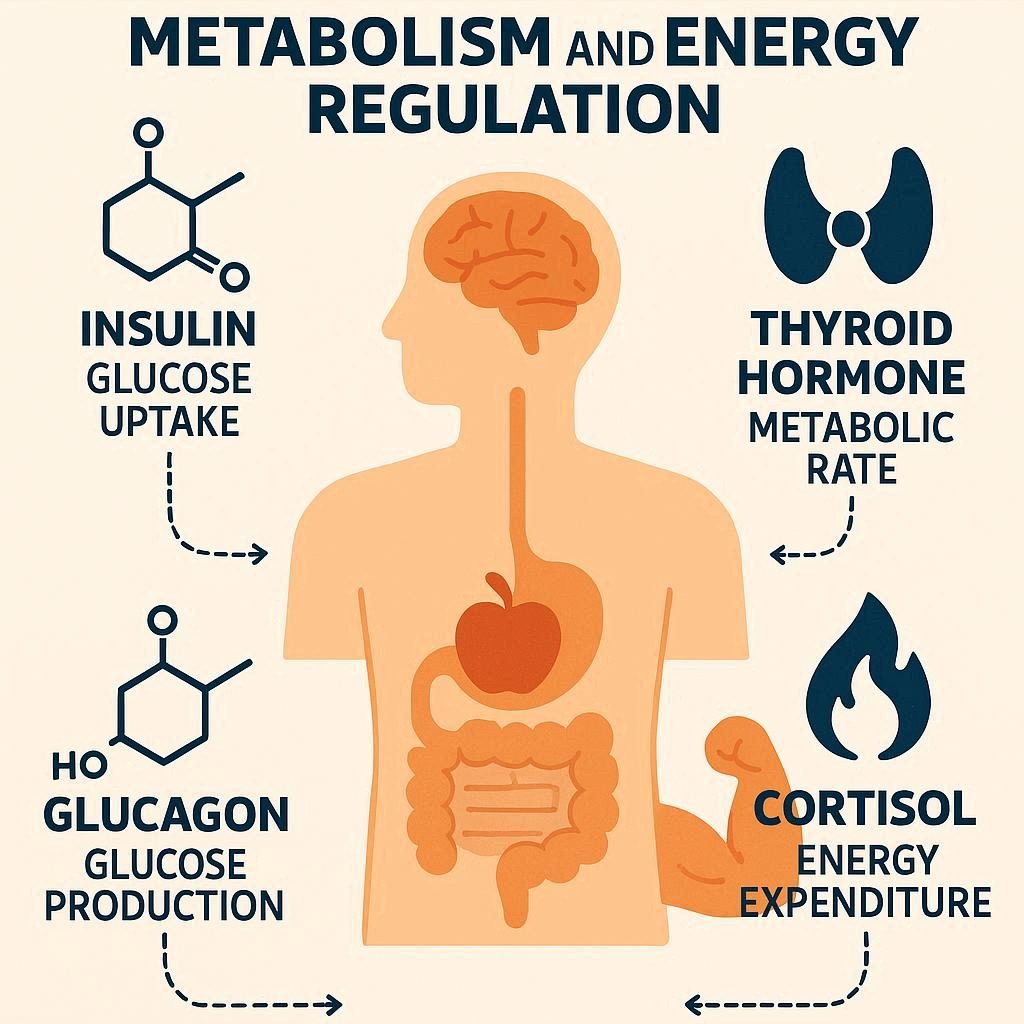
Metabolism and energy regulation are some of the essential processes that enable the human body to perform well. All the movements, thoughts, and biological processes rely on the capabilities of the body to transform food to a usable energy and distribute it accordingly. Hormones to a great extent control this intricate regulation and serve as chemical messengers in the storage, release, and utilization of nutrients. In the absence of appropriate hormonal regulation, the body would not be able to balance the sugar level in the blood, control the fat resources, or provide energy to perform the everyday activity.
Insulin, glucagon and thyroid hormones are especially important hormones involved in mechanisms of metabolism regulation. These hormones make sure that energy is ready at all times and that it is saved whenever it is taken in large amounts in comparison with demand. The mechanism of action of these hormones helps in understanding the way in which the body works in order to achieve balance and why imbalance in the signaling of these hormones can result in metabolic diseases like diabetes and obesity.
Knowledge Metabolism and Energy Balance
Metabolism is the total of all chemical reactions in the body keeping a person alive. These responses can be broadly classified as catabolic, found in the breakdown of molecules to provide energy, and anabolic, found in the synthesis of tissues and their repair using energy. Energy balance will occur when energy intake in food is the same as energy output in exercise and general physiological processes.
The hormones control metabolism by regulating the rate of chemical reactions, channeling the nutrients to storage or instant consumption, and regulating the energy outlay as per the body requirements. This regulation enables the body to adjust to the change in diet, bodily activity, and the environment.
Controlling the level of hormones in the blood
Regulation of blood sugar is vital in the regulation of energy especially to body organs like the brain which is extremely dependent on glucose. The interaction of two major hormones, insulin and glucagon, is instrumental in keeping the levels of blood glucose normal and ensuring that there is a sustained flow of energy.
Insulin and Energy Storage
The pancreas synthesizes insulin and releases it into the blood upon a rise in the level of blood sugar, usually following a meal. The main thing it does is to aid the absorption of glucose into the cells which can be utilized to provide energy or serve as a reservoir of glucose that can be used at a later time. Insulin enhances the transformation of glucose into glycogen within the liver and muscles to form a supply of ready source of energy.
Besides the regulation of glucose, insulin is also involved in the storage of fats through the promotion of transformation of excess glucose into fatty acids. This is a process in which the body can store excess energy effectively. Protein synthesis is also aided by insulin, which helps in the maintenance and growth of the muscle.
In case of insulin dysfunction, glucose does not get into the cells and instead remains in the blood resulting in high levels of blood sugar. The situation is a characteristic of diabetes and demonstrates the role of insulin in the metabolism.
Glucagon and Energy Release
Glucagon is the antagonist of insulin generated by the pancreas as well. It is discharged when blood glucose level decreases like in a state of fasting or in extended exercises. When glucagon is released, the liver is triggered to decompose glycogen into glucose that is then released into the blood to keep the energy levels high.
Another effect of this hormone is that it facilitates the break down of fats into fatty acids that serve as an alternative source of energy in the event that there is low glucose level. These actions help the glucagon to make sure that the body is not starving in times of low food consumption.
Insulin and glucagon interactions enable the body to stabilize the level of blood sugar and adjust to the different energy needs.
Metabolic rate of Thyroid Hormones
Whereas the short-term energy supply is controlled by insulin and glucagon, thyroid hormones are very important in controlling the general metabolic rate. The thyroid gland produces these hormones, which determine the rate at which the cells would change nutrients into energy.
The thyroid hormones control the amount of oxygen used, the amount of heat generated, and the amount of energy used in the body in almost all the tissues. They dictate the efficiency of the body in calorie use and directly influence the body weight, temperature and energy level.
To gain a better idea on how these hormones work in the body, readers may consider this elaborate process of describing the thyroid hormones and how they work in metabolism and energy regulation.
Thyroid and Cellular Energy expenditure
Thyroid hormones at the cellular level enhance the work of the mitochondria which are the bodies that produce energy. These hormones improve the rate at which the cells generate energy by increasing the efficiency of the mitochondrial system to produce energy.
This boosts energy production and this boosts the vital physiological functions such as muscle movements, digestion, and brain circulation. The thyroid hormones also affect the responses of the other hormones to their metabolism.
Metabolism is efficient when the levels of thyroid hormones are in place. Nonetheless, the imbalances may substantially change the energy consumption and storage.
Fat Metabolism and its Hormonal Regulation
Another important role of hormones is to control the process of fat storage and use in the body. Insulin stimulates fat storage in case of surplus energy that is stored as fat whereas glucagon and other hormones stimulate the breakdown of fat through energy deficiency.
The thyroid hormones also affect the metabolism of fats as they enhance the rate at which fats are burned up and used as energy. This is a synchronized hormonal mechanism that makes sure that the fat reserves are mobilized in accordance with the energy requirements.
The imbalances in the hormones may result in either excess fat or the inability to access the available stored energy, a factor that can contribute to the metabolic disorders.
Energy Consumption and Hormonal Effect
The expenditure of energy comprises of basal metabolic rate, physical activity and thermogenesis. All three elements are affected by hormones. The level of thyroid hormones is especially significant in the determination of the basal metabolic rate or the amount of energy needed to sustain the basic bodily functions in the resting condition.
Insulin indirectly influences energy expenditure through the modulation of nutrient storage and availability, whereas glucagon assists in the release of energy used during activity. The combination of these hormones enables the body to regulate the energy expenditure according to lifestyle and physiological requirements.
Hormonal Imbalances and Metabolic Imbalances
In case of failure to regulate hormones, energy balance and metabolism may be disturbed. The resistance of insulin, say, diminishes the efficiency of insulin, causing the high level of blood sugar and the high level of fat storage. This is a condition that is strongly associated with type 2 diabetes and obesity.
On the same note, the levels of abnormal thyroid hormones may lead to changes in the metabolic rate. Lack of thyroid hormone production decreases metabolism thereby increasing weight gain and diminished energy levels. The overproduction will enhance the metabolism which may result in weight loss and exhaustion.
These disorders show the importance of hormonal balance toward supporting metabolic health.
Hormones, Appetite, and Energy Consumption
Hormones also play a part in determining what a person eats and the amount of energy that is taken by engaging with the brain. Insulin and other metabolic hormones provide inputs to the brain on the amount of energy and storage. The thyroid hormones do so indirectly because their effect is on energy expenditure, and metabolic demand which in turn influences the appetite.
The hormones involved in this communication contribute to controlling hunger and satiety to make sure that the energy consumed corresponds to the requirements of the body.
Long-term Energy Control and Hormonal balance
In the long-term, hormonal balance and metabolism are maintained. The endocrine system is constantly regulated to maintain different levels of hormones depending on a change in the diet, physical activity, and the environment.
This flexibility enables the body to be economical in energy efficiency levels in various stages of life and activity. Hormonal balance helps maintain healthy weight, maintain energy levels, and is the key to the health of the metabolic activity.
Environmental Lifestyle Influences on Hormone Metabolism
Regulation of hormonal metabolism is determined by nutrition, physical activity, sleep, and stress. Balanced diets facilitate constant insulin reaction whereas routine physical work boosts insulin sensitivity and use of energy.
Sleep is especially critical to ensure that the hormones are balanced because most metabolic hormones adhere to daily patterns. Long-term stress may interfere with the hormonal communication, which is harmful to the metabolism and energy balance.
Conclusion
Much of the metabolism and energy expenditure within the human body is controlled by hormones. Under the concerted efforts of the insulin, glucagon and thyroid hormones, the body regulates blood sugar levels, regulates fat storage and depleted energy based on physiological requirements.
The role of these hormones implies the significance of hormonal balance in the prevention of such metabolic diseases like diabetes and obesity. With the right hormone regulation, the body transforms nutrients into energy efficiently, encourages the body to be active on a daily basis and long-term health. This complex system of hormonal control lays stress on the importance of endocrine action, metabolism, and well-being in general.