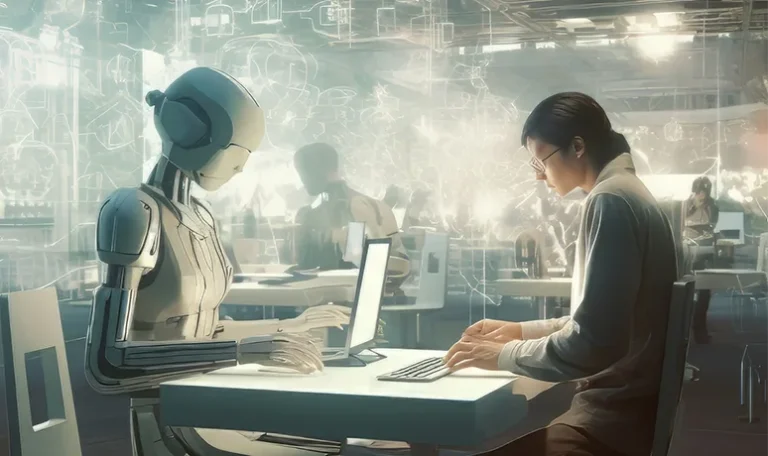
A Digital Employee is no longer a future idea. You already see it at work in document handling, customer conversations, and internal operations.
These digital workers take on tasks that once consumed hours of human effort and complete them with speed and consistency.
As you plan for 2026, the role of digital employees becomes clearer. They are not replacements for people. They are structured, dependable contributors who help your teams work with focus and clarity.
When designed well, they improve how work flows across the organization without disrupting accountability.
This shift is changing how you think about productivity, roles, and collaboration.
What Makes a Digital Employee Different From Automation
Traditional automation follows fixed rules. A digital employee follows intent.
You can think of a digital employee as a worker who understands context, completes tasks, and responds to changing inputs. Instead of running a single script, it operates across steps and systems.
Key differences include:
- It works across multiple tools and data sources
- It understands instructions written in plain language
- It adapts when inputs change
- It follows defined guardrails and approvals
This makes digital employees suitable for knowledge-based work, not only repetitive actions.
Why Digital Employees Matter More in 2026
Work has changed shape. You deal with more information, more systems, and tighter timelines.
Digital employees help you manage this complexity by taking responsibility for well-defined work. They reduce manual effort without removing human judgment.
Several factors drive this shift:
- Knowledge work has increased across every role
- Customers expect faster and clearer responses
- Teams are expected to do more with limited resources
- Errors carry higher costs in compliance and trust
By 2026, digital employees are no longer optional support. They are part of how work gets done.
How Digital Employees Support Daily Work?
Digital employees fit into your existing workflows. They do not require a complete rebuild of how you operate.
Below are common areas where they add value.
Document Handling and Review
You deal with contracts, policies, reports, and internal documents daily. Digital employees can:
- Read and summarize long documents
- Extract key terms and conditions
- Answer questions using approved sources
- Prepare structured drafts for review
This shortens review cycles and reduces manual scanning.
Customer and Internal Conversations
Digital employees handle routine questions through chat or voice channels. They respond using approved knowledge and tone.
Their role includes:
- Answering common queries
- Routing complex issues to people
- Maintaining consistent responses
- Supporting teams outside business hours
You stay in control while reducing response delays.
Process and Operations Support
Many internal processes follow clear steps. Digital employees guide these flows reliably.
Examples include:
- Employee onboarding steps
- Compliance checks
- Data validation
- Status updates across systems
They complete tasks on time and flag issues early.
From Single Tasks to Connected Workflows
Early AI tools focused on isolated tasks. That approach limits value.
In 2026, the focus shifts to connected workflows. Multiple digital employees work together, each handling a specific responsibility.
A simple example:
- One digital employee gathers data
- Another reviews and validates it
- A third prepares a summary or response
This mirrors how your teams already work. The difference is speed and consistency.
Platforms that support multi-agent workflows make this practical without heavy technical effort.
What You Gain From Using Digital Employees
When digital employees are designed with purpose, the benefits extend beyond time savings.
You gain:
- More consistent outcomes
- Faster turnaround on routine work
- Better use of human expertise
- Clearer ownership of tasks
You also reduce cognitive load. Your teams spend less time managing information and more time making decisions.
Digital Employees and Human Collaboration
Digital employees work best when roles are clear.
You assign tasks based on strengths:
- Digital employees handle volume and repetition
- People handle judgment, creativity, and accountability
This balance builds trust. Your team knows what to expect and when to step in.
You also maintain visibility. Every action taken by a digital employee can be reviewed and improved over time.
A Simple Comparison
| Aspect | Human Teams | Digital Employees |
| Availability | Limited by time | Continuous |
| Consistency | Varies | High |
| Scale | Linear | Rapid |
| Judgment | Strong | Guided by rules |
| Learning | Experience-based | Model-driven |
The value comes from using both together, not choosing one over the other.
Designing Digital Employees That Last
Successful adoption requires thoughtful design.
You should focus on:
- Clear instructions and boundaries
- Approved knowledge sources
- Defined escalation points
- Ongoing review and improvement
Avoid assigning vague responsibilities. Digital employees perform best with clarity.
Responsible design also protects trust. Sensitive decisions remain under human oversight.
Where Platforms Matter
As digital employees grow in number and responsibility, management becomes important.
You need systems that help you:
- Build digital employees quickly
- Connect them into workflows
- Monitor performance and outcomes
- Adjust behavior as needs change
This is where solutions like EMA quietly fit into modern operations. By enabling multi-agent workflows, document intelligence, and voice-based interactions, such platforms support how digital employees actually work in real environments.
The value comes from orchestration rather than individual features.
Preparing Your Workforce for 2026
To prepare, you should start with practical steps.
- Identify tasks that follow clear patterns
- Start with one workflow, not many
- Keep people involved from day one
- Measure outcomes, not activity
Digital employees succeed when they support real needs, not experiments.
Looking Ahead
The workforce of 2026 includes both people and digital employees working side by side. This model brings clarity to roles and improves how work flows across teams.
You gain time, consistency, and focus. Your teams gain space to think and lead.
As digital employees become a standard part of operations, platforms like EMA play a supporting role by helping organizations design, manage, and scale this new type of workforce without losing control.
The future of work is not about removing people from the process. It is about giving them better partners to work with every day.