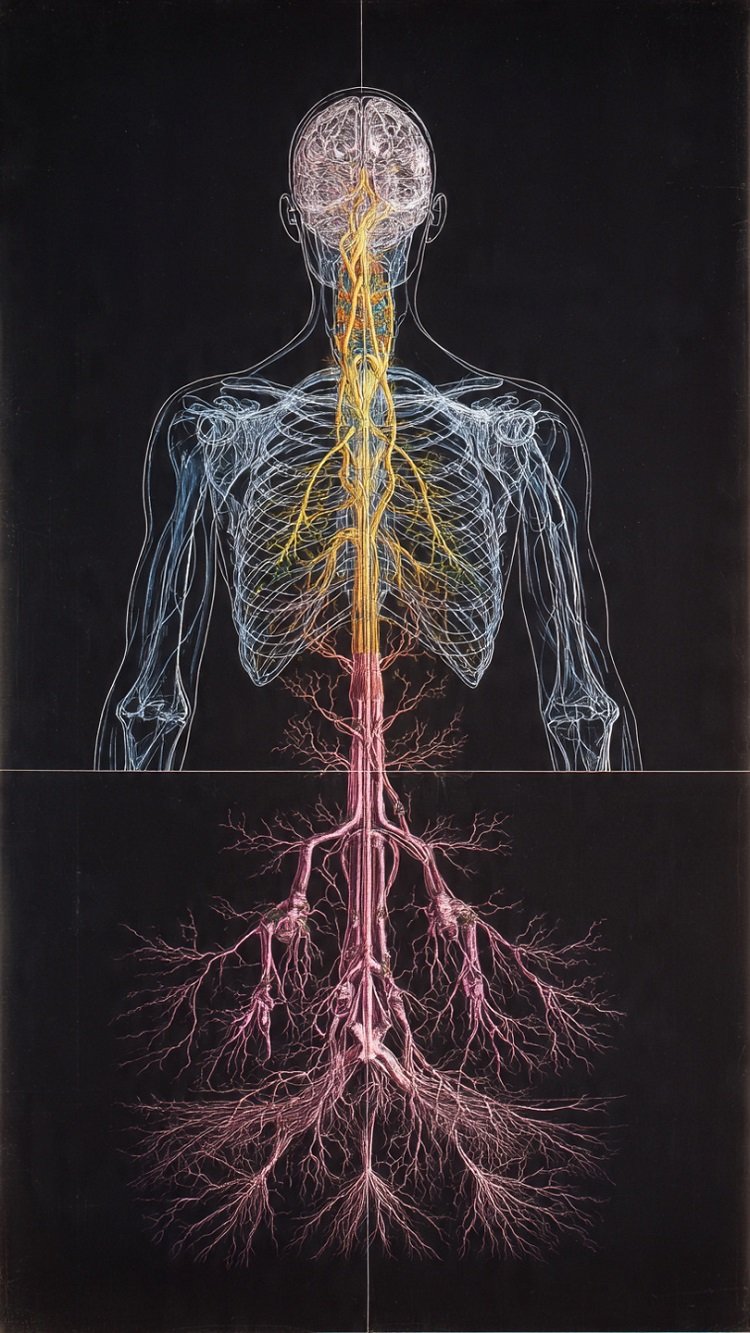
The nervous system is one of the most complex and important control systems in the human body. It organizes the thoughts, emotions, movements, reflexes, and automatic tasks by transmitting and receiving signals at high speeds. All of the heartbeats, breaths, sensations and choices depend on the accurate communication of billions of neurons all operating in unison.
The system is separated into two significant components- central nervous system (CNS) and peripheral nervous system (PNS). Information is processed within the CNS the brain and the spinal cord and decisions are made as well as sensory input interpreted. The PNS runs across the body transmitting messages to and fro CNS as well as all the tissues.
This article discusses the interaction of these systems, the ways in which the neurons process electrical and chemical signals and the manner in which the nervous system facilitates reflexes, controls movement and awareness of the environment.
Learning the Nervous System Organization
The nervous system represents a communicational system like none other. It collects data of the environment, processes it and initiate reactions- all in fractions of a second.
Two Main Divisions
- Central Nervous System (CNS)
- Brain
- Spinal cord
- Peripheral Nervous System (PNS).
- Brachial plexus and all nerves off the CNS.
- Sensory and motor pathways.
The two divisions are necessary. The CNS is the process center, and the PNS are the lines of communication between the CNS and the body.
The Central Nervous System: The Processing center of the Body.
CNS deciphers the information that the body receives, decides, and communicates with the body. The CNS is necessary to enable the body to think, feel, and move.
- The Brain
The brain is a very structured organ, and it is segmented into a number of important areas.
- Cerebrum
In charge of thinking, memory, feeling, language and voluntary movement.
- Cerebellum
Balance and co-ordination of controls, fine movement.
- Brainstem
Keeps vital processes, such as breathing, heart rate and sleep, alive.
- The Spinal Cord
The spinal cord serves as the primary communication system in the brain and the rest of the body. It also controls reflexes- automatic instant responses and does not involve thinking.
Examples include:
- Shaking your hand off a hot thing.
- Medical examination Reflexive knee-jerk.
Reflexes are considered protective to the body; they decrease the reaction time.
The Peripheral Nervous Systems
PNS consists of the total amount of nerves which are outside the brain as well as the spinal cord. It links the CNS to the skin, muscles, organs and glands. It is necessary to provide the brain with no sensory information and no control over movement without it.
Peripheral nervous systems is a key word that has been used to describe the system of nerves that are distributed all over the body just like electrical wires.
Subdivisions of the Peripheral Nervous System
PNS is divided into two large subdivisions:
- Somatic Nervous System
Rules subconscious motions and conscious feelings.
Examples:
- Moving your arm
- Walking
- Sensing the touch or the heat
The somatic system transmits sensory information to the CNS and withdraws motor signals to the muscles.
- Autonomic Nervous System (ANS)
Control is the unwilling function that make the body alive.
Includes:
- Heartbeat
- Digestion
- Breathing rate
- Blood pressure
- Glandular activity
ANS is divided into two branches in its turn:
- Sympathetic Nervous System
The stimulus is the fight or flight response:
- Accelerates heart rate.
- Releases adrenaline.
- Stimulates blood circulation in muscles.
- The Parasympathetic Nervous System
Helps in supporting Rest and Digest functions:
- Slows heart rate.
- Promotes digestion.
- Encourages restoration and recovery.
The systems are combined to establish stability and balance of the body processes.
The Communication between Neurons: Electrical and Chemical Signals
Neurons are specialized cells that are meant to transmit and receive information. Communication entails two processes: electrical transmission and chemical signaling.
Neuron Structure
A neuron includes:
- Dendrites: Receive incoming signals.
- Cell body: Processes information.
- Axon: Conductor of electrical impulses.
- Axon terminals: Secret chemical messengers.
Electrical Signaling: The Action potential
An action potential is an electrical impulse that is discharged when a neuron is stimulated enough.
Steps include:
- Depolarization of stimulus trigger.
- The axon is the passage through which electrical charge goes.
- The signal is transmitted to the axon terminals.
- There is a sequence in the opening and closing of ion channels.
This electric impulse is capable of passing in large nerves more than a meter–and in milliseconds.
Neurotransmitters: Chemical Signaling
The electrical impulse is converted to a chemical one at the end of a neuron.
Synaptic Transmission Process
- Terminal signal is reached by electricity.
- Neurotransmitters get discharged into the synaptic cleft.
- These attach to receptors of the subsequent cell.
- A new impulse begins.
Synaptic neurotransmitters are common, and they are:
- Dopamine – reward, motivation.
- Serotonin – mood regulation.
- Acetylcholine –muscle action.
- Learning and memory Glutamate.
- GABA – relaxation, inhibition.
This is an electrochemical process in which it is possible to think, feel, and move.
Reflexes: Quick Protective Reflexes.
Reflexes are self-defensive reactions.
How Reflexes Work
- One of the senses identifies injury.
- The spinal cord receives a signal via the sensory neurons.
- A motor response is elicited by the spinal cord.
- Muscles react instantly.
This occurs at a faster rate than the brain can handle, and this damages less.
Sensation: How the Body Interprets the Environment
Sensory receptors notice the changes in the environment and transforms them into electrical impulses.
Types of Sensory Receptors
- Mechanoreceptors- touch, pressure.
- Temperature –thermoreceptors.
- Nociceptors – pain.
- Chemoreceptors- taste and smell.
- Photoreceptors – vision.
The PNS communicate signals to the CNS where the brain processes them.
Movement Control: The Nervous System Control of Muscles
The brain is the beginning of movement, and the muscles are the ends.
Steps in Voluntary Movement
- The movement is planned by the motor cortex.
- Precision and balance are perfected in the cerebellum.
- Motor commands are transmitted to the spinal cord.
- Muscle fibers are brought into action by the motor neurons.
In case nerves or neurons are damaged, coordination of movements is impaired.
Integration: The Process in which the Nervous System Processes Information
Integration entails the fusion of sensory, memory, experience and emotional responses to produce a coordinated response.
Example of Integration
- suppose you should feel something sharp:
- Sensory input detects pain.
- Instant withdrawal is caused by spinal reflex.
- Brain interprets sensation.
- Emotional reaction is aroused.
- The experience is stored in memory.
Reaction is the change of behavior to prevent future injury.
This is an advanced process that describes the interactions of human beings with their surroundings.
Health and Wellness of Nervous System
The health of the nervous system is crucial to protect as it is simple to remove with the help of nerve cells, which cannot regenerate easily.
Factors That promote the health of the Nervous system
Nutrition
- Omega-3 fatty acids
- B vitamins
- Antioxidants
- Physical Activity
Enhances the circulation of blood in the brain and nerve performance.
- Sleep
Essential in consolidation of memory and repairing the cells.
- Stress Management
Chronic stress impairs the neurons and causes failure in the balance of neurotransmitters.
- Safety Practices
The CNS and PNS are shielded by wearing helmets, minimizing the risk of falls, and preventing harm to the substances.
The widespread forms of the Nervous System Disorders
The knowledge of nervous system determines early warning signs.
- CNS Disorders
- Stroke
- Multiple sclerosis
- Epilepsy
- Parkinson’s disease
- Alzheimer’s disease
- PNS Disorders
- Neuropathy
- Carpal tunnel syndrome
- Guillain–Barré syndrome
Timely intervention is better.
The importance of the Nervous System
All the sensations, thoughts and emotions are governed by the nervous system. It makes sense of the world, directs judgments and maintains homeostasis. The absence of the smooth cooperation between the peripheral nervous systems and the CNS would send the body to its grave.
Conclusion
The nervous system is a remarkable communication system, which links the brain, the spinal cord and all the body parts. With the knowledge on the structure and functions of the central and peripheral divisions, and the transmission of electrical and chemical signals by neurons, readers are able to understand the process of reflexes, movement, sensation and the interrelation process of environmental information. Maintaining the health of the nervous system promotes the well-being, brain processes, and the quality of life in general.