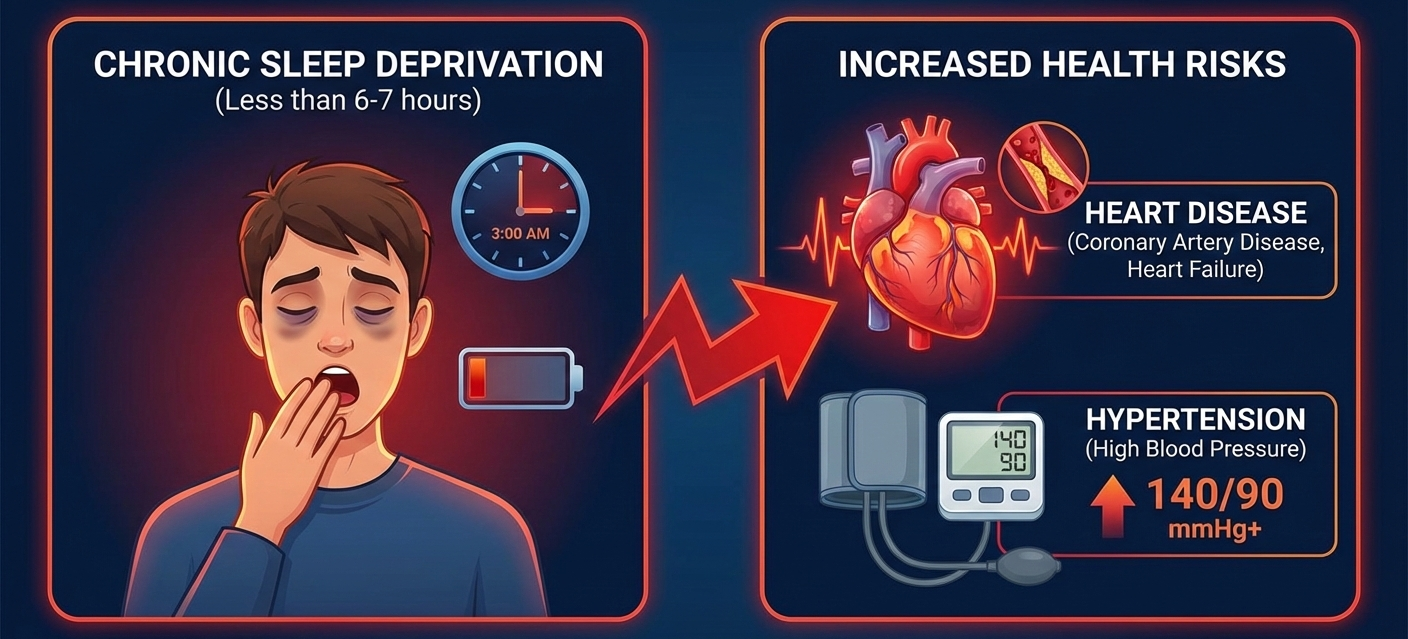
Sleep is regarded as something comfortable or productive, which is much more than rest. Sleep controls the level of immune activity, metabolic stability, cardiovascular stability and hormonal balance. Once sleep is regularly not enough, the effects are spread across the body.
Scientific evidence is now showing that chronic sleep deprivation is linked with health risks on a systemic level. Some of the most important outcomes are immune suppression, weight gain, insulin resistance, high blood pressure, and cardiovascular disease. These results make sleep not a luxury of lifestyle, but one of the pillars of preventive medicine.
This is because learning the relationship between sleep deprivation and physiological processes explains why physiological systems require sufficient sleep to ensure prolonged health care.
Sleep as a Regulatory System
Sleep provides a co-ordination of various body processes. The growth hormone helps in tissue repair when sleep is deep. The hormone regulation and reorganization of the nervous system takes place during REM sleep. The inflammatory indicators vary in very well-regulated patterns throughout the night.

These regulatory systems are disproportionate when there is an interruption of sleep duration or quality. With time, constant disturbance leads to susceptibility to disease.
Immunosuppression and Risk of Infection
Sleep is essential in the immune system with regard to effective defense mechanisms.
Cytokine release and Immune activation
Cytokines, which are proteins that mediate the immune responses, are released by the body during sleep. These are molecules that enhance infection protection and inflammation regulation.
Sleep deprivation suppresses the production of cytokines and undermines immunity.
Impaired Antibody Response
It has been found out that sleep-deprived individuals might not generate enough antibodies after vaccination. This implies that adaptive immunity depends on sleep.
Sleep deprivation can make one more prone to viral diseases and slow down the recovery process.
Metabolic Dysregulation
The glucose metabolism and energy regulation are majorly centred on sleep.
Insulin Sensitivity
Insulin controls the level of blood glucose. Research indicates that insulin sensitivity is reduced by sleep deprivation and this reduces the efficiency of the body in converting glucose to energy.
There is decreased insulin sensitivity which predisposes one to type 2 diabetes.
Hormonal Imbalance
Sleep also has effects on the hormones that regulate the feeling of hunger and satiety such as leptin and ghrelin. Lack of sleep reduces leptin (satiety hormone) and raises up ghrelin (hunger hormone).
The imbalance stimulates growth of appetite and energy.
Weight Gain and Obesity Risk
The weight gain is associated with the hormonal changes that result with sleep deprivation.
Organisms with high caloric intake exhibit higher fat synthesis rates alongside a reduced rate of fat oxidation.
Higher Caloric Intake
Organisms with high caloric intake show an increased rate of fat synthesis and a decreased rate of fat oxidation.
When a person is sleep deprived, they tend to be addicted to foods with high amounts of carbohydrates and fats. Neurological modifications of the reward-processing centers enhance the food-seeking behavior.
Reduced Energy Expenditure
Weight gain may be further caused by fatigue caused by lack of sleep which reduces the amount of physical activities.
In the long run, the aggregate impact of these effects increases risk factors of obesity and associated metabolic disorders.
Resistance to Insulin and Type 2 Diabetes
The chronic loss of sleep interferes with the glucose regulation via various mechanisms.
Elevated Cortisol Levels
Lack of sleep heightens cortisol, a hormone that causes elevation of sugar in the blood. Constant elevation is an addition to insulin resistance.
Inflammatory Response
Restriction of sleep enhances low-grade systemic inflammation which disrupts the insulin signal transduction.
Hormonal imbalance and inflammation are two issues that greatly expand the risk of diabetes.
High Blood Pressure and Blood Pressure Irregularities
Blood pressure has its own circadian rhythm and it usually drops during sleep.
Disturbed Nighttime Dipping
It is disrupted by chronic sleep deprivation in this nocturnal drop in blood pressure. The continued increase puts a strain on blood vessels.
Activation of Sympathetic Nervous System
Loss of sleep enhances the activity of the sympathetic nervous system, which increases the heart rate and the resistance to vascularity.
Continuous sympathetic stimulation is a factor that causes hypertension.
High Risk of Cardiovascular Disease
The coordinated metabolic, hormonal and inflammatory controls are critical to the cardiovascular health.
Inflammation and Atherosclerosis
Sleep deprivation facilitates inflammatory markers that relate to the development of the plaque in arteries. Chronic inflammation increases the atherosclerosis process.
Endothelial Dysfunction
The endothelium, which is the lining of the blood vessels, also needs proper sleep in order to maintain it. Restriction of sleep affects the endothelial performance, decreasing the flexibility of the vessel.
High Predisposition to Heart Disease
Epidemiological research has associated lack of sleep to high risk of coronary artery diseases, stroke and heart failure.
These associations bring out the importance of sleep in prevention of cardiovascular disease.
Systemic inflammation and pathophysiology
The long-term sleep deprivation leads to low-grade inflammation. High levels of inflammatory markers correlate with many chronic diseases such as cardiovascular disease and metabolic syndrome.
The pathway between sleep loss and systematic health downfall is connected through inflammation.
Sleep and Preventive Healthcare
Preventive care is based on early intervention and risk minimization. Sleep has a key position in both purposes.
Reducing Disease Burden
Sleep provides defense against the immune system, normalizes metabolism, and cardiovascular resilience. Through sleep issues, people can reduce the risk of illnesses in the long run.
Cost-Effective Prevention
Promoting enough sleep does not need a lot of finances as compared to managing chronic illness. Healthcare burdens may be greatly minimized through lifestyle changes.
The redefinition of positioning sleep as preventive medicine redefines its significance in a social approach to health.
The Accumulated Effect of Sleeplessness
Sleep deprivation has not been just a single occurrence. Physiological stress is enhanced by repeated sleepless nights due to lack of rest.
Even weeks of moderate levels of sleep deprivation can be a cause of progressive metabolic and cardiovascular impairment.
Appreciation of cumulative effect promotes the habitual emphasis on restorative sleep.
Physical Health: Behavioral Strategies
The evidence-based recommendations that can be used in enhancing sleep are:
- Having regular sleep patterns
- Restricting stimulants and caffeine prior to sleep.
- Establishing a dark and calm atmosphere in sleeping places.
- Performing physical exercises.
- Minimizing time in front of electronic screens (before bedtime).
These practices encourage regular circadian rhythms and improve the quality of sleep.
Conclusion
The sleep is one of the most important regulators of systemic health. Chronic sleep deprivation suppresses immunity, glucose metabolism, maladaptive weight gain, high blood pressure, and cardiovascular risks.
Scientific evidence continuously proves that lack of sleep is a predisposing factor of diseases. Instead of being a luxury and lifestyle choice, sleep is a pillar of preventive care.
Focusing on proper sleep aids in the immunity, bodily equilibrium, and heart security. Understanding the importance of sleep as a means of disease prevention promotes behavior change on a long-term basis and supports the need to understand the importance of sleep in the overall health management.