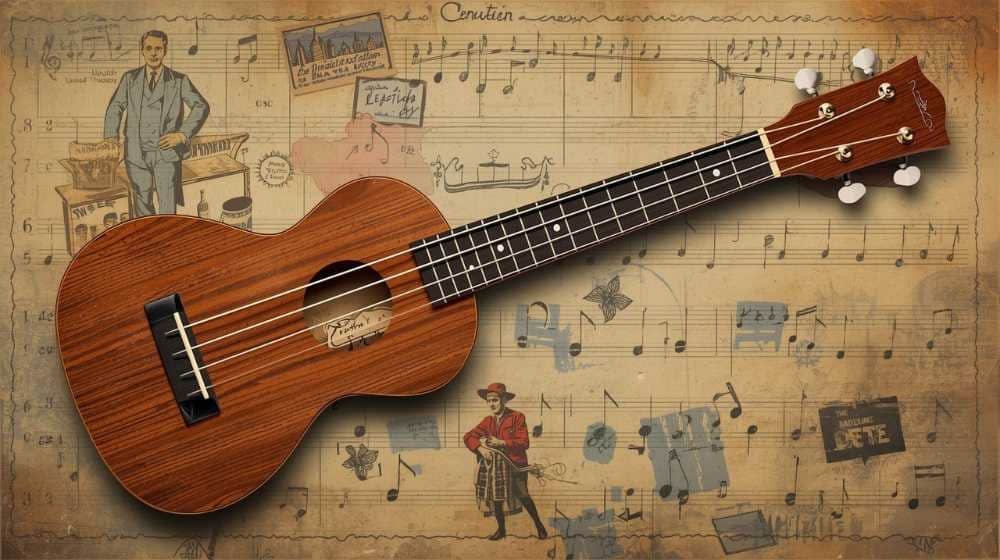
The ukulele, a small, four-stringed instrument with a distinctive bright sound, has become a cultural symbol of Hawaii. However, its origins stretch far beyond the Pacific Islands, and its journey across continents has been nothing short of fascinating. From its humble beginnings in Portugal to its rise as a global musical phenomenon, the ukulele’s history reflects cultural exchanges, musical innovation, and social trends over more than a century. This comprehensive guide will explore the history of the ukulele, examining its roots, evolution, and eventual global dominance.
1. The Origins of the Ukulele: Portuguese Beginnings
The ukulele’s roots can be traced back to 19th century Portugal. The direct ancestors of the ukulele are the machete and cavaquinho, two small, four-stringed instruments used in traditional Portuguese folk music. These instruments were introduced to Hawaii by Portuguese immigrants, particularly those from Madeira and the Azores islands, during the late 1800s.
The Portuguese Machete and Cavaquinho
- Machete: A small, guitar-like instrument, the machete had a compact body and was typically tuned with four strings. It was easily portable and perfect for seafaring Portuguese immigrants, who brought it along as they sailed to Hawaii.
- Cavaquinho: Slightly larger than the machete, the cavaquinho was another four-stringed instrument that had a more defined tone and was used in Portuguese folk music. The cavaquinho‘s characteristics would later influence the ukulele’s design.
The Transformation in Hawaii
When Portuguese immigrants arrived in Hawaii, they introduced these instruments to the local Hawaiian population. The Hawaiian people adapted the instruments to their cultural context, crafting new versions that blended both Portuguese and Hawaiian elements. Early Hawaiian ukuleles were made from native koa wood, a material prized for its tonal qualities.
The name “ukulele” is believed to come from the Hawaiian word meaning “jumping flea,” referencing the lively movement of the player’s fingers on the strings, or the energetic character of the music itself.
2. The Ukulele’s Birth in Hawaii: A Cultural Transformation
By the 1880s, the ukulele had evolved into a distinct Hawaiian instrument. It became incredibly popular among the local population and was often played during celebrations, festivals, and social gatherings. The instrument was embraced as a symbol of Hawaiian culture, in part due to the royal family’s support.
The Role of Hawaiian Royalty
Queen Liliuokalani, Hawaii’s last reigning monarch, played an instrumental role in popularizing the ukulele. She was not only an accomplished ukulele player but also a composer. Her love for the instrument helped solidify the ukulele’s place in Hawaiian culture and reinforced its identity as a symbol of local pride.
Hawaiian Ukulele Craftsmanship
Hawaiian luthiers began refining the design of the ukulele, experimenting with different types of wood and construction techniques. The use of koa wood, in particular, became a hallmark of Hawaiian ukuleles. This wood gave the instrument a rich, warm tone that would become synonymous with the sound of Hawaiian music.
3. The Ukulele Goes Global: The Hawaiian Music Craze
The 20th century saw the ukulele spread far beyond Hawaii’s shores, reaching mainland America and other parts of the world. This global spread was largely due to the Hawaiian music craze that began in the early 1900s. Hawaiian performers who played the ukulele captivated audiences in the U.S. and abroad.
The Panama-Pacific International Exposition (1915)
The ukulele gained international attention during the Panama-Pacific International Exposition held in San Francisco in 1915. This event, which celebrated the completion of the Panama Canal, featured Hawaiian music as a key attraction. A performance by a Hawaiian ukulele player during the exposition introduced the instrument to a global audience, sparking the first wave of widespread popularity.
The Rise of Hawaiian Artists and Recordings
In the 1920s, Hawaiian musicians, such as Sol Hoʻopiʻi, began recording music and performing across the United States. Their music often featured the ukulele, and the instrument became an essential part of the Hawaiian music sound. As Hawaiian music became increasingly popular in the U.S., the ukulele’s reputation grew, and more people were drawn to learn the instrument.
4. The Ukulele’s Integration into Mainstream Music
By the 1920s and 1930s, the ukulele had found a prominent place in mainstream American music. Jazz musicians and pop artists began incorporating the ukulele into their performances, expanding its reach beyond Hawaiian music into other genres.
Jazz and Swing Music Influence
The ukulele became an integral part of the jazz and swing music scenes in the U.S. during the 1920s. Jazz musicians embraced the ukulele for its bright, percussive sound, which complemented the rhythm-driven nature of jazz. The instrument’s small size made it ideal for performances in smaller ensembles or intimate settings.
Roy Smeck: The Ukulele Virtuoso
One of the most important figures in the ukulele’s rise during the early 20th century was Roy Smeck, often referred to as the “Wizard of the Strings.” Smeck’s innovative ukulele playing, combined with his appearances in vaudeville shows and on radio broadcasts, helped cement the instrument’s place in popular music.
5. Decline and Revival: The Ukulele in the 20th Century
Despite its initial rise to fame, the popularity of the ukulele began to decline in the mid-20th century. The rise of rock and roll and the dominance of electric guitars overshadowed the ukulele, and by the 1950s and 1960s, the instrument was relegated to the fringes of the music world.
The Ukulele’s Niche Role in Music
During the post-WWII era, the ukulele was largely associated with novelty music and tropical-themed performances. It continued to be used in folk music and light entertainment, but it was no longer a mainstream instrument.
6. The Ukulele Resurges: A Cultural and Musical Revival
The ukulele experienced a dramatic revival in the late 20th century, especially in the 1990s and 2000s. Several factors contributed to this resurgence, making the ukulele more popular than ever.
The Impact of Israel Kamakawiwo’ole
One of the most pivotal moments in the ukulele’s revival came with the success of Israel Kamakawiwo’ole, a Hawaiian musician whose 1993 rendition of “Somewhere Over the Rainbow” became an international hit. His soulful voice, combined with his delicate ukulele playing, introduced the instrument to a new generation of listeners. The song remains a quintessential ukulele classic.
The Role of Social Media and YouTube
With the rise of social media platforms, particularly YouTube, aspiring musicians began sharing ukulele tutorials, performances, and covers. The accessibility of the ukulele, combined with the ease of learning its basic chords, made it a popular instrument for beginner musicians. Online communities helped the ukulele spread rapidly, leading to an explosion of interest in the instrument.
7. The Ukulele Today: A Global Musical Icon
The ukulele is now firmly entrenched as a global musical instrument, with its presence felt in genres ranging from pop and indie rock to classical music and jazz. Its small size, ease of play, and distinctive sound have made it a favorite among musicians of all ages.
Ukulele in Modern Music
Today, the ukulele is used by musicians around the world, from casual strummers to professional performers. Artists like Jake Shimabukuro have pushed the boundaries of what is possible on the ukulele, incorporating virtuosic techniques and complex arrangements. The ukulele’s versatility has allowed it to be incorporated into a wide range of musical styles, making it a sought-after instrument for musicians and music producers alike.
Ukulele as a Tool for Music Education
The ukulele has also found its place in music education. It is one of the most popular instruments for teaching young children the basics of music theory, rhythm, and chord structures. Its simplicity makes it an ideal starting point for budding musicians, and many schools have adopted the ukulele as part of their music curricula.
8. Timeline of Ukulele History
| Year | Event |
| Late 1800s | Portuguese immigrants bring the machete and cavaquinho to Hawaii. |
| 1880s | The ukulele is developed in Hawaii, with local craftsmanship and design. |
| 1915 | Hawaiian music is introduced to a global audience at the Panama-Pacific International Exposition. |
| 1920s | Ukulele becomes a key instrument in jazz and swing music, especially in the U.S. |
| 1930s | Roy Smeck popularizes the ukulele in American vaudeville and radio. |
| 1950s-1960s | Decline of ukulele due to the rise of rock and roll. |
| 1990s | Ukulele experiences a revival through the success of artists like Israel Kamakawiwo’ole. |
| 2000s-present | Ukulele continues to thrive, with mainstream artists incorporating it into pop music. |
9. Conclusion: The Timeless Appeal of the Ukulele
From its Portuguese roots to its current status as a global music sensation, the ukulele’s journey is a testament to the power of cultural exchange and musical adaptation. Its cheerful, melodic sound continues to inspire musicians across all ages and genres. Whether played by beginners on a beach in Hawaii or virtuosos in concert halls worldwide, the ukulele remains a symbol of joy, creativity, and the enduring magic of music. As its popularity continues to grow, the ukulele will undoubtedly remain a beloved instrument for generations to come.