Introduction
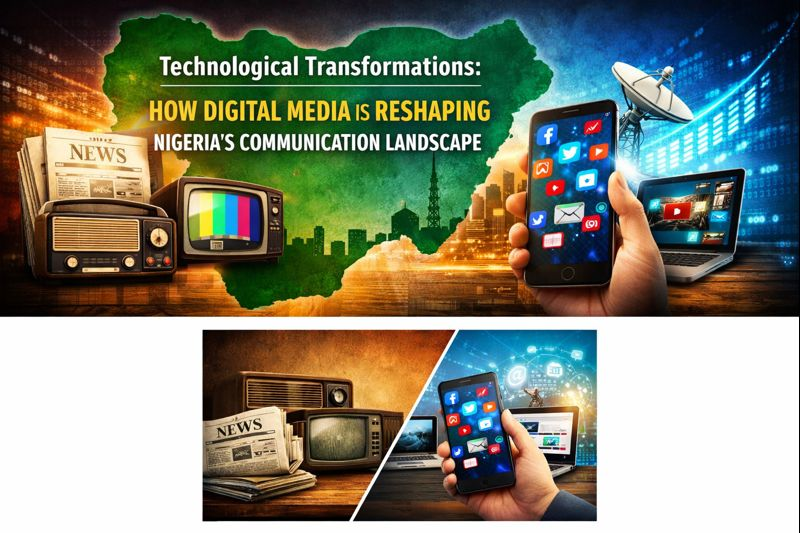
The communication environment in Nigeria has experienced exceptional technological transformation in the last 20 years. What once depended so much on the printed newspapers, land-based radio, and TV broadcasting has slowly transitioned into an ever-changing digital workforce, based on the internet, mobile phones, and new content sources.
Nigerians today access news, entertainment, and information in the community more than those found in other devices, and news makers and content developers have turned to digital devices and technologies that have transformed the way stories are told, information shared, and the audience engaged.
This change has not merely changed the flow of information, but also reformulated the discussion in the population, civic action, and national awareness.
This paper discusses this technological transformation, the shift in media consumption towards the online world, how this affects journalism, the effects that this has on the audience, and the general consequences of this on Nigerian society.
This article is a valuable source that will further elaborate on how digital innovation has revolutionized journalism in contemporary societies.
A History of the Print Dominance to Digital-First Consumption
The Age of Old-Fashioned Newspapers
Newspapers, which included The Guardian, Punch, Daily Trust, and The Nation, influenced the opinion of people in Nigeria for decades. Print journalism was deep, investigative, and detailed. Nevertheless, they gradually lost their dominance as production costs, sluggish circulation, and restricted reach gave way to the need to deliver information more quickly and interactively, as audiences started demanding it.
Switch to Internet News Media
Due to technological transformation and the emergence of internet, smartphones became common among the population, and news outlets in Nigeria started to transition to the web. Large newspaper houses began to publish online versions, and individual online news outlets such as Premium Times, Sahara Reporters, Pulse Nigeria, and Legit sprung up. This served as the beginning of technological transformations in communication.
These sites post breaking news immediately, update news instantly, and reach millions of people in states and in the diaspora without geographical limitations. News is being read on websites, mobile applications, and social feeds, so that Nigerians do not miss the latest emerging events.
The Digital Age of Radio and Television Transformation
The Further Development of Radio to Podcasts and Online Streaming
The radio is still very effective in Nigeria, particularly due to the fact that it transcends the literacy levels and reaches remote communities. But the digital technology has transformed radio into on-demand listening. Nigeria has a large number of streaming stations online, and podcasts allow them to have easy access to political debates, talk shows, and education programs. It is a digital change that has made radio content time and space independent.
Television, Television Is Out of the Living Room
The same has happened with television. Although they still have a place in the mainstream broadcasting, in the form of such stations as Channels TV, NTA, TVC, and AIT, the digital platform has increased access to content. News clips, interviews, and programs are now being watched through social media, streaming services, and YouTube, whereby the Nigerians are involved. Netflix, Showmax, and local streaming applications are also platforms that have increased the number of options for entertainment, offering viewers the opportunity to watch at any time and from any location.
Social Media: A New Definition of Communication and Audience Engagement
Emergence of Active, Not Passive, Audiences
In contrast to the conventional media, where the communication was predominantly one-way, the digital media promote communication. They can instantaneously contact journalists, fact-check, hold them accountable, and air their views using Twitter (X), Facebook, Instagram, TikTok, and WhatsApp. Hashtags have been able to influence the national discourse, organize civil activities, and amplify the voices of the people. The example of the #EndSARS movement is still a powerful demonstration of how social media could stimulate the national discussion and activism.
User-Generated Content and Citizen Journalism
The use of digital media has enabled the common Nigerians to become reporters. People are able to take videos, record events, and provide live updates way before the mainstream news outlets report on the events through smartphones. This has liberalized information, with the narratives no longer being influenced by media corporations. Meanwhile, it leaves it to users and journalists to check the truthfulness.
Blogging, Online Publication and Independent Media Voices
Due to technological transformation and change in communication, blogging has become a very strong communication tool in Nigeria. The most famous bloggers and online publishers report on entertainment, lifestyle, politics, technology, and social issues that affect the perception of society and set the trends.
Nigerians have a lot of confidence in blogs due to their quick, relatable, and culturally aware content. There has also been the rise of independent journalism platforms, which provide investigative reporting, fact-checking programs, and governance, economy, and public accountability reporting. This is a rich contribution of voices in the media space in Nigeria, which encourages pluralism.
The Nigerian Journalism Digital Innovation and the New Face
Quickened News Making and Multi-Platform Storytelling
The digital tools have transformed the manner in which the news is collected, created, and presented by journalists. Journalists are currently equipped with smartphones, social media monitoring apps, digital cameras, and analytics to track trends and react fast.
Facebook no longer exists as a text-only newsroom; it contains videos, infographics, live broadcasts, podcasts, and interactive images. Journalists are published on various platforms, which guarantees an extended effect and increased interaction.
Data Journalism, Checking, and Fact-Checking
Data-driven and investigative journalism has also been promoted in the digital environment. The Dubawa and Africa Check organizations help in combating the spread of misinformation by fact-checking news, scrutinizing statements, and informing citizens about reliable sources of information. In journalism, the digital archives, analytics, and research tools have become the tools that journalists use to deliver evidence-based reporting.
Streaming Services and the Change in Consumption of Entertainment
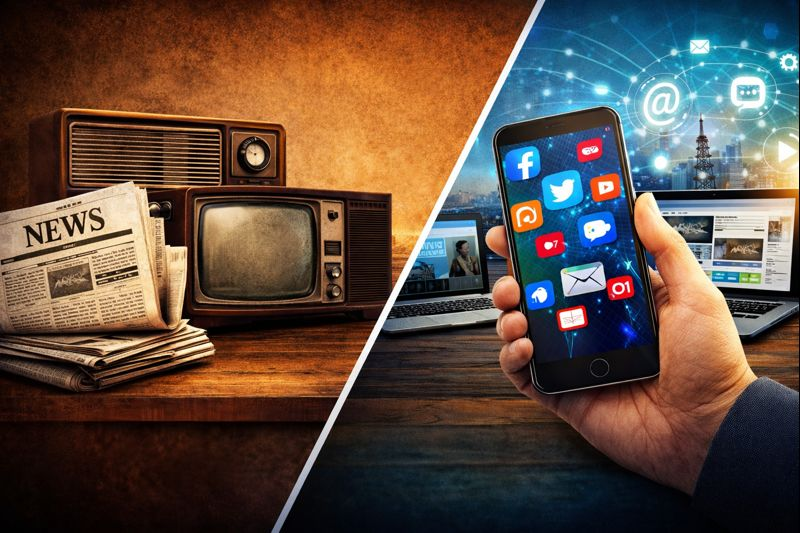
The streaming sites have profoundly altered the entertainment industry in Nigeria. Nollywood movies, music, documentaries, and talk shows are now being transmitted all over the world through digital streaming.
The content creators do not have to rely on cinemas or broadcast stations only; they can also create their own audience over the Internet. The platforms such as YouTube, Boomplay, Spotify, and TikTok have become a way of monetizing their content, as Nigerian artists, comedians, filmmakers, and other influencers grow the creative economy and make Nigeria more influential in the global culture.
Implication on Information Sharing and National Communication
Real-Time Information Flow
Digital communication also helps Nigerians to get the news immediately, be it in political news, developments of the economy, the latest security news, sports news, and social news. The digital platform is utilized by government agencies, NGOs, and corporate bodies to pass information about policies, public announcements, and emergency information directly to the citizen without delay.
Increased Civic and Public Engagement
Online communications promote citizen activism and civic engagement. Comment sections, live streams, online town halls, and social threads provide citizens with the opportunity to participate in discussions of the policy, have a debate, and monitor the governance. The social platforms also provide transparency and responsiveness to the government officials and public institutions who use these platforms to communicate directly with their citizens.
Difficulties in Nigeria’s Digital Communication Landscape
With all the advantages, there are obstacles to the digital transformation of Nigeria.
Fake News and Misinformation
False information is sometimes spread under the influence of the speed of digital communication. False information, manipulated videos, and unestablished stories have the potential to become viral and divide or panic. This renders verification, media literacy, and responsible journalism to be most imperative.
Digital Disparity and Access Restriction
Digital tools are not available to all Nigerians equally. The internet costs, electricity problems, and rural areas with poor connectivity, among others, as well as poor digital literacy, limit participation to some citizens. Nigeria needs to keep on enhancing infrastructure, affordability, and digital education in order to enjoy the full benefits of the digital transformation.
Ethical and Regulatory Concerns
The cyber environment also poses the problem of harassment on the internet, privacy invasion, online crimes, and legal controls. The freedom of expression and its responsible use are issues that are still discussed nationwide.
Future of Communication in Nigeria
The future of communication in Nigeria is definitely digital. As there are more technological transformations, people will continue to have broadband access, and use more sophiscated smartphone. Young people will continue to drive innovation. As technological transformation continues to change, digital media will keep defining journalism, entertainment, communications with the public, and civic life.
It is projected that artificial intelligence applications, immersive media, data visualization, virtual broadcasting, and enhanced mobile platforms will further enhance media innovation.
The traditional media will not be fully eliminated, and it will progressively become digital in its approaches to stay current in emerging technological transformation. The future of media will be characterized by the hybrid communication models, which are a blend of broadcast, print, and digital.
Conclusion
Technological transformation in the communication environment in Nigeria can be seen as a larger media revolution around the world. The move of the newspapers, the traditional radio and television, to the digital platforms, the blogs, the social networks, and the streaming services has altered the way Nigerians get to know about things, how they consume the content, and how they contribute to the national discussions.
Digital or technological transformations and innovation have enabled journalists with new tools, provided room for citizens to participate, sped up the delivery of the news, and opened up the opportunity to express the story to a broader scope than usual. It has enhanced civic participation, enlarged civic discourse, and placed Nigeria on an international platform of digital communication.
Nevertheless, this change also requires accountability: fighting misinformation, making the media more inclusive, better-structured, and exhibiting responsible media practices. With proper management, the digital communication revolution witnessed in Nigeria presents enormous potential in terms of democracy, education, cultural influence, economic growth, and social development. The country is still on an upward trajectory, through innovation, technology, and the force of the united voices that are building its present and future.
See here for more information on technological transformation in our contemporary world.