Introduction
Drain problems are one of the most common plumbing issues homeowners face. While it may seem minor at first, a clogged or slow drain can disrupt daily routines and, if ignored, lead to more serious plumbing damage. Understanding the difference between a slow drain and a blocked drain is crucial for determining the right solution.
What Is a Slow Drain?
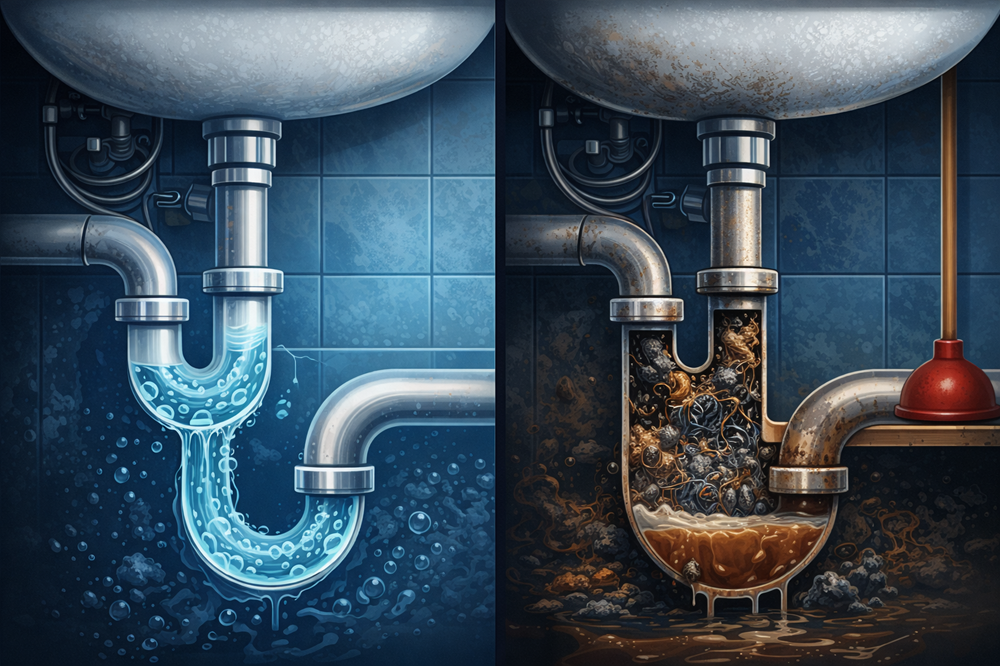
A slow drain is when water takes longer than usual to flow out of a sink, bathtub, shower, or floor drain. The flow may be sluggish but not completely stopped. Slow drains often start gradually and worsen over time.
Common causes of slow drains include:
- Accumulation of Hair and Soap – Hair strands and soap scum can stick to pipe walls, restricting water flow.
- Grease and Food Residue – Kitchen sinks often become slow due to fats, oils, and food particles building up.
- Mineral Deposits – Hard water can leave mineral deposits that gradually narrow pipes.
- Partial Blockages – Small obstructions inside pipes may allow some water to pass but slow the overall flow.
Slow drains are usually a warning sign that more significant blockages could develop. If ignored, the partial obstruction may turn into a full blockage, causing serious issues.
What Is a Blocked Drain?
A blocked drain, also called a clogged drain, occurs when water is completely unable to pass through the pipe. Unlike a slow drain, a blockage is an immediate and often more severe problem. Water may back up into sinks, bathtubs, or toilets, creating unpleasant odors and potential water damage.
Common causes of blocked drains include:
- Foreign Objects – Small items like jewelry, toys, or debris accidentally dropped into drains.
- Tree Roots – Roots from nearby trees can infiltrate underground pipes, causing full blockages.
- Severe Grease Build-Up – In kitchens, thick layers of grease can completely obstruct drains.
- Broken or Collapsed Pipes – Old, damaged pipes may collapse or crack, resulting in total blockages.
Blocked drains require immediate attention, as standing water can cause damage to flooring, cabinets, and even the foundation if left untreated.
Key Differences Between Slow and Blocked Drains
| Feature | Slow Drain | Blocked Drain |
| Water Flow | Reduced but still flowing | Completely stopped or backing up |
| Causes | Gradual accumulation (hair, soap, grease) | Severe obstruction (foreign objects, tree roots, pipe damage) |
| Warning Signs | Water drains slowly over time, minor odors | Water pooling, gurgling noises, strong odors, backups |
| Urgency | Can often wait a short time for intervention | Requires immediate attention |
| Solutions | Drain cleaning, minor plumbing adjustments | Professional clearing, possible pipe repair or replacement |
Understanding these differences helps homeowners decide whether a simple DIY solution may work or if professional assistance is necessary.
When to Call a Professional
While slow drains can sometimes be managed with regular cleaning or minor maintenance, blocked drains are usually more complex and require professional intervention. In Toronto, expert drain cleaning Toronto can help address these issues quickly and prevent costly repairs.
services use advanced tools such as drain snakes, hydro-jetting equipment, and cameras to locate and remove blockages efficiently.
Professional plumbers can:
- Safely remove stubborn clogs without damaging pipes
- Inspect pipe conditions to prevent future blockages
- Recommend preventive maintenance for high-risk areas like kitchens and bathrooms
Attempting to fix severe blockages yourself can sometimes worsen the problem, causing leaks, pipe damage, or incomplete clearing.
Preventive Tips for Homeowners
Preventing slow or blocked drains is easier than dealing with the aftermath. Some tips include:
- Avoid Pouring Grease Down the Sink – Collect grease in a container and dispose of it properly.
- Use Drain Screens – Hair, food, and debris can be trapped before entering pipes.
- Regular Maintenance – Schedule professional drain cleaning periodically to prevent buildup.
- Flush with Hot Water – Occasionally pour hot water down drains to dissolve grease and soap residues.
- Be Mindful of What Goes Down the Toilet – Only flush human waste and toilet paper.
These steps help keep pipes clear, reduce the risk of slow drains, and prevent blockages from developing.
Slow drains and blocked drains may seem similar, but the differences are significant. Slow drains develop gradually and allow some water flow, while blocked drains stop water completely and require urgent attention. Recognizing the signs early can save time, money, and property damage.