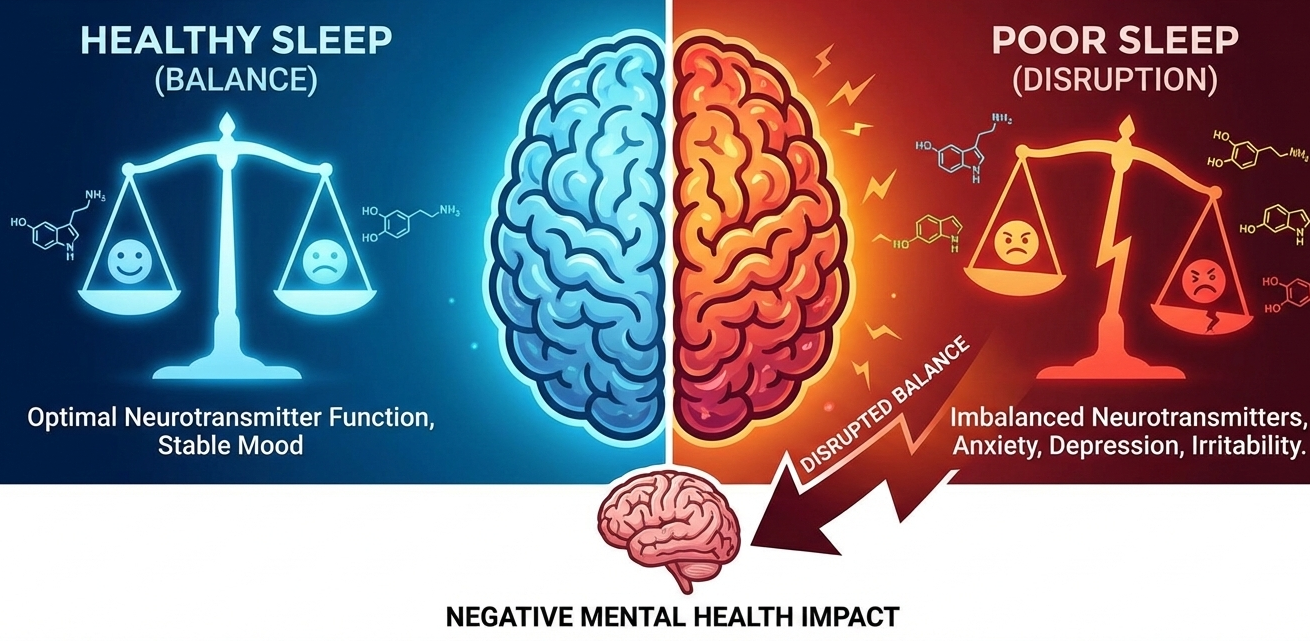
Mental health is closely related to sleep. Instead of functioning separately they interact by the action of complex neurological and hormonal mechanisms. Poor sleep may also reinforce emotional instability and psychological distress may alter normal sleeping pattern. It is a mutual relationship which creates a loop and boosts resilience or increases vulnerability.
Scientific knowledge on the neurotransmitter balance shows the way in which sleep modulates the chemical substances that determine the mood, impetus and reaction to stress. Simultaneously, such conditions as anxiety, depression, and stress-related disorders disrupt the architecture of sleep, causing continuous disruption.
Acknowledging sleep as a fundamental element of psychological resilience revisits the notion that the phenomena is an essential element of mental health care and not a peripheral one.
Emotional Health and Biological Interconnection with Sleep
Sleep assists in brain repair, recalling and emotional processing. The neural circuits rearrange and neurotransmitters are restored during deep and REM sleep.
Serotonin, dopamine, norepinephrine, and gamma-aminobutyric acid (GABA) are neurotransmitters that control the mood and stress levels. Emotional stability requires equal output and receptor sensitivity.
The deprivation of sleep relationship interferes with this balance resulting into emotional hyperactivity and low cognitive control.
Balance and Mood regulation: Neurotransmitters
Emotional Stability and Serotonin
Serotonin has an effect on mood, appetite, and sleep-wake processes. Lack of sleep can change the signal of serotonin, which leads to irritability and depressive conditions.
Dopamine and Motivation
Dopamine aids in the processing of rewards and motivation. Loss of sleep may make the dopamine receptors less sensitive, impairing the motivation and enhancing fatigue.
GABA and Calmness
GABA is an inhibitory neurotransmitter which helps to relax. Disruption of sleep can also reduce the efficacy of GABA leading to anxiety and tension.
Even neurotransmitter activity is dependent on regular, restful sleep.
Regulation of Emotions in the Sleep
The REM sleep is very important in integration of emotions.
Emotional Experiences Processing
In the REM sleep, the brain re-activates the emotional memories under control. This will lessen the severity of distressing events and enhance the coping skills.
The lack of REM sleep can disrupt this regulation causing overreacting emotional reactions.
Interaction between Prefrontal Cortex and Amygdala
The amygdala is the fear and stress processor, which is regulated by the prefrontal cortex. This regulatory route is susceptible to sleep deprivation.
Emotional reactions can be increased and less controlled as a consequence.
Irritability and Insomnia
Persistent worrying and physiological hyperarousal are common anxiety disorders.
Stress Systems Hyperactivation
High levels of cortisol and sympathetic nervous system disrupt the process of sleeping.
The mental activities of racing and physical tension increase the time of sleep and break sleep patterns.
Anxiety and Insomnia Feedback Loop
Loss of sleep amplifies emotions sensitivity and stress perception that further amplify the symptoms of anxiety.
To overcome this cycle, it is usually important to treat sleep hygiene and underlying anxiety.
Depression and Sleep disorders
The alterations in sleep architecture are closely associated with depression.
Reduced Slow-Wave Sleep
Depressed people usually have a lesser deep sleep which restricts physical restoration.
Altered REM Patterns
Depression may also induce REM sleep earlier and more often, which may enhance negative emotional processing.
Sleep disorders may relate to depressive episodes as well as worsen them.
Sleep Fragmentation and Stress Disorders
Post-traumatic stress disorder (PTSD), which is a stress-related disorder, interferes greatly with sleep.
Hypervigilance and Nightmares
Lack of restorative sleep phases as a result of frequent awakenings and distressing dreams.
Chronic Cortisol Elevation
Continuous stress keeps the cortisol level high, disrupting the circadian rhythms and declining the efficiency of sleep.
Psychological distress may be strengthened by long-term disruption.
Stress Response and Hormonal Regulation
Sleep balances the hypothalamic-pituitary-adrenal (HPA) axis that controls the production of stress hormones.
Sleep helps to lower evening cortisol levels and helps to maintain normal hormonal rhythm.
This regulation is interrupted by chronic sleep restriction which increases stress reactivity.
Stable sleep helps in managing adaptive stress.
The Bidirectional Cycle
Sleep has an impact on mental health and vice versa.
Poor sleep may:
- Increase irritability
- Minimize emotional fortitude.
- Heighten stress perception
- Impair cognitive control
On the other hand, anxiety, depression and chronic stress can:
- Prolong sleep onset.
- Cause frequent awakenings
- Change distribution of REM and deep sleep.
- Worsen the overall quality of sleep.
The significance of combined treatment methods can be highlighted in the understanding of this cycle.
Sleeping as a method to build psychological resilience
Enhancement of sleep will boost emotional stability and clear thought.
Behavioral Interventions
- Set routines of sleeping.
- Limit the amount of time spent in front of screens toward the end of the day.
- Don practice relaxation methods.
- Restrict caffeine and stimulants.
Cognitive Approaches
CBT-I is cognitive behavioral therapy of insomnia that deals with maladaptive beliefs and behaviors related to sleep.
Combined interventions enhance the quality of sleep and mental outcomes.
Long-Term Implications
A chronic sleep disturbance can make one susceptible to chronic mental disorders. The initial recognition of sleep disturbances offers a possibility of prevention intervention.
The treatment of sleep issues could decrease the severity of symptoms and enhance responsiveness to treatment.
Conclusion
There is a reciprocal relationship between sleep and mental health based on the balance of the neurotransmitters, emotional and stress hormone production. Lack or incomplete of sleep interferes with mood stability and control of thoughts. Anxiety, stress-related disorders, and depression, in turn, disrupt the normal sleep patterns.
As a fundamental element of mental health care, the awareness of sleep as the essential factor of psychological resilience transforms it. Sleep restoration is a priority that facilitates a normal neurotransmitter system, consistent emotional regulation, and functional stress responses.
By fostering an understanding of this two-way relationship, proactive behavior change will be promoted and the critical importance of sleep in maintaining emotional health reinforced.