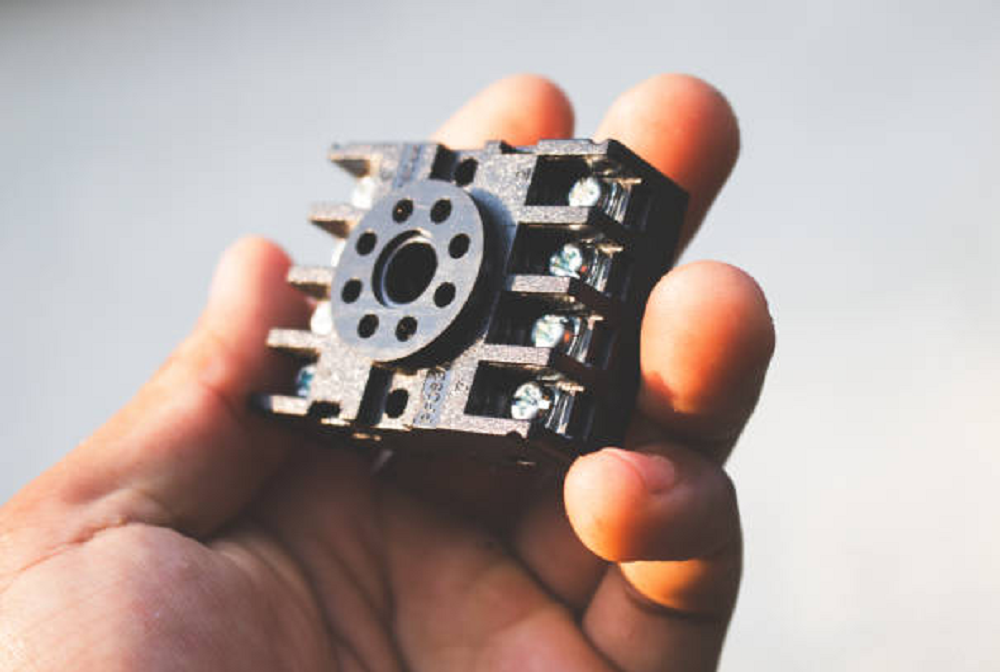
In today’s industrial automation, a solid state relay (SSR) functions as a switching device which is performed electrically, not mechanically. The SSR does its job in a reliable and efficient manner. SSRs are commonly utilized where long life, fast operation, and silent switching is required. With the introduction of these relays in the 1960s, set reliability factors for electromechanical relays became obsolete. Solid State Relays are quite literally indispensable components for B2B industrial automation solutions because they take efficacy, safety and process reliability to an advanced level. If you are looking for reliable semiconductor relay solutions, you can explore OMCH’s semiconductor relay products here https://www.omchsmps.com/de/produkt-kategorie/ssr-relay/. This article shows the working principles of SSRs, their possible applications, their advantages and points to consider while selecting SSRs for your business.
What is a Semiconductor Relay?
A semiconductor relay (SSR) is a type of electronic switch built using semiconductor components (diodes, thyristors, triacs), which function without electromechanical contacts. These relays serve the purpose of providing electrical insulation between the control circuit and the load circuit. The relays can be controlled from the control interface and respond well with heavier loads. These devices are important for reliable operation, quick switching times, and long working periods.
Semiconductor relays, unlike electromechanical relays, have no moving components, which means there is no wear-and-tear related to motion. This absence of moving parts also means that these devices are more resilient to damages caused by shock or vibrations. These devices can be used in harsh industrial settings. The functioning of semiconductor relays is built on switching of semiconductor parts which are switched on and off with control signals for electrical circuits.
How Do Semiconductor Relays Work?
Semiconductor relays use individual semiconductor parts like opto-isolators, triacs, or thyristors to electrically isolate and turn the load circuit on or off. In SSR, when a control signal is fed into one of the inputs, the semiconductor components are switched on, and current can flow through the output circuit.
These relays exploit the use of semiconductor materials from which current flows in one direction while in opposite direction current flow is blocked. With this the SSR has an optical isolator or another means to ensure that the control circuit and load circuit are not in electrical contact. It is the purpose of SSR’s to use semiconductor relays to achieve very short control response times in high speed switching operations.
Low voltage control signals trigger operation of most semiconductor relays, therefore they are easily interfaced with microcontrollers, PLCs and other control systems. Optically isolated solid-state relays are characterized by zero cross point turn on and turn off rules, where the relay is turned on or off when the alternating voltage is equal to zero, therefore reducing the stress in switching components and replacing the relay.
Applications of Semiconductor Relays
The ability to seamlessly switch, dependability, and toughen-up make semiconductor relays suitable for different industrial settings. Some of the main uses of semi-conductor relays are:
Industrial Automation Systems
In automated industries, servo semi automatics relays are primarily utilized for regulating machines and the processes within automated assembly lines. SSRs are great for managing engines, light, and heating systems because of their effortless and rapid switching, efficiency, and extensive lifespan. These can be combined with PLCs and advanced control appliances, enabling self-operating and remote regulation of the industrial systems.
Temperature Control Systems
Heating and cooling appliances are some systems that depend more on semi-conductor relays. Ovens, furnaces and climate control systems which demand utmost temperature control rely on semi-conductor relays too. SSRs have speedy switching, controlling the ON and OFF cycling of heating and cooling recognition units, ensuring the temperature is relatively stable throughout the process.
HVAC Systems
With HVAC (heating, ventilation, and air conditioning), semi-conductor relays serve in controlling AC, heating fans, and even the heating units. These relays guarantee steady switching of the units in the HVAC system, thus creating balance in temperature and air flow. Control signals with low voltage are beneficial SSRs for activating high powered components, compressors and motors.
Medical Equipment
Diagnosing devices, patient monitoring systems, and surgical robotics are some medical apparatuses with increasing use of semiconductor relay SSRs. These relays provide exact switching with low electrical noise cumulatively having high performance reliability which is highly preferred in sensitive medical fields. In these devices, SSRs do not make sound or have any moving parts that can break. This feature is critical for most medical devices designed for reliability and longevity.
Power Supply Systems
In power supply systems, SSRs are used for switching towards stable regions of different components prone to inefficiency for power distribution. SSRs function also in DC and AC powered electrical circuits and in particular, SSRs can, with little loss, switch on and off in solar powered systems. Their effectiveness in dealing with large currents and voltages makes these devices ideal for controlling power distribution in intricate electric systems.
Advantages of Semiconductor Relays
Semiconductor relays are a much better option than electromechanical relays for many industries for several reasons. Here are some of the advantages:
Absence of Mechanical Components
None of the electronic semi-conductor relays have mechanical components. Traditional electromechanical relays have contactors that open or close circuits using mechanical contacts, which is a technique that eventually causes wear. Circuit switching for semiconductor relays is done with devices, which mechanically eliminate the motion caused by movement – wear and tear.
Circuit Switching Speed
Relays with semiconductor parts can perform open/close circuits much quicker than the comparably primitive electromechanical relays. Resulting from this, the precise control required in implementations with relatively high response time requirements, for example, in automation of industry and temperature control systems, is now attainable.
Increased Reliability and Life Expectancy
Not having moving components makes semi-conductor relays more robust than mechanical relays. Their vibration, shock, and electrical arc from damage makes harsh industrial surrounding use more desirable. The increased reliability saves money and improves efficiency automation systems.
Complete Noise Insulation
With none of the moving parts present, semi-conductor relays operate without noise. This makes them ideal for medical devices or laboratory equipment, where noise elimination is critical.
Compact Design
Semiconductor relays are usually much smaller than electromechanical relays. Their compact configuration provides better space economy in industrial control panels, machines, and other equipment, which is important in overcrowded locations.
Conclusion
Semiconductor relays are indispensable components in modern industrial applications, offering fast, reliable, and efficient switching capabilities without the wear and tear associated with mechanical relays. Their ability to switch circuits with high precision and speed, along with their durability, makes them ideal for use in various applications, including automation systems, temperature control, HVAC systems, medical equipment, and power supply systems.By incorporating semiconductor relays into your operations, your business can improve operational efficiency, reduce downtime, and enhance the longevity of your systems. OMCH offers a range of high-quality semiconductor relays designed to meet the demands of diverse industries. Whether you’re looking for fast, reliable switching for automation systems or precise temperature control, OMCH provides robust solutions that enhance the performance of your operations.