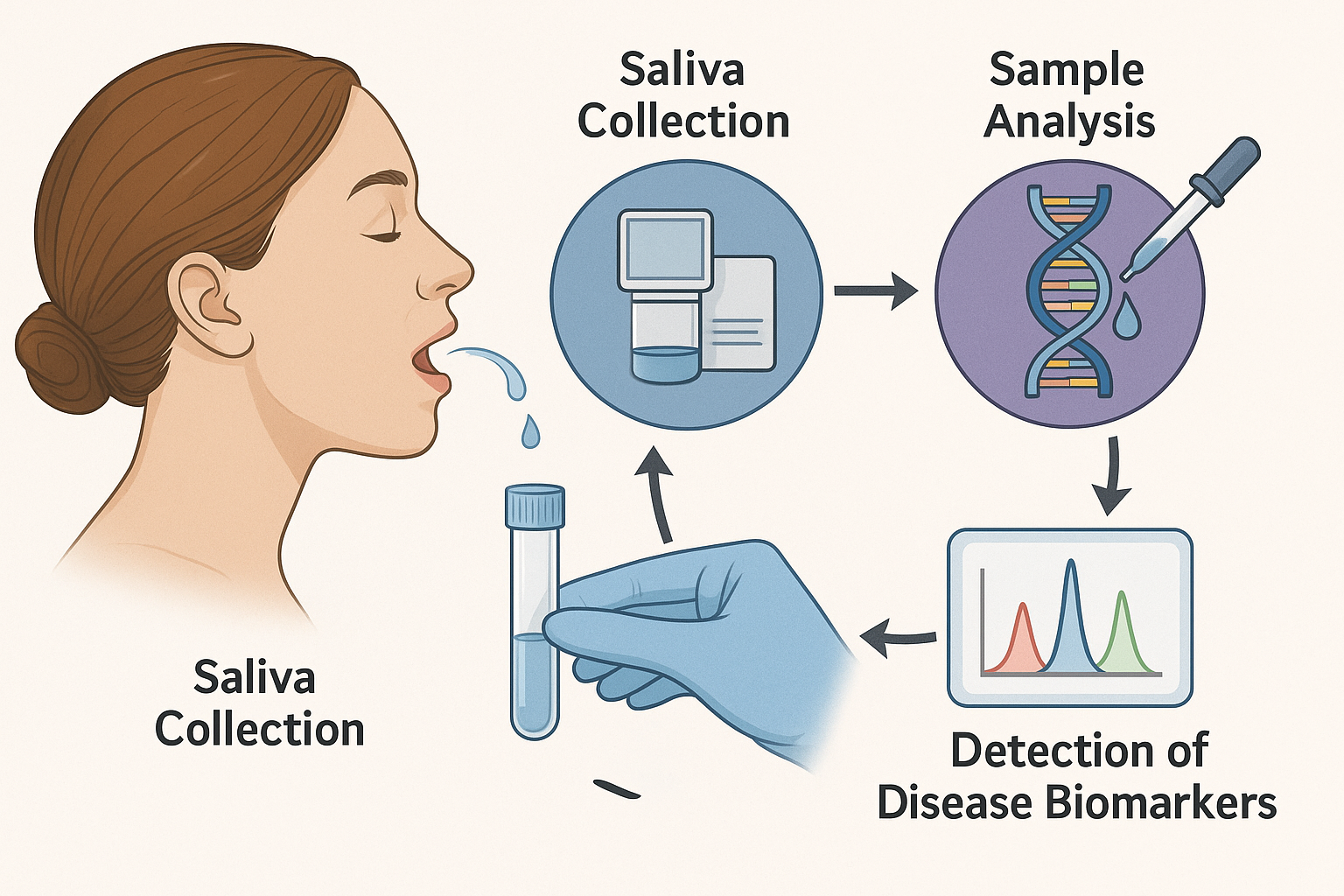
Saliva has historically been considered a simple biological fluid for digestion and lubrication in the oral cavity. Recent scientific developments, however, reveal that it is a much deeper story, for saliva is a mirror on the health of the body and is an important diagnostic tool for serious oral and systemic diseases. This fluid is noninvasive and readily accessible, and it has great promise for changing the way dental practitioners and physicians identify, evaluate and treat diseases. The process of saliva analysis holds great promise for changing diagnostic dentistry and its use for the preclinical diagnosis of oral cancer and early detection of dental caries, as well as cardiovascular diseases and diabetes.
The Diagnostic Potential of Saliva
Saliva is more than 99% water, but the remaining 1%—a mixture of proteins, enzymes, DNA, RNA, hormones, electrolytes and microorganisms—is a rich source of diagnostic information. The saliva can interact directly with (local) (oral) as well as the systemic biological processes in the body and thus can reflect with remarkable accuracy various changes in the state of health of the body.
In contrast to blood or tissue biopsies, saliva can be obtained easily, painlessly, and repeatedly, and it can thus be utilized for screening and monitoring programs on a large scale. This has led to considerable research efforts that have been directed toward salivary biomarkers, which are measurable entities that reflect the presence or progression of disease.
The technologies of molecular biology and omics (shown as genomics, proteomics, metabolomics, and microbiomics) have come into practice, where it is possible to detect and quantify such biomarkers with unparalleled accuracy.
The Molecular Basis of Salivary Analysis
Saliva contains the molecules that represent the physiological and pathological conditions in the body. The application of techniques of modern molecular biology to the detection of these molecules and to the interpretation of their meaning are the basis of this chapter.
1. Genomic and Transcriptomic Markers
DNA and RNA fragments in saliva give a genetic and epigenetic picture of the activity of disease. For example, the mutations found in oncogenes or tumor suppressor genes can be detected in the DNA of saliva permitting a non-invasive method of defining new cancerous changes. In the same way, messenger RNA (mRNA) expression profiles reflect the activity of inflammation, microbial infection or malignancy.
2. Proteomic Markers
Proteomic analysis is concerned with the totality of proteins that are excreted in saliva. Induction of certain proteins such as cytokines, enzymes and immunoglobulins is increased on occasion of infections in the rancid cavity and inflammation. The understanding of specific patterns relative to proteins permits differentiation by the clinician between gingivitis, periodontitis and other pathologies.
3. Metabolomic Markers
Metabolites are small molecules that are the products of cellular metabolism. Changes in their amounts reflect imbalances of metabolism, lymphatic control, bacterial activity or systemic disease. For example, a reduction in glucose or lactate concentrations in saliva reflects diabetes mellitus or acidogenic activity of microbes which is conducive to the formation of dental caries.
4. Microbiomic Markers
The human mouth is a site of a rich microbial community. Dysbiosis refers to an abnormality of this microbial community. Periodontitis and even diseases of the cardiovascular system have been associated with this dysbiosis. The study of saliva allows real-time study of the microbial status of the individual and the potential risk of pathology to be defined before evidence of disease is noted.
Saliva as a Diagnostic Tool for Oral Diseases
1. Detection of Oral Cancer
Oral squamous cell carcinoma (OSCC) is one of the most common and deadly malignancies in the oral cavity. Early recognition significantly improves survival, but presently available screening tests cannot recognize OSCC until well advanced.
Salivary constituents such as IL-8, IL-1β, and CD44, together with specific patterns of mRNA and microRNA, clearly demonstrate the potential to differentiate cancerous from noncancerous tissue. Through the development of more advanced biosensors and point-of-care (POC) testing devices, these biomarkers can now be determined within minutes from the time of specimen collection, allowing for early intervention and a more favorable outcome in the patient.
2. Monitoring of Caries
Dental caries, or tooth decay, is produced by the interaction of bacteria, dietary sugars, and host factors. Black’s classical methods of diagnosis (clinical examination and radiographs) are available, but saliva will provide a biochemical insight into caries susceptibility. By the determination of counts of acidogenic organisms, enzymatic activity and buffer capacity, caries susceptibility is determined before the lesions are visible. Enzymes (amylase, lysozyme), salivary constituent levels, and species specific microbial DNA serve as early indicators of cariogenic activity.
3. Assessment of Periodontal Disease
Periodontitis is a chronic inflammatory disease which destroys the supporting structures of the teeth. The customary diagnosis rests upon probing of the periodontal tissues and radiographic examination, which detect existing destruction but not the early inflammatory changes.
Salivary diagnostics will provide a means to detect inflammatory cytokines such as IL-6, TNF-α, MMP-8, etc., before the structural destruction has occurred. This will allow the dentist to follow the course of disease and response to treatment with much more effectiveness.
Salivary Diagnostics and Systemic Health
Potential of the saliva as diagnostic fluid is not confined to oral diseases. Because numerous molecules in saliva are derived from blood, systemic diseases can be represented detectable in saliva.
1. Diabetes Mellitus
Glucose and oxidative stress related markers are found in saliva in close association with those found in blood, providing an alternative method for non-invasively monitoring diabetes. This method has the advantage of avoiding the discomfort associated with overcoming frequent sampling.
2. Cardiovascular Diseases
Inflammatory salivary mediators (CRP, interleukins) have also been linked to risk for this condition. Salivary determination of these markers could contribute to an early identification of at risk subjects and to monitor the effect of life-style or drug intervention.
3. Infectious Diseases
Utilization of saliva for detection of pathogens ranging from HIV to hepatitis viruses and now to SARS-CoV-2 highlights its use as a diagnostic medium. The rapid saliva test was a panacea for the difficulty of the COVID-19 epidemic: dependable screening that didn’t require sticking a nasal swab up your nose.
4. Hormonal and Neurological Disorders
Cortisol, melatonin, and alpha-amylase in saliva can indicate stress, sleep disorders and neurological disorders. Such assays have already been applied in animal and human behavior studies, and may soon be useful for managing dental patient anxiety or stress-related conditions such as bruxism, or temporomandibular joint disorders.
Technological Advances Shaping Salivary Diagnostics
Advances in biotechnology, nanotechnology and bioinformatics are enabling accelerated clinical translation of saliva-based diagnostics.
1. Point-of-Care Testing Devices
Miniaturized biosensors and lab-on-a-chip platforms provide rapid, real-time detection of biomarkers at chairside. Dentists are now able to test saliva samples on the spot and within minutes, with the results of a test that usually went out to a lab.
2. Nanotechnology-Based Sensors
Nanoparticles-based sensors improve the sensitivity of the detection of biomarker. Gold nanoparticles, carbon nanotubes, and quantum dots are integrated in diagnostic chips for detection of subtle molecular modifications in the early stages of diseases.
3. Artificial Intelligence and Data Integration
Machine learning methods are being used to analyze the large datasets generated from saliva profiles, identifying complex patterns of subclinical biomarkers for particular diseases. Its behavior assisted by AI can tell apart similar clinical pathologies, foresee the evolution of disease, and personalize therapy schemes.
4. Multi-Omics Platforms
The integration of genomic, proteomic, metabolomic, and microbiomic data provides a comprehensive view of oral and systemic health. Such multi-omics strategies give a panoramic view of disease pathways, enhancing diagnostic accuracy and identifying novel therapeutic targets.
Clinical Significance and Future Direction
The adoption of salivary diagnosis as part of the standard monitoring services offered by dental clinics is going to transform the concept of preventive dentistry. Instead of being based on visual or radiographic manifestations, clinical decisions will be made on molecular data obtained noninvasively in the near future.
1. Tailored dental treatment
Every patient’s saliva profile provides a different view of their likelihood of developing disease and how they might respond to therapy. Personalized prevention plans—based upon individual biomarker signatures—may contribute to improved treatment outcomes and long-term oral health.
2. Detection of disease at an early stage
Saliva-based screening allows disease detection at subclinical stage and far before the existence of symptoms. It is this mode of early intervention that is most useful in diseases such as oral cancer, for which rates of survival are highly dependent on early detection.
3. Telehealth Integration
Saliva-based testing is, in many ways, ideal for digital dentistry and telemedicine. Patients may be able to collect saliva samples at home and send them electronically to their dentists, who could use them to monitor patients remotely and reduce office visits.
4. Affordable, quality care
“We want to see healthcare work together to maximize the benefits and reduce the costs.”
Because minimal equipment is needed to collect saliva, and only a small amount of saliva is required to perform the tests, saliva testing is well suited for mass public health screening, especially in resource-poor areas. Low-cost diagnostic kits may open the door for people to preventive dental care all over the world.
Challenges and Considerations
Although great strides have been made, the following issues must be resolved or at least addressed for salivary diagnostics to move from the research to the clinical setting:
- Standardization: Standard protocols for collection, storage, and analysis need to be established to maintain uniformity in research and clinical applications.
- Sensitivity and Specificity: Although many biomarkers are potentially useful, none are disease specific. Clinical reliability may be affected by false positives or negatives.
- Regulatory Approval The tests need to undergo testing and obtain regulatory approval for adoption in clinical use.
- Professional Training Dentists will need to be trained in how to interpret molecular diagnostic results and use them in treatment planning.
Conclusion
Saliva has come in the 21st century to render the professional dental clinician and researcher from a dream state to that of reality in terms of becoming the indicator for health and disease in dentistry. Molecular biology, nanotechnology, and AI are still evolving, and saliva is more than a mere biological fluid but a diagnostic treasure trove. Exploiting salivary bio-markers in this way, the dental community can provide an early warning system for both oral and systemic disease, tailor treatment plans to individual patients, and lead the way in shaping a new modality for holistic health care.
And as the science advances and technology matures, the day will come when salivary diagnostics will be center stage in modern dental practice—safe, non-invasive, and available to everyone.