The Balance of Form and Function
We often think of safety features in commercial buildings as purely utilitarian. However, wrought iron railings challenge that idea. They offer solid protection, of course, but they also bring visual appeal. In other words, these railings don’t just perform—they impress.
Many building managers overlook the impact a railing can make. That’s a missed opportunity. Above all, railings guide movement, protect people, and shape first impressions. A sturdy, attractive railing system shows that safety and style are not mutually exclusive.
Why Commercial Spaces Require More Than Basic Barriers
In commercial settings, safety codes are non-negotiable. However, meeting code is the minimum. We believe buildings deserve features that elevate their usability, not just comply with standards. Wrought iron railings can meet structural demands while also making a design statement.
For example, staircases and mezzanines often require strong barriers. Similarly, ramps and accessible entrances need handrails that are both functional and durable. Wrought iron meets these needs, and its longevity makes it more cost-effective over time. Most importantly, it requires very little maintenance once installed.
The Durability Advantage
Durability is often what draws businesses to wrought iron in the first place. It holds up against wear, weather, and heavy foot traffic. In addition, its resistance to bending or snapping means fewer repairs.
Compared to materials like wood or aluminum, wrought iron provides superior long-term performance. This strength is not just useful for outdoor exposure. It also makes it ideal for busy interiors, such as schools, hospitals, or retail spaces. Therefore, when safety is critical, wrought iron becomes the practical choice.
Design Versatility for All Building Types
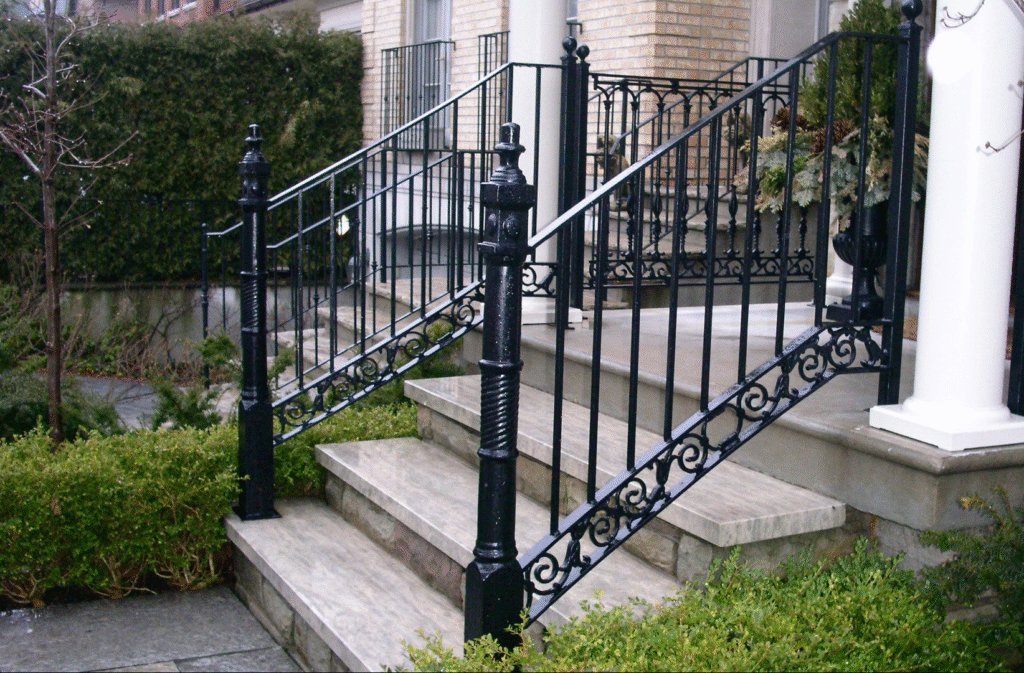
Commercial properties vary widely—from historic storefronts to modern offices. Fortunately, wrought iron is versatile. It can be fabricated into sleek, minimalist designs or more ornate traditional patterns. Consequently, we can match it to almost any building style.
This adaptability allows businesses to keep a cohesive look throughout their property. For instance, railings can echo design elements already present on the exterior. Likewise, interior railings can coordinate with flooring, lighting, or wall accents. Matching safety features to the space makes everything feel more intentional.
To explore examples of iron railings in Toronto, visit our homepage and see how others are applying this flexibility in their own commercial settings.
Meeting Local Building Requirements
All commercial properties must meet specific safety codes, particularly around staircases, balconies, and drop-offs. These rules are in place for good reason. After all, they ensure every railing is strong enough and high enough to prevent falls or injuries.
We take compliance seriously when planning and installing railing systems. However, we also understand that looking good matters too. That is why we aim to meet both structural and aesthetic standards. Our process starts with measurements and reviews of local codes, ensuring the final installation satisfies every requirement.
Working with experienced professionals helps avoid missteps. For instance, a railing that is even slightly too low or spaced too far apart may be flagged during inspection. Getting it right the first time saves time and money later.
Security Applications Beyond Just Safety
Wrought iron is not just about fall prevention. It also contributes to overall building security. In parking garages, stairwells, or outdoor pathways, railings can define boundaries and discourage unauthorized access.
In some properties, we integrate railing systems with gate controls or security fencing. This approach helps guide foot traffic and limits entry points. As a result, businesses reduce risk without sacrificing design.
Furthermore, wrought iron is difficult to damage or dislodge. That’s particularly useful in public-facing areas, where tampering is a concern. Once installed correctly, it becomes a reliable part of the property’s physical defense.
Low-Maintenance Without Sacrificing Style
Some building features look good when they’re new, but quickly lose appeal due to rust or wear. Wrought iron avoids this pitfall. With proper powder coating or galvanizing, it remains rust-resistant and attractive for years.
In addition, routine maintenance is minimal. Occasional cleaning and quick checks for chips or scratches are usually enough. Unlike wood, it does not warp or rot. And unlike stainless steel, it doesn’t require constant polishing to keep up appearances.
We see this as a win for building managers. Less time spent on upkeep means more time for everything else. More importantly, it ensures safety features stay reliable without constant attention.
A Visual Asset for Curb Appeal
When people approach a commercial building, railings are one of the first features they see. That’s why we often recommend selecting a design that reflects the business inside. Whether modern and understated or decorative and classic, the right railing makes a property look cared for and complete.
Curb appeal matters in more than just retail. Office buildings, medical clinics, and even warehouses benefit from looking professional. A clean, consistent exterior shows clients, employees, and tenants that you prioritize detail and safety.
We’ve seen buildings improve their overall appeal simply by upgrading the front steps and balcony railings. For properties undergoing exterior renovation, it’s a smart place to start.
Custom Fabrication for Unique Layouts
No two buildings are exactly alike. Therefore, railing systems should be built to match specific layouts. That includes curves, slopes, uneven ground, and attachment challenges. Off-the-shelf railings rarely fit these conditions well.
We always begin with an on-site assessment. After that, we measure and design components to fit exactly. That includes planning post placements, picket spacing, and height requirements. This tailored approach leads to a more secure, finished result.
Custom fabrication also allows us to solve design problems that prefab systems cannot. For instance, a tight staircase or angled walkway may require unique railing dimensions. We embrace these challenges rather than avoid them.
Helping Clients Through the Decision Process
Many clients know they need a railing, but are unsure where to begin. To clarify things, we usually break it down into four steps: location, purpose, style, and code. Once those are clear, the rest becomes simpler.
First, we identify where the railing will go. That tells us what stress it needs to handle. Then we ask about its purpose—is it to guide people, block access, or support accessibility? Next, we explore the design goals. Finally, we check code and spacing rules.
By guiding clients this way, we help them choose something that is safe, legal, and well-suited to their property.
Take the Next Step with the Right Support
If your commercial building needs new railings or an upgrade to existing ones, the safest choice is to work with experienced professionals. We’re ready to help from planning through to installation. If you want to begin a custom project or ask a few questions, you can contact us directly and we’ll walk you through the process.
Frequently Asked Questions
What’s the average height required for commercial railings?
In most commercial buildings, guardrails must be at least 42 inches tall. This ensures fall protection for elevated walkways, decks, or mezzanines. Handrails along stairs usually fall within 34 to 38 inches, depending on the local building code.
Are wrought iron railings suitable for both indoor and outdoor use?
Yes, wrought iron works well in both settings. When coated properly, it resists corrosion and remains durable outdoors. Indoors, it adds a strong architectural element without requiring much maintenance.
How long do wrought iron railings last?
With proper care, they can last for several decades. Regular inspections and occasional touch-ups are usually enough to keep them looking and functioning like new. Their longevity makes them a strong investment for commercial properties.
Can wrought iron railings be installed on uneven surfaces?
Absolutely. In fact, custom fabrication allows us to build railings that match slopes, steps, and curved pathways. We design each section to suit the exact measurements of your site, ensuring a clean and secure fit.
Do iron railings need frequent maintenance?
Not at all. A basic cleaning schedule and periodic inspections are usually sufficient. Powder-coated or galvanized finishes prevent rust and wear. If damage does occur, it’s usually easy to repair individual sections without replacing the entire system.