The human body is endowed with great mechanisms that enable it to react immediately upon the possible danger. Among such mechanisms, the reflex actions are some of the quickest and most effective reactions. These automatic responses are unconscious and they are facilitated by special pathways that are called reflex arcs. Reflex arcs become very important as they allow the body to respond quickly to any hazards in order to avoid some body damage and safety in general.
Reflex actions are necessary to survival since one does not have to go through the process of the brain processing information and then acting. These fast reactions are instead centralized in the spinal cord. This enables the body to respond to dangerous stimuli almost immediately, like when one comes into contact with a hot object or a sharp surface.
The knowledge of the functions of reflex arcs will give us a good idea of how efficient the nervous system is. The analysis of the biological processes involved in reflex actions will help people to understand how the body defends itself and can stay stable in changing environments.
What Are Reflex Arcs?
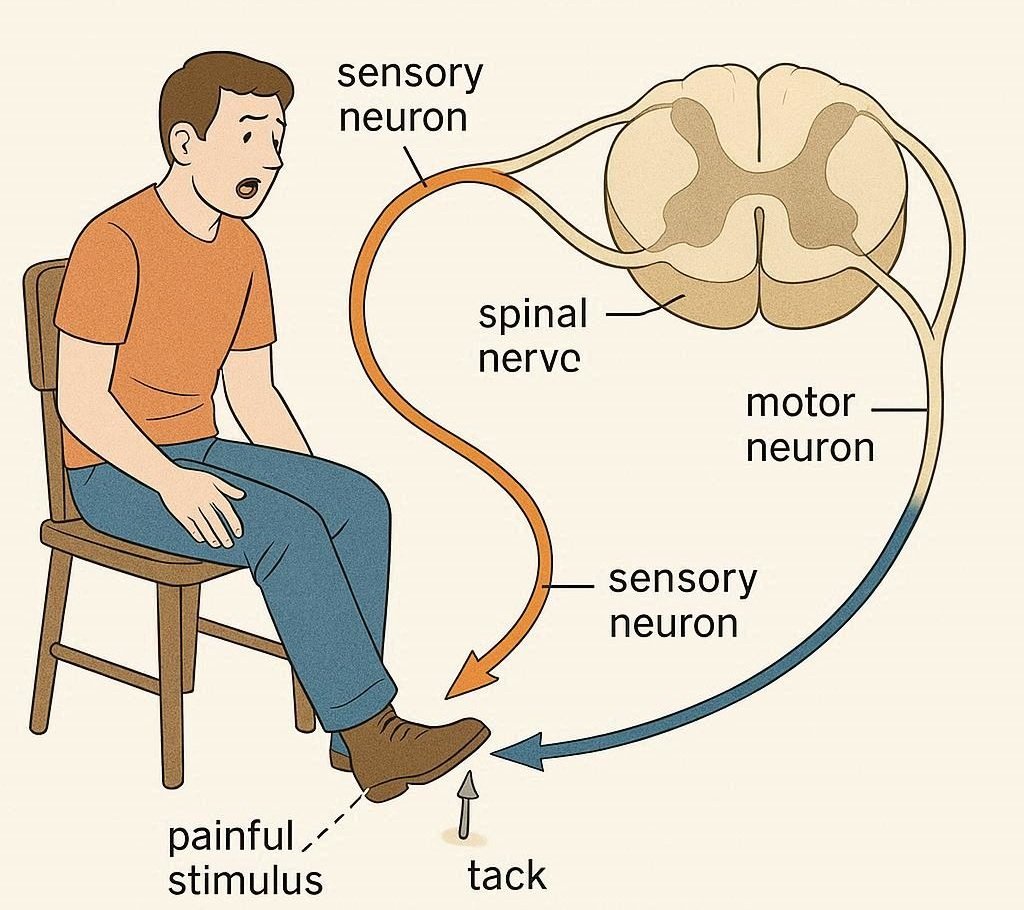
Reflex arcs are circuits that govern reflex actions. They are a combination of a sequence of interrelated parts that combine to form a quick reaction to a stimulus. These structures are sensory receptors, sensory neurons, interneurons, motor neurons and effectors like muscles or glands.
It starts with the detection of a sensation by a sensory receptor and it can be heat, pressure, or pain. This data is subsequently passed down sensory neurons to the spinal cord. The information is transmitted to interneurons in the spinal cord, which speedily transmit signals to motor neurons. These are motor neurons that relay the signal of response to the corresponding muscles which result in an immediate response.
Reflex arcs do not need the direct participation of the brain as opposed to voluntary movements. This will enable the body to react faster thus minimizing chances of hurt. The initial response is regulated by the spinal cord completely although the action is later notified by the brain.
The Spinal Cord Role in Reflex Actions
The spinal cord is in the forefront in the coordination of reflex arcs. It is an interactive center, which interprets the incoming information that comes in the senses and sends an immediate response. This role plays a critical role in making sure that the reflexive actions are quick and effective.
When a stimulus is detected, the signals are sent to the spinal cord by the sensory neurons and the spinal cord processes them almost immediately. The information is analysed by the interneurons located in the spinal cord and the correct response is established. This response is further relayed to the motor neurons which stimulate the muscles required.
The spinal cord enables reflex action to take place immediately by controlling such processes. This is a quick response mechanism that is important in scenarios where a few seconds may be the difference between injury or not.

“reflex arcs processed through the spinal cord for rapid response”
The Biological Process involved in the Reflex Actions
The effectiveness of the reflex arcs is that they are streamlined in nature and functionality. All the elements of the reflex arc contribute to making the response of the reflex process effective and fast.
This starts with the senses receptors that sense any change in the environment. These receptors transform the physical stimulant into electric impulses that are able to be carried out by neurons. These are transmitted to the spinal cord through sensory neurons and are processed.
The interneurons in the spinal cord are the connectors, which connects the sensory input with the motor output. They are important in deciding what type of response will be given depending on the nature of stimulus that is received. The response signal is then transmitted to the effectors, e.g. muscles, by motor neurons to create the physical response.
All this can be done in milliseconds, thus proving how efficient reflex arcs are. This is because the pathway is so simple and direct that one is able to respond quickly, and it is a pathway that is necessary to stay alive.
Types of Reflex Actions
There are various types of reflex actions depending on the complexity and the purpose of the action. There are those reflexes that have a single synapse between sensory and motor nerves whereas others have more than one interneuron.
The knee-jerk reflex is an example of a simple reflex, which entails a direct linkage of the sensory neuron and motor neuron. These reflexes are so rapid and do not demand much processing. Multiplexing reflexes contain more than two interneurons and may relatively coordinate responses among a number of muscle groups.

All reflex actions, however complex, depend on reflex arcs to conduct messages speedily and effectively. This will make sure that the body is able to react in the right manner to a large variety of stimuli.
Significance of Reflex Actions to Survival
Reflex movements are necessary to safeguard the body against injuries. Reflex arcs prevent injuries, which might have happened in case the body was not able to react fast due to the pure reliance on conscious decision-making.
As a case in point, when one touches a hot surface, the body would instantly pull off the hand before the brain has a chance to receive the pain. This prompt action limits tissue injury and the chances of devastating injury.
Reflexes also contribute towards balance and posture. They assist the body to adapt to change in position and react to the occurrence of unforeseen disturbances. This brings stability and coordination in general.
Reflexes also aid internal (physical protection) as well as internal processes like heart rate and breathing. These unconscious movements make sure that the body continues to perform functions that are important to it without conscious undertakings.
Reflex Arcs and prevention of injury
The defensive role of reflex arcs does not just limit itself to instantaneous responses to environmental stimuli. They also assist in preventing injuries that are caused in the daily activities due to appropriate co-ordination of the muscles and stability of the joints.
As an example, reflexes can stabilize joints when a person suddenly moves and the chances of strains or dislocations decrease. They are also involved in the coordination of muscle motion to provide a smooth and controlled movement.
Reflexes are more important in sports and physical activities due to the need to react to the sudden alterations including losing balance or facing obstacles. Reflex arcs allow preventing accidents and improving performance by making quick corrections.
Connection between Brain and Spinal Cord
Though reflex actions are basically under the control of the spinal cord, the brain still plays a role in processing and interpreting the information. Once a reflex has generated an action, the brain is fed information on what transpired.
Through this communication, individuals are able to be conscious of the stimulus and the response. To illustrate, once a hand is removed off of a hot place, the brain interprets the information about the pain and lets the person interpret the event.
This communication between the brain and the spinal cord is what makes the reflexes become part of the overall operation of the nervous system. It can be learned and adapted also because the brain can utilize this information to influence future behaviour.
Increasing Awareness of the Nervous System
The conceptualization of reflex arcs can be helpful in understanding the efficiency and complexity of the nervous system. These tracks show that the body has the capacity to react to stimuli and do so well without necessarily trying to.
Through the value of the reflex actions people can understand more about the way the nervous system safeguards and upholds the body. This information also shows the relevance of keeping the nervous system in good health as a result of proper nutrition, exercise, and rest.
To learn more about reflex arcs, see: Reflex arc.
Conclusion
Reflex actions form an important part of the body defence mechanism and allow the body to react quickly to potentially dangerous stimuli. The spinal cord is able to process information and create instant responses without the brain inputting the information through reflex arcs.
This process is effective and contributes to survival, prevention of injury, and general coordination. Learning about the working of reflex arcs will help people to enjoy the amazing power of the nervous system.
Reflex actions also demonstrate how the human body is complex and thus the need to take good care of your neurological health. By being conscious and responsible, people can contribute to the mechanisms that keep them safe and in good working order in their day to day lives.