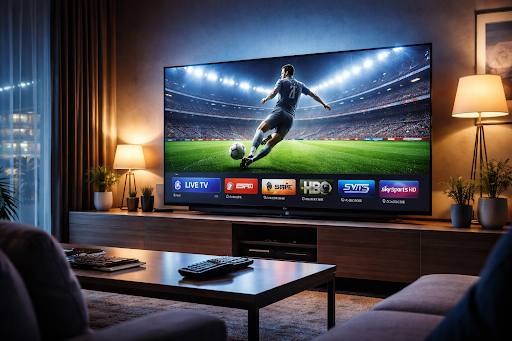
In 2026, streaming is no longer just about watching TV — it’s about performance, picture quality, and reliability. As more cord-cutters switch to IPTV services, many are comparing Premium IPTV options with powerful 4K IPTV solutions.
But what exactly separates Premium IPTV from 4K IPTV? Are they the same thing? Or does one offer advantages that the other doesn’t?
If you’re tech-savvy, a sports fan, or want smooth 4K streaming, this guide explains the key facts—clearly and professionally, without hype.
What Is Premium IPTV?
Premium IPTV delivers high-quality streaming with stability, reliability, customer support, and a large content library.
Unlike free or low-cost IPTV that buffers or vanishes, premium services invest in infrastructure and server optimization.
Features That Define a Premium IPTV Service
Here’s what truly separates premium from standard IPTV:
- High-speed global servers
- Anti-freeze technology
- 99%+ uptime reliability
- Large VOD (Video on Demand) libraries
- Live sports packages
- Multi-device compatibility
- 24/7 customer support
- Regular channel updates
Premium IPTV is not just about resolution — it’s about the entire streaming ecosystem working seamlessly.
Why Premium IPTV Is Growing in 2026
Several factors explain the surge in demand:
- Cord-cutting acceleration – Traditional cable costs are rising.
- Demand for international content – Viewers want global access.
- Live sports in HD & 4K – Football, UFC, NBA, cricket, and more.
- Improved broadband speeds – 5G and fiber networks support heavy streaming.
- Device integration – Firestick, Android TV, Smart TVs, and more.
In 2026, users expect zero buffering during live matches — and premium IPTV providers are engineered to deliver exactly that.
What Is 4K IPTV?
4K IPTV refers specifically to IPTV services that stream content in Ultra HD (3840 × 2160 resolution). It focuses primarily on picture quality.
While Premium IPTV describes the service tier and reliability, 4K IPTV emphasizes resolution and visual clarity.
Benefits of Ultra HD Streaming
4K IPTV delivers a noticeably superior viewing experience:
- Ultra-sharp images
- Deeper contrast
- Richer colors
- Enhanced sports detail (see every blade of grass)
- Immersive movie experiences
- Future-proof resolution
For sports fans especially, 4K makes a massive difference. Fast-moving action appears smoother, clearer, and more realistic.
Devices That Support 4K IPTV
To enjoy true 4K IPTV, you need:
- 4K Smart TV
- Amazon Firestick 4K / Fire TV Cube
- NVIDIA Shield
- Android TV Box (4K capable)
- Apple TV 4K
- Minimum 25 Mbps stable internet connection
Without compatible hardware and strong bandwidth, you won’t experience real Ultra HD performance.
Premium IPTV vs 4K IPTV – Key Differences
Let’s break it down clearly.
| Feature | Premium IPTV | 4K IPTV |
| Focus | Stability & full-service quality | Ultra HD resolution |
| Streaming Quality | HD, Full HD, often 4K | Primarily 4K |
| Server Infrastructure | High-end, anti-freeze | Depends on provider |
| Channel Library | Extensive | Varies |
| Sports Reliability | High priority | Depends on server quality |
| Overall Experience | Complete ecosystem | Visual upgrade focus |
Now let’s analyze deeper.
Content Library
Premium IPTV services typically offer:
- 10,000+ live channels
- International sports
- PPV events
- Movie libraries
- TV series
- Regional channels
- Kids content
- Adult categories (optional)
4K IPTV providers may also offer large libraries — but some focus mainly on delivering select channels in Ultra HD.
If you want variety plus reliability, premium services usually have the edge.
Streaming Stability
This is where premium services truly shine.
Premium IPTV providers invest heavily in:
- Load-balanced servers
- Backup streams
- Anti-buffering systems
- Multiple CDN connections
4K IPTV without strong infrastructure can buffer heavily — especially during live sports events.
In 2026, stability matters more than resolution alone.
Picture Quality Comparison
Let’s be honest — 4K resolution looks incredible.
However:
- A stable Full HD stream is better than a buffering 4K stream.
- Premium IPTV often includes 4K channels anyway.
- True 4K requires strong bandwidth and device compatibility.
So the real question isn’t Premium vs 4K — it’s whether your premium provider includes 4K capabilities.
Many top-tier services now combine both.
Why Users Prefer Premium 4K IPTV in 2026
The trend in 2026 is clear: users don’t want to choose between stability and resolution.
They want both.
Modern streamers prefer services that offer:
- Premium server infrastructure
- Ultra HD 4K channels
- Large VOD libraries
- Multi-device support
- Responsive customer service
Sports fans especially demand:
- Zero buffering
- Real-time streaming
- High-frame-rate performance
- Crisp 4K picture
That’s why the smartest buyers choose IPTV services that blend premium reliability with 4K technology.
How to Choose the Right IPTV Provider
Here’s a checklist before subscribing:
1. Check Server Stability
Look for uptime guarantees and anti-freeze features.
2. Confirm 4K Channel Availability
Not all services offer true Ultra HD streams.
3. Test with Free Trial
Always test streaming quality during peak hours.
4. Review Device Compatibility
Ensure it works with your Smart TV, Firestick, or Android device.
5. Customer Support Quality
Reliable support is crucial if issues arise.
6. Read Real User Feedback
Avoid providers with consistent buffering complaints.
7. Internet Speed Test
Minimum 25 Mbps for stable 4K streaming.
Final Verdict
In 2026, the debate between Premium IPTV and 4K IPTV isn’t about choosing one over the other — it’s about finding a provider that combines both.
Premium IPTV ensures:
- Stability
- Reliability
- Broad content access
- Professional support
4K IPTV ensures:
- Ultra-clear visuals
- Immersive sports and movie experiences
- Future-ready resolution
The ideal solution? A premium IPTV service that fully supports 4K streaming with optimized servers and large content libraries.
If you’re a serious cord-cutter or sports fan, investing in quality IPTV isn’t a luxury anymore — it’s a necessity.
Streaming expectations are higher than ever in 2026. And only providers that balance performance and picture quality will truly deliver what modern users demand.
.