The quality of sleep is influenced by the lifestyle, the environment, and the biological process. Although the issue of total time spent in sleep is important to many people, studies have indicated that sleep efficiency, including the percentage of time one spends asleep when in bed, is also significant. Practical sleep hygiene is a set of evidence-based behaviours associated with the support of regular, restful sleep.
The evidence from science proves that maintaining consistent sleep schedules, at the right amount of light exposure, the control of stimulants, and the development of pre-sleep rituals can help to considerably increase the length of sleep and its effectiveness. Instead of addressing the problem with quick fixes, sustainable behavioural changes based on circadian biology deliver quantifiable changes.
The science of these strategies can be used to translate research into lifestyle interventions.
The science behind Sleep Hygiene
Sleep consists of two systems that interact with each other; circadian rhythm and sleep pressure. Timing is controlled by the circadian rhythm and it is mainly affected by light exposure. The pressure to sleep accumulates during the day when adenosine accumulates in the brain.
Interference with either of the systems decreases the quality of sleep. Affected by the irregular schedules, use of the screen at late hours, too much use of caffeine, or awkward conditions in the bedrooms may disrupt natural signals.
The strategies of sleep hygiene are designed to strengthen biological signalling and not to subdue it.
Optimizing Light Exposure
The greatest environmental cue on the circadian rhythm is light. The morning sunshine keeps one alert and aligns the internal clocks.
Morning Light to Circadian Adjustment
Outdoor time during an hour after waking up helps healthy melatonin inhibition and solidifies daytime wakefulness. Though indirect natural light is a plus as well.
Limiting Evening Light
Artificial lighting especially blue light that is emitted by screens inhibits the production of melatonin. At least one-hour exposure prior to bedtime has been found to boost the natural sleep signals.
Turning down the lights in the house at night also increases circadian preparedness to sleep.
Sticking to regular sleeping habits
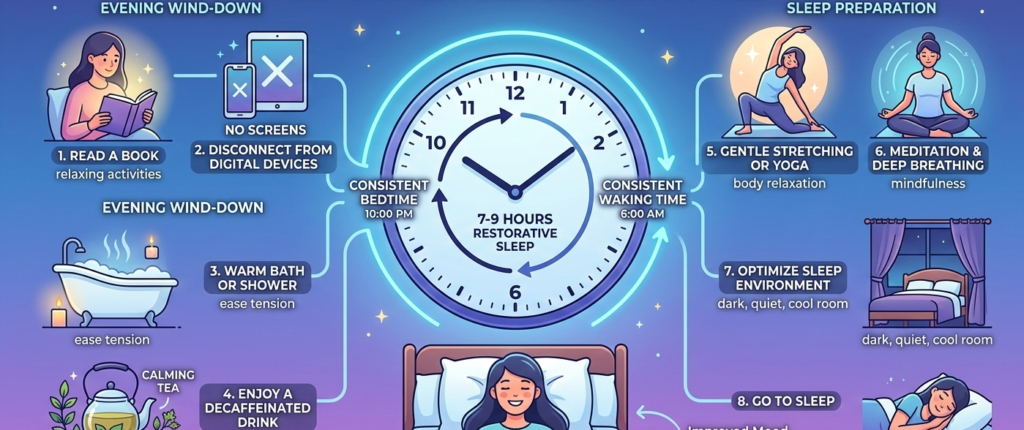
Stability of circadian is enhanced by consistency. Going to bed and waking at the same time every day is upholding predictable hormonal rhythms.
The abnormal sleep habits disorient the body clock. Minor changes can move the melatonin release and cortisol time.
Regular sleep patterns contribute to the regulation of the sleep onset latency and make life more productive. It is best to have weekends resemble weekday time to avoid circadian disorientation.
Regulating Caffeine Intake
Caffeine is an adenosine blocker, which postpones the urge to sleep. Though moderate consumption of caffeine is able to improve alertness, consumption in the late day disrupts nighttime sleep.
Studies indicate that caffeine should not be taken within a period of six or eight hours before going to sleep. Those people who are sensitive to stimulants might need a more extended period.
Other hidden sources like chocolate, some drugs and energy drinks should also be counted.
The withdrawal symptoms could be avoided by gradual decrease instead of sudden stoppage.
Screen Time Bedtime Management
Electronic products produce blue light which inhibits melatonin. Also, captivating material produces arousal of the mind.
Limiting time on the screen at night helps in triggering sleep. In case some devices have to be used, disruption can be reduced with night-mode settings and brightness decrease.
Creation of technology free bedrooms helps to reinforce behavioural boundaries, which relate to rest.
Regulation of Bedroom Temperature
Thermoregulation is a very important role in sleep onset. Body temperature decreases naturally as one is about to fall asleep.
This physiological process is assisted by a cooler bedroom. Although the optimal temperatures are relative, a cool room tends to induce more sleep.
Enhanced awakenings during the night might be as a result of overly warm environments.
Comfort is also improved by proper ventilation and breathable bedding material.
The Development of Structured Pre-Sleep Routines
Before sleep routines act as an indication to change between the state of being awake and resting. Monotonous, relaxing exercises can be used to alleviate physiological arousal.
These can be reading printed material, relaxation, gentle stretching or mindfulness exercises.
The consistency enhances correlation between these actions and sleep onset
Regular exercises ought to start at an expected timing every night in harmony with circadian rhythm.
The Importance of Physical Activity
Exercise enhances the quality of sleep by raising the proportion of the slow-wave sleep and decreasing the sleep latency.
Exercise timing matters. The circadian alignment is supported by morning or afternoon activity. Vigorous exercise just before sleep can make one more alert.
Sustainable benefits are brought about by moderate consistency and not intensity.
Nutrition and Sleep Quality
Bedtime meals are not good as they are heavy and can disrupt sleep. On the other hand, sleepiness can be affected too because of going to bed very hungry.
Evening meals, which are taken a number of hours before sleep, are beneficial to stable digestion.
Alcohol (although it may seem to be a relaxant) interferes with sleep architecture and becomes more fragmented.
Conscience eating schedule is a complement to other hygienic measures.
Reducing Cognitive Arousal
Stress and rumination disrupt the process of sleep. Bedtime worry can be prevented through cognitive methods including journaling or planning in the evening before bed.
Progressive muscle relaxation and relaxation breathing reduce the sympathetic nervous system activity.
Dealing with the stress during the day also helps to achieve better nights.
Treatment of Environmental Noise
Noise pollution enhances micro-arousals, which lowers sleep efficiency. Disturbing noise can be covered by white noise players or fans.
The earplugs may offer supplementary safeguard in high noises.
Monotony in the state of sound averts unexpected interruptions.
The Importance of Bed Association
The bedroom must be linked more with sleep. Working on the bed or spending a long period at the screen loosens this association.
In case one is unable to fall asleep in a period of about twenty minutes, taking a temporary leave of the bedroom and doing something that does not involve much noise can help in avoiding frustration.
Going to bed in case of feeling sleepy supports positive conditioning.
Duration of Sleep versus efficiency of sleep
Time in bed does not assure of restorative sleep. The efficiency of sleep determines the level of actual sleep.
Behavioural interventions that employ timing, exposure to light and the environment enhance duration and efficiency.
Monitoring trends can be used to determine factors that diminish quality.
Prolonged Positive Results of Real-World Sleep Hygiene
Long-term follow-up of the standards of sleep hygiene has increased cognitive clarity, emotional control, metabolic stability, and immune activity.
When sleep efficiency is enhanced, there is less fatigue daytime and higher productivity.
Benefits are cumulative in the long-term consistency.
Connecting Specialized Knowledge and Practice
Recommendations on behaviour are based on scientific findings, which can be scientific. By converting these lessons into everyday routines, people will be able to enhance their sleep state without using drugs.
Minor modifications, including lighting cutbacks, reduced caffeine, and regular bedtime, will lead to quantifiable change.
The secret is in the long-term use as opposed to the momentary testing.
Conclusion
Practical sleep hygiene is a collection of evidence-based methods that are based on the principles of circadian biology and behavioural science. Maximizing light exposure, keeping a regular sleep schedule, manageable caffeine use, screen time, temperature in the bedroom, making a routine of pre-sleep activities can all help improve sleep duration and efficiency.
These interventions are a combination of scientific knowledge and practical lifestyle change. Instead of using the temporary solutions, regular habits support biological rhythms and reinforce the processes of restorative power.
To enhance the quality of sleep, one needs to consciously make the body aware of the timing systems of sleep. With continual implementation of evidence-based practices, one can develop a deeper and more effective rest and contribute to overall health and wellness over a long period.