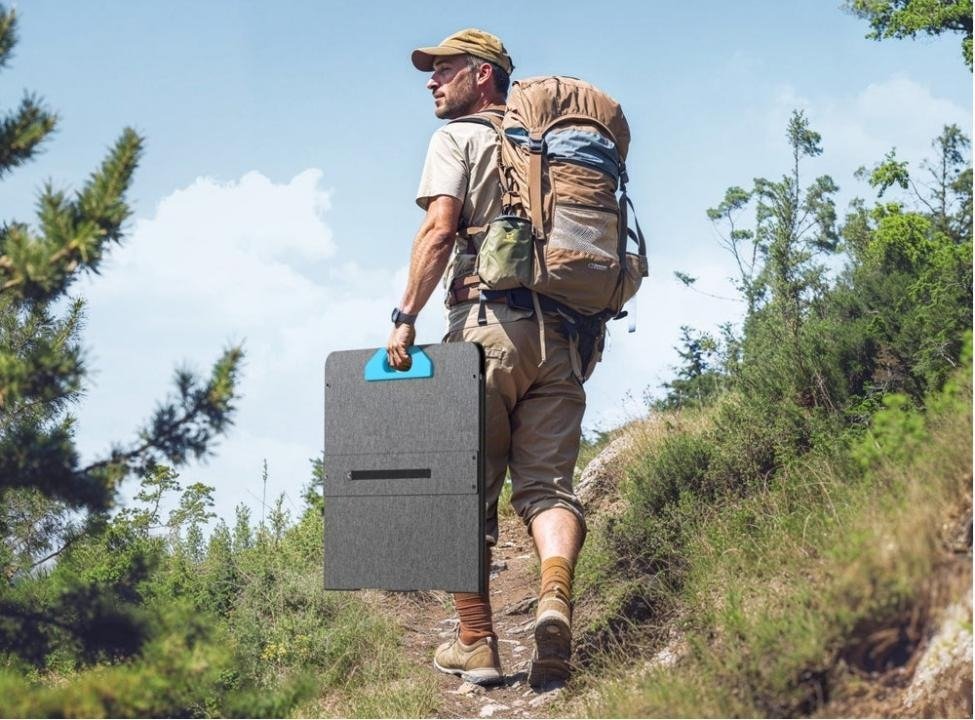
Travelers crave reliable power sources to keep devices charged during outdoor adventures. Portable solar panels provide just that, delivering green energy when miles away from outlets. They offer peace of mind, especially in remote areas. Selecting the right panel requires understanding specific needs and environments. Whether hiking in dense forests or camping in deserts, a suitable portable solar panel can keep essential devices running. Assess your power needs and consider weather durability and charging speeds in panels. This guide explores features, efficiency, compatibility, and design elements crucial for choosing the best portable solar panel. With the right choice, travelers of all types can ensure continuous power, supporting devices, and enhancing off-grid experiences.
Understand Your Power Needs as a Traveler
Before investing in a portable solar panel, travelers should evaluate their power requirements. Consider the devices you plan to charge, such as smartphones, cameras, or laptops. A solo backpacker might only need to power a few small devices, while a family camping trip could demand more energy for multiple gadgets. Prioritize your list of essential devices and determine how often you’ll need to recharge them. Device specifications often include battery capacity in milliampere-hours (mAh). Match these needs with the solar panel’s output rating, ensuring it can recharge your devices effectively. Additionally, think about location conditions—cloud cover and shading can impact charging efficiency. Understanding your power usage will streamline the process of finding a solar panel that caters to your specific travel scenario.
Key Features Travelers Should Look for in Portable Solar Panels
When choosing portable solar panels, travelers must prioritize wattage, efficiency, compatibility, and real-world performance. These aspects dictate how swiftly and effectively panels convert solar energy into electrical power.
Wattage, Output Stability, and Real-World Charging Speed
Wattage defines a solar panel’s potential power output; a higher wattage panel generally charges devices more quickly. Real-world charging speed can differ due to environmental factors, such as sunlight intensity. Panels like the Anker SOLIX PS200 capitalize on solar trapping technology to enhance charging speed, boasting up to 1.5 times faster outputs. Consistency of output, even under fluctuating sunlight, is vital. Panels that feature advanced technologies ensure stable power delivery, especially when charging a connected solar power bank. Your priority should be ensuring devices charge at optimal speeds despite potential solar changes.
Solar Cell Efficiency and Performance in Changing Environments
Solar cell efficiency determines how well a panel converts sunlight into usable power. Highly efficient monocrystalline cells, like those in Anker SOLIX, achieve up to 23% conversion efficiency, optimizing charging times significantly. Depending on your destinations, environmental conditions such as cloud cover, shade, or high temperatures may impede efficiency. The right panel performs consistently across diverse settings, avoiding energy output fluctuations. Assess efficiency ratings and learn about cell design and technology to predict panel performance. Choosing a model with adaptable features for various environments ensures travelers maintain power for their devices without interruption from changing solar conditions.
Compatibility With Portable Power Stations and Battery Banks
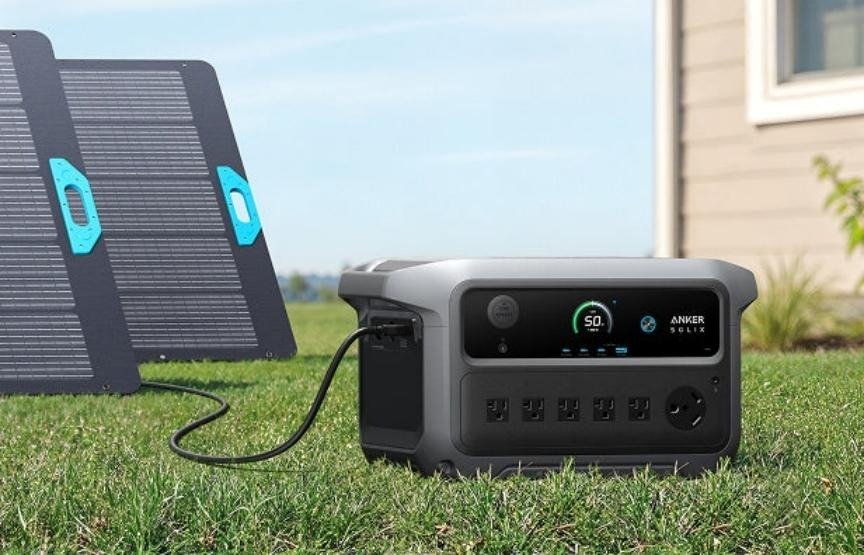
Compatibility is a critical factor when selecting a portable solar panel, as it determines how well the panel integrates with other power storage options. An ideal panel should work seamlessly with power stations and battery banks, enhancing its versatility during travel. For example, the Anker SOLIX easily connects with the Anker SOLIX C2000 Gen 2 for optimal off-grid energy storage. A compatible setup allows travelers to store power for later use, expanding the accessibility of renewable energy even during periods without sunlight. Examine the specifications of your devices and potential solar panel choices, ensuring compatible connectors and voltage outputs. A streamlined power system supports a broad range of charging needs, safeguarding device operation during prolonged trips.
Portability, Durability, and Travel-Friendly Design
Portability ensures convenience for travelers; panels should be easy to carry, set up, and use. Durability means the panel withstands harsh conditions, while design impacts usability during travel.
Foldable Panels, Weight, and Packability for Travel
Foldable solar panels offer simplicity and ease of transport for travelers. Such features enable panels to compactly fit in backpacks or bags, without adding excess clutter. The lightweight design of panels like Anker SOLIX ensures they don’t burden travelers on prolonged hikes or journeys. When folded, panels remain protected, preserving sensitive components. Evaluate the panel’s weight and packability when making a choice. Consider whether you need a panel that folds quickly or one that boasts extra features, even at the cost of added weight. An optimal blend provides travelers with a solution that both delivers energy and complements their travel gear efficiently.
Weather Resistance and Build Quality for Outdoor Conditions
Travelers often venture into environments with unpredictable weather, so choosing a panel that can withstand various elements is crucial. Features like Anker SOLIX’s IP67 waterproofing ensure panels resist damage from rain or humidity, bolstering durability. The build quality, including frame and backing materials, influences resistance to impact and wear, protecting the delicate solar cells. For camping trips or extended outdoor ventures, a weatherproof solar panel extends charging capability regardless of environmental challenges. Consider the harshest conditions you’ll encounter and select panels tested to endure such climates. Quality construction ensures travelers enjoy a prolonged lifespan and reliable energy delivery.
Easy Setup, Angle Adjustment, and Storage on the Go
Ease of setup enhances portability, enabling travelers to deploy panels quickly and efficiently. Panels offering angle adjustability, like Anker SOLIX’s options for 30°, 40°, 50°, or 80°, ensure maximum sunlight absorption. Such flexibility adapts to changing light conditions, improving energy capture at varying times of day. Look for systems that allow angle adjustments easily—beneficial for diverse location setups and optimizing solar exposure. Storage features, both during deployment and transit, impact convenience considerably. Check for efficient folding mechanisms and protective casings that facilitate safe and uncomplicated packing. Pre-trip experimentation with setting angles and storage methods ensures smooth, stress-free functionality when on-the-go.
Conclusion
Choosing the perfect portable solar panel enhances travel by ensuring consistent, Eco-friendly power access. Insight into power needs, preference for compatible features, and a focus on efficiency guide travelers toward the best-fit solar solution. Prioritize panels with reliable wattage, high conversion rates, and a flexible design suitable for diverse environments. Panels like Anker SOLIX, with their portable, adjustable, and durable features, embody ideal choices for explorers seeking uninterrupted energy access. A well-selected solar panel boosts travel experiences, maintaining device use and prolonging adventures. With these considerations, travelers are equipped to make informed choices, ensuring a steady power supply beyond the grid’s reach.