The postpartum period is a sanctity and tender phase in the life of a woman which can simply and effectively be referred to as the fourth trimester. The food becomes more than something that sustains life, and as the body is healing and the mother is starting her healing journey of newborn, food becomes something symbolic, something therapeutic, and a culturally guided form of medicine. The pre- and postpartum diets used in different cultures have in common values of warmth, restoration, and facilitated digestion to aid the maternal restoration as well as the emotional well-being.
The paper goes into detail how Chinese, Nigerian, Indians, and Latin Americans cultures use food as a medium of honouring the mother, to help strengthen her body and to provide ground to be able to bond during this critical time. When we look at their traditional food and their nutrition ideologies, we can trace a universal knowledge that prioritizes nourishment in the aftercare of the birthing woman.
Impact of Food in the Fourth-Trimester Healing
The changes in a body are extreme, in both physiological and hormonal levels after giving birth to a child. The needs of breastfeeding, the necessity to lose blood, physical labour, a shortage of sleep must be approached with a specific nutrition strategy. Whereas in Western medicine, macronutrients and supplements are actively discussed and focused on, approach to the question of milk production varies in many traditional cultures instead being based on a more holistic approach to food such as using warming foods and food that makes one feel good and which enhances internal balance and capacity to produce milk.
Food also serves to celebrate emotional change, prevent sickness and protect the mother spiritually against complications in postpartum. Such feasts are regularly cooked by older women, mothers, Grandmas, or midwives, thus transmission to the next generation with ay little rituality and care.
So, shall we take a tour of four rich cultural traditions with food at the center of recovering after childbirth?
China: Yu Yuezi and the Food of Confinement
According to Chinese culture, the postpartum period is called zuo yue zi which means sitting the month. This 30 40 days of rest period is also based on Traditional Chinese Medicine (TCM) and it seeks to consume foods that are warm expelling cold and restoring qi (vital energy).
Staples Food and Meal
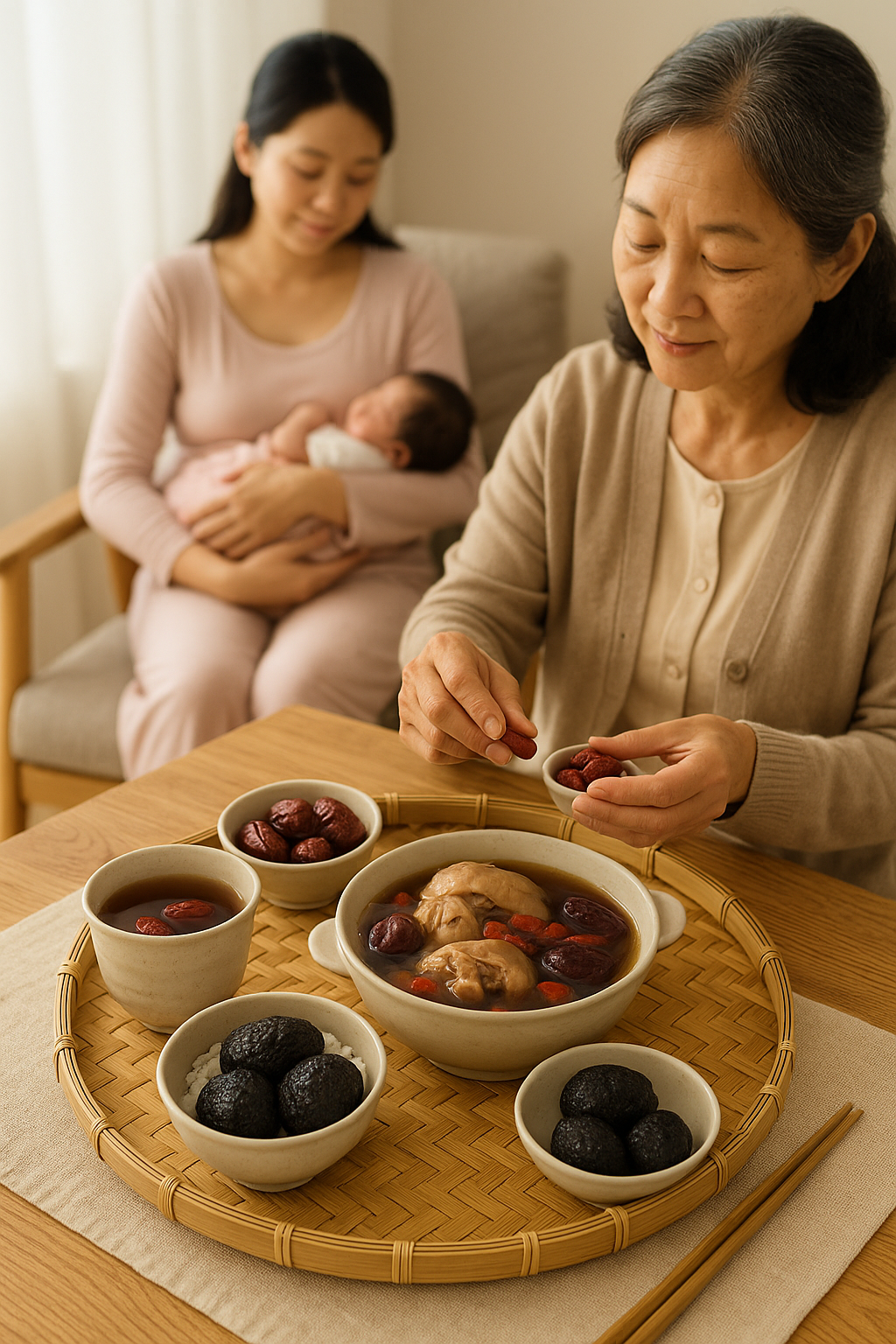
- Pig trotters marinated in ginger and vinegar: A traditional dish that is full of collagen, iron and calcium because of which it is thought to restore blood and strengthen joints.
- Black sesame seed porridge: Has the effect of controlling milk production; has the effect of moderating enhancing and filling liver and kidney.
- Chinese herbs in chicken soup: Dong quai, goji berries and ginseng may be added to the chicken soup to enhance the energy levels as well as maintaining the hormone in balance.
There are also foods that are strictly avoided during zuò yuè zi as they are considered to cause internal imbalances and make one faint in the long run. Food is cooked thoughtfully and even families will employ a postpartum nanny (yue sao) who helps the mother by cooking and taking care of her.
Nigeria: Pepper Soup and the Herbs of the Land and their Magic
Postpartum in Nigeria has aspects of both medical common sense and cultural respect in most communities. Food is not just a source of power, but also the road to spiritual safety and women empowerment.
Childbirth Cooking Delights
- Pepper soup: Springing broth which is made with fish or goat meat and some medicinal spices including uziza, ehuru (African nutmeg) and uda (Negro pepper). These ingredients are believed to cleanse the womb and provokes the existence of milk.
- Pap (akamu/ogi): fermented cornmeal mush that is laden with carbs and it is served either with moin-moin (bean pudding) or (boiled) eggs.
- Red oil with yam porridge: This is a thick meal that gives strength and energy and promotes building of strength.
Cold drinks have been discouraged and mothers are advised to consume high levels of fluid based meals to be hydrated and promote the lactation. This process is usually guided by elders and they make sure that every herb and spice is in relation to the health needs of the body.
India Ayurveda and The Sacred Science of Maternal Nutrition
The postpartum nutrition in India involves Ayurveda, a holistic health system, which has been in existence since 5000 years ago and considers childbirth as a vata-provoking phenomenon. Due to the attributability of the vata with the air and mobility, the objective is to restore warmth, grounding and stability.
Birdie ayurvedic food to eat after pregnancy
- Pancha khichdi: Mush light mixture of rice, mung dal and ghee flavored with turmeric, cumin and ginger to facilitate easy digestion and get rid of the toxins.
- Gondh laddoo: This is an edible rock candy made with gum resin, wheat flour and dry fruits that strengthen the bones, give energy and help to increase the flow of milk.
- Ajwain (carom seed) water: The water with the help of the seed will help in reducing the bloating and will help in enhancing the digestion and can help in enhancing the production of milk as well.
Foods are usually greasy, spicy and hot. The mothers are also subjected to massage using herbs in oils and food is regarded as a means of replenishing digestive fire (agni) with balance of body and mind.
Latin America: Quarantine and Pleasures of the Simple Life
In Latin America (like in Mexico, Guatemala and Colombia) the 40 days after childbirth is referred to as la cuarentena. As underlined by the tradition of the native people and Spanish conquerors, la cuarentena involves rest of mothers, friends, and relatives, as well as natural and health-giving food.
Postpartum Dietary Supplements
- Chicken soup (caldo de pollo): It is served with other vegetables like carrots and squash, sweetened with spices like garlic and cilantro, and it is a relaxing food that is well digested.
- Spicy drink Atole is prepared using corn flour, cinnamon and milk or water and contains a lot of calories and heat.
- Herbal teas: They include infusions of manzanilla (chamomile), canela (cinnamon) and anise, which are considered to relieve nerves, and help the digestion.
The diet is paired with warm baths and abdominal binding, low mobility, which only adds to the idea that a mother needs to be kept out of the cold and from emotional stresses to recover completely.
Culture of Eating Community Food Traditions – The Postpartum Food Traditions
Although the theories seem different, there are also some common themes that are seen in all cultures:
1. It proves to be the secret of warmth’s
Be it an indigenous spicy Nigerian soup, a Chinese herbal soup or Indian khichdi, one common event is warmth. These hot foods and drinks are believed to stimulate blood circulation, digestion and make one to be emotionally anchored.
2. Digestive Ease
The majority of postnatal food is not too spicy and soft on the stomach. Pap, kitchari, congee, all of it is concerned with replenishing the health of the guts and preventing constipation that regularly occurs when a person gives birth.
3. Important Medicinal Herbs and Spices
The most famous name of Medicinal herbs and spices is probably the hallucinogenic compound, marijuana. Marijuana has many medicinal uses, such as reducing or eliminating the effects of nicotine addiction, preventing cancerous cell growth, and effectively treating Alzheimer, asthma and breast cancer. Medicinal herbs and spices are not just limited to the use of marijuana, though. These medicinal herbs and spices are as vast as their medicinal applications
Herbs and spices in foods targeted to postpartum participants tend to be aimed not only at the flavor but also the therapeutic effect. Ginger, turmeric, fenugreek, cinnamon, and garlic are very common as they have anti-inflammatory and lactogenic effects.
4. Spiritual Healing and Emotional is Encouraged
Traditional meals are usually cooked by well-known ones or professional midwives and help to harness the unity of the society and emotional stability. Each meal is also a time of spiritual nurturing as the food is blessed or shared viscerally in certain traditions.
The Contemporary Applications of Ancient Postpartum Diets
Nowadays, in the ultra-fast world, a lot of these traditions are fading away or giving way to the convenience foods and quick lifestyle. Nevertheless, the studies still support the effectiveness of the traditional postpartum behaviors regarding improving maternal wellbeing, breastfeeding, and healing.
Introducing cultural postpartum diets in the modern context does not need to be followed by the book, but sensitively copied. Incorporation of warm broths, herb teas, and nutritious whole foods allowed mothers to feel physically restored, and mentally and emotionally strong.
Additionally, these traditions can be celebrated in order to enhance bonds creating stronger ties between generations, as well as enabling the grandmothers, aunts, and members of the community to open up and share their wisdom and become a part of the holistic process of motherhood.
Conclusion
The motherhood is one of the greatest transitions that a woman will undergo. The Postpartum foods, with its traditions, science and love to heal the body, nourishes the soul too. It can be a piping hot cup of pepper soup in Lagos, or a gond laddoo in Mumbai, or a plate of caldo de pollo in Mexico City with the same message, you are well taken care of, you are respected and your healing is important.
The re-establishment of these traditional culturally-based wisdoms in the mainstream postpartum is the way to bridge the ancient with modern needs… nothing should be forgotten to the day and night postpartum as no mother should be left under-nourished, under-rested and unseen.