Introduction
The fabric of the print media in Nigeria dates back before the invention of the modern national dailies. It begins with a radical, adventurous trial in Abeokuta in 1859, when Rev. Henry Townsend began Iwe Irohin Fun Awon Ara Egba Ati Yjmoruba. It was not just a newspaper, but an educational resource, a cultural landmark, and a source of enlightenment to the masses. It became the start of a tradition that will later become a part of Nigerian journalism history, the history that can be re-read by scholars and readers to comprehend the roots of Nigerian media culture.
Nigeria’s journalism history was significantly shaped by the 20th century’s political landscape. The political situation of the 20th century was influential in defining journalism history in Nigeria.
Townsend aimed at nothing complex but deep. He wanted to teach people how to read and write, and develop the habit of remaining in the know among the local people. More than 160 years on, the legacy of this pioneer newspaper still influences literacy, development of indigenous languages, and ability of the population to access information.
The Birth of Iwe Irohin: Education-Based Vision
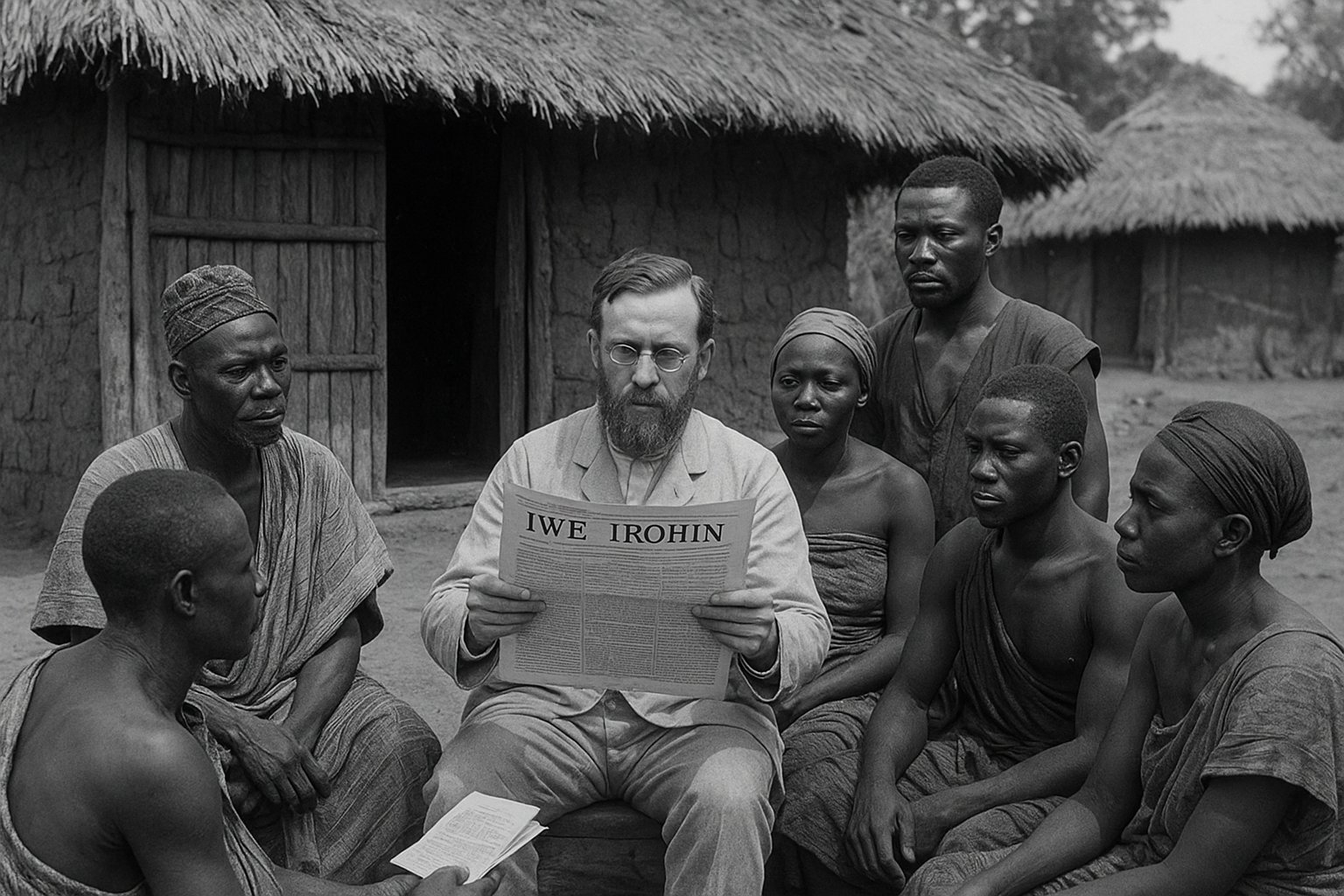
The British missionary of the Church Missionary Society (CMS) called Rev. Henry Townsend knew the strength of press as a light-enforcing tool. It was first published in Yoruba and aimed at the Egba community in Abeokuta when he started Iwe Irohin on December 3, 1859. The initial problems were humble two-page issues, which were printed every two weeks, yet the significance of them in culture was gigantic.
Townsend was motivated by years of experience dealing with local communities. He noted that reading and writing were not only empowerment skills, but also access to active involvement in the life of the community. Later on, as he explained, he wanted to instil the habit of the Egba people to seek information through reading.
The newspaper soon attained a following through its explicit manner, ethical approaches, and usefulness. It published:
- local news
- government notices
- reports on trade
- missionary updates
- market prices
- educational commentary
Such balanced mix enabled Iwe Irohin to become relevant and relatable to its original readers.
The Story of Promoting Literacy: A Revolutionary Move in the 19th Century
Fostering the Culture of Reading
Prior to the year 1859, the literacy rate in much of the present-day Nigeria was abysmal. There was little written communication, particularly in local languages. With the introduction of Iwe Irohin, this picture was revolutionized.
The newspaper was a source of encouragement to many individuals to learn how to read. Adults, youths, and even the elderly members of society attended newly started mission just because they wanted to know what the newspaper was referring to.
In less than a few years, the literacy level in Yoruba by the Egba community started to increase significantly. It was also not intimidating to learn, knowing that the paper was published in a language one was already familiar with and that it had a reason.
Making Education Practical
Literacy ceased being an abstract skill and now had a practical meaning. Information in the newspaper gave the readers a chance to interact with the world surrounding them. They got to know of trade opportunities, political events, and social problems.
Iwe Irohin was also used by teachers in the classrooms as reading material. It turned out to be one of the first educational materials for Yoruba–speaking students.
Funding of Indigenous Language Development
Making Yoruba a Medium of Public Communication
Among the greatest contributions of Iwe Irohin was the fact that it contributed to making Yoruba richer and standard as a written language.
Prior to the introduction of the Yoruba–language publications by Townsend and his colleagues, there was irregular spelling, and written sources were rare. This was altered when Iwe Irohin embraced a common system of writing and propagated the language extensively through print.
The newspaper helped:
- standardize Yoruba spelling
- introduce new vocabulary
- create written texts of ideas of governance, economy, and religion
Promoting Cultural Expressivity
Since it contained information in the Yoruba language, the newspaper enabled the readers to consume information in a context that they identify with as part of their cultural identity. It showed the indigenous languages could convey and articulate complex concepts, in opposition to the colonial beliefs that the local languages could not serve intellectual discussion.
With time, Iwe Irohin was able to encourage the establishment of other native language newspapers in the region. Such newspapers served to maintain the African language and pride in culture.
Changing Public Information Dissemination
Publicity of Trustworthy News and Public Notices
In Nigerian Journalism History, majority of Nigerians in the middle of the 19th century depended on oral communication sources, which included town criers, community elders, and marketplaces as their news sources. Iwe Irohin brought up a new system which was more reliable.
The newspaper was the primary source of information that was verified in Abeokuta and beyond. It reported on:
- local political events
- resolutions of orthodox councils
- missionary activities
- alterations in commercial routes
- colonial sources of messages
This means of communication increased the level of transparency and minimized misinformation.
Bridging Communities
Although this began with the Egba people, Iwe Irohin was later extended when an English language supplement was added in 1860. This dual strategy enabled the newspaper to be read by native population and the European population.
The English version featured such events as:
- missionary expeditions
- trade reports
- occurrences in Lagos
- International news that was transmitted through missionary correspondence
This interrelation between various people stimulated the knowledge and expanded the scale of the newspaper.
The Development, Problems, and History of Iwe Irohin
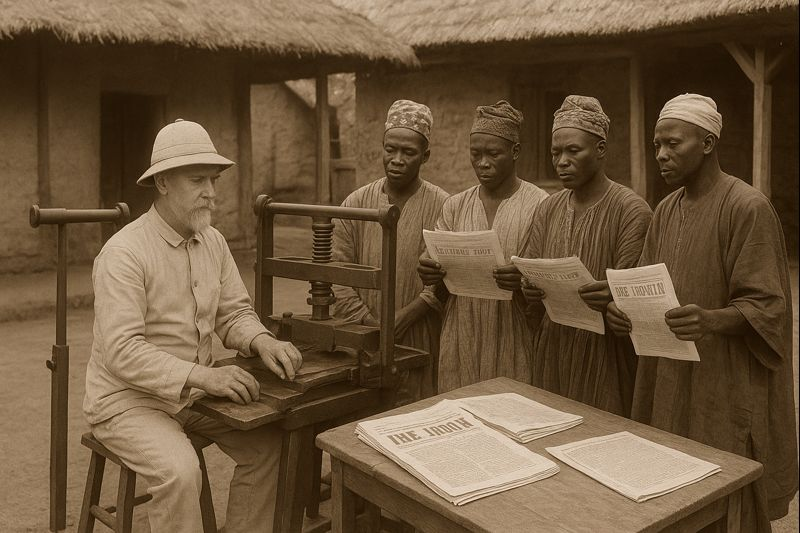
Although it was successful, Iwe Irohin was not without a challenge. The most notable one happened in the course of the 1867 war between Egba people and the British administration. Mission property, such as the printing press, was also attacked. The newspaper was closed down in the same year.
But long in its short existence, its legacy lingered.
Major Legacies
A Designer of Newspapers to Come
Following the publication of Iwe Irohin, a number of other publications followed as an inspiration of its design and applicability. Newspapers like:
- The Anglo-African
- The Lagos Times
- The Observer
carried on the spirit of project enlightenment which Townsend had founded.
Principles of Nationalist Journalism
In Nigerian journalism history, the education and enlightenment instilled by Iwe Irohin subsequently produced an educated reading public of nationalistic presses at the beginning of the 20th century. The culture of reading that Iwe Irohin had contributed to was developed by writers such as Herbert Macaulay, Nnamdi Azikiwe, and Obafemi Awolowo.
Empowering Cultural and Intellectual Identity
Iwe Irohin had paved the way to a tradition of African–language media that has flourished in radio, television, and online media since it established that indigenous–language journalism was viable and successful.
The Greater Social Influence and Persistence of Iwe Irohin Education
In Nigerian journalism history, Iwe Irohin had a much broader social impact that extended beyond its pages every fortnight. It slowly influenced the perception of information, communication with the surrounding community, and the perception of literacy as a useful tool among the people.
The paper made people anticipate the readings or the information to be read in the newspaper with eagerness. This expectation enhanced closer relationship between the community and flow of information. The literate were used as informal interpreters to the illiterate and this stimulated the shared knowledge on occurrences that formed the Egba community.
The meetings taking place around the newspaper generated social discussions on issues like commerce, governance and life within the society. It also reinforced the concept that information could be exchanged openly and this was one of the first transitions to structured communication among people.
Through the existence of Iwe Irohin, mission schools and learning centres developed since the families now saw the necessity of learning to read and write as a form of empowerment. Children and adults were going to classes with the aspiration of knowing what the newspaper reported.
Consequently, reading and writing started to have a practical use in everyday life. It was also advantageous to the local traders as they also embraced the use of written communication to keep accounts and record business activities, and this enhanced commercial accuracy in the area.
The Yoruba language was also accorded a new cultural pride. It revealed that the local stories, events, and knowledge system were significant enough to be printed, shared, and stored. This confidence inspired the subsequent generation of writers, educators and cultural preservers to keep on producing indigenous literature.
Conclusion
In the history of Nigerian journalism, the legacy of Iwe Irohin is overall attributed to the fact that it changed the way people perceived literacy, culture and the worth of information. Even though its publication was terminated in 1867, its basis on the written communication, development of the indigenous language and knowledgeable citizenship kept on expanding over generations.
The knowledge that the newspaper placed as a community resource inspired later nationalistic publishers who broadened the newspaper tradition in Nigeria. Iwe Irohin was a pioneer in printing in all respects, but a permanent element that influenced the formation of Nigerian journalism and enhanced the cultural and intellectual identity of the population.