Introduction
Nigeria has over 250 ethnic groups, each of them having their own traditions, languages, beliefs, artistic manifestations. The pressures of globalization, urbanization and modern way of life have not eroded the cultural heritage of the Nigerians, festivals and celebrations are used to revere the Nigerian culture. These festivals are historical archives to the community, which enhance the community sense of identity, passing values across generations, and fostering cohesion in diversity. They are not entertainment shows; they are traditional institutions of culture, which mirror the worldview, spirituality and social structure of different Nigerian societies.
Nigeria cultural festivals are rituals and music and dance mixed with costumes, oral storytelling, masquerades, food, and community involvement. These aspects contribute to the fact that festivals remind communities about their roots, commemorate their ancestors, celebrate the agricultural seasons, and reexamine moral and social values. Nigerian festivals and cultural heritage have also been on the international spotlight over the past years, which have helped in the growth of tourism and cultural diplomacy.
This article will discuss the way in which festivals are used as cultural preservation in Nigeria through looking into the origin of the festival, the rituals, and the meaning of the festival. It also puts into focus the importance of major Nigerian festivals and cultural heritage as a source of tourism, education and the passing of history and values across generations.
The Cultural Significance of Festivals in the Nigerian Society
One of the main places in the life of traditional Nigerians is occupied by festivals. The calendar year in most communities is organized in such a manner that it is a series of major cultural celebrations reflecting important events in the life of a community like harvests, religious festivals, victory, coronations and rites of passage. The festivals are usually spiritual in nature in which the physical world is connected to the ancestral and supernatural worlds.
Conventionally, festivals are times of social unity, reconciliation and regeneration. At times of festivals, conflict is resolved, group affiliation is enhanced, and identity is reinforced. The elders are important in terms of preserving tradition as care takers, practiced in terms of performance, dances, and rituals by the youths who ensure continuity of cultural knowledge.
Festivals are also informal systems of education. Songs, chants, masquerade shows, storytelling amongst others relay moral teachings, social norms, and historical stories in a memorable and interesting manner. This renders festivals effective in conservation of intangible cultural heritage.
The History and Customs of Nigerian Festivals
Majority of the Nigerian festivals were founded on religious belief, farming activities and historical experiences. Prior to the arrival of Christianity and Islam, most of the societies in Nigeria had indigenous religions that stressed on the worship of gods, ancestors and forces of nature. The festivals were arranged to please gods, thank about harvest, protect or honor important communal events.
These Nigerian festivals and cultural heritage revolve around rituals which in many cases include sacrifices, prayers, symbolic dances and the use of sacred objects. Similar events like masquerades, which are popular in most Nigerian societies, are said to be the ghosts of their ancestors who have come back to communicate with the living. The costumes, masks, and acts of masquerades are heavily symbolic in terms of spirituality and artistic design.
Although the religious and cultural practices in the Nigerian setting have changed over the years even in modern times, a lot of festivals still uphold their traditional practices albeit with some modern touch. This flexibility has contributed to the fact that festivals have been important and are also relevant within generations.
Nigeria has significant Cultural Festivals
There are many Nigerian festivals and cultural heritage depending on the regions; each of them represents the history and values of people. The following are some of the most outstanding festivals:
The Osun-Osogbo Festival
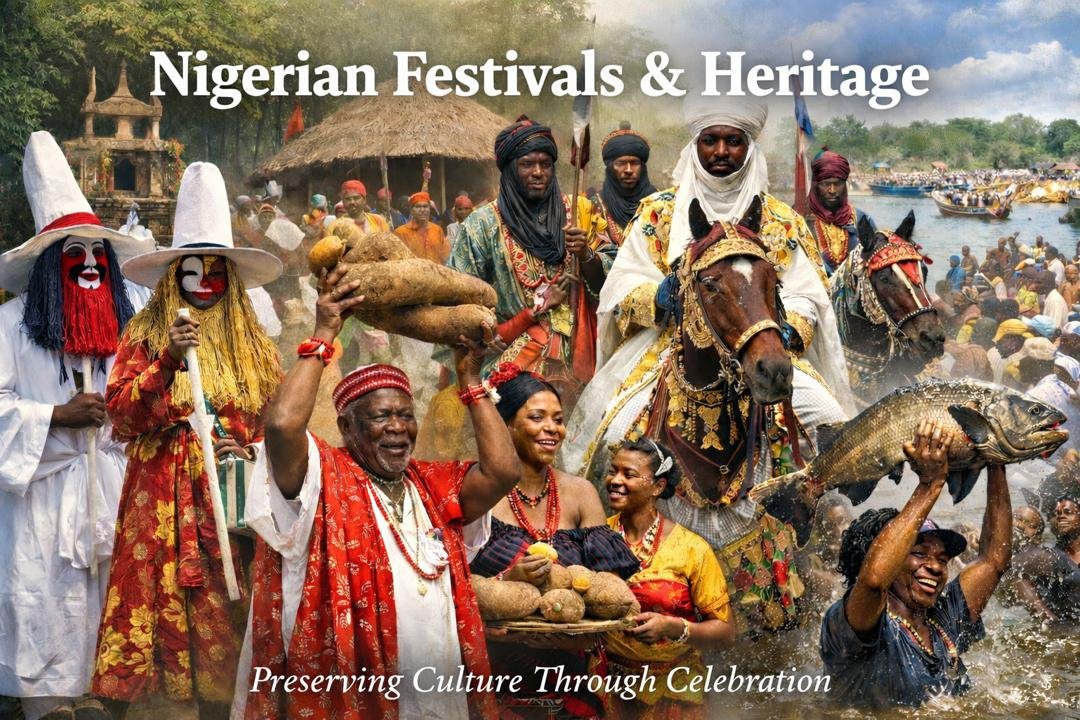
One of the most known cultural celebrations in Nigeria is the Osun-Osogbo festival. It is celebrated every year in Osuno, Osun State, in honor of Osun, the Yoruba fertility, water and prosperity goddess. The festival is more than 700 years old, and it is deeply entrenched with the Yoruba traditional religion.
The celebration lasts two weeks and entails ritual cleansing of the town, arts and crafts, traditional music and a massive procession to the Osun Sacred Grove a UNESCO world heritage site. The performing priestess, who is virgin, takes the sacrificial offerings to the river goddess, which symbolizes the purity and the common devotion. It is important to note that the Osun-Osogbo Festival is also a way of saving the Yoruba spirituality, art, and identity. It is also the biggest contributor to cultural tourism in Nigeria as it attracts thousands of tourists, scholars and lovers of culture across the globe.
The Fishing Festival in Argungu
The Argentungu Fishing Festival is an occasion of the Hausa of Kebbi State. It was founded in 1934 in order to peacefully unite the Sokoto Caliphate and the Kebbi Kingdom. The festival focuses on a competition in fishing activity in the Matan Fada River where fishermen employ traditional fishing equipment in order to fish within a specified time.
The festival also involves music, wrestling, boat race as well as cultural exhibitions in addition to fishing. It is a sign of unity, harmony and peace among communities. The Argungu Festival is focused on the significance of water resources, the traditional way of life and the community cooperation. Being one of the most iconic festivals in Nigeria, Argungu became a significant tourist destination, which exhibits the culture of the North of Nigeria and enriches the local economies.
The New Yam Festival (Iri Ji / Iwa Ji)
The New Yam festival is a common event among the Igbo of southeastern Nigeria. It is the completion of the agricultural year and the starting of a new agricultural period. The Igbo culture regards yams as a sign of wealth, labor and masculinity.
The festival entails giving out the first yams to gods and ancestors prior to eating by the people. The celebration is done with traditional dances, masquerades, feasting and cultural performances. The elders make blessings to the land and invoke prosperity of the coming year. The New Yam Festival solidifies the values of agriculture, appreciation of tradition and the appreciation of the gods. It is also used as a means of educating the young generation about the history of farming and community accountability.
The Durbar Festival
Dubar Festival is a festival that is celebrated in some of the cities in the north of Nigeria like Kano, Zaria, Katsina, and Sokoto. It is linked with such Islamic celebrations as Eid al-Fitr and Eid al-Adha and can be traced back to the period of ancient emirates.
Durbar has colorful horse processions, traditional costumes and horsemanship exhibitions. Emirs and traditional rulers are at the head of the procession and they are the representatives of authority, discipline and continuation of culture. The festival also maintains the equestrian culture of the north Nigeria and the value of traditional leadership. It also captures both local and international tourists, which adds a lot to the cultural tourism around the area.
The Eyo Festival
The Eyo Festival or the Adamu Orisha Play is a festival peculiar to the Yoruba people and Lagos. It is commonly denoted to celebrate the death of a great chief or king or to celebrate important historical events. Eyo masquerades are participants who wear white flowing robes and hats accompanied by staffs called opambata. The festival is an indicator of the history of Lagos, social hierarchy and spiritual beliefs.
The Eyo Festival, in spite of the modernization that is taking place quicker in Lagos, is a powerful sign of the native identity and cultural pride among its residents to remind them of the traditional background of the city.
Festivals as a Means of Cultural Conservation
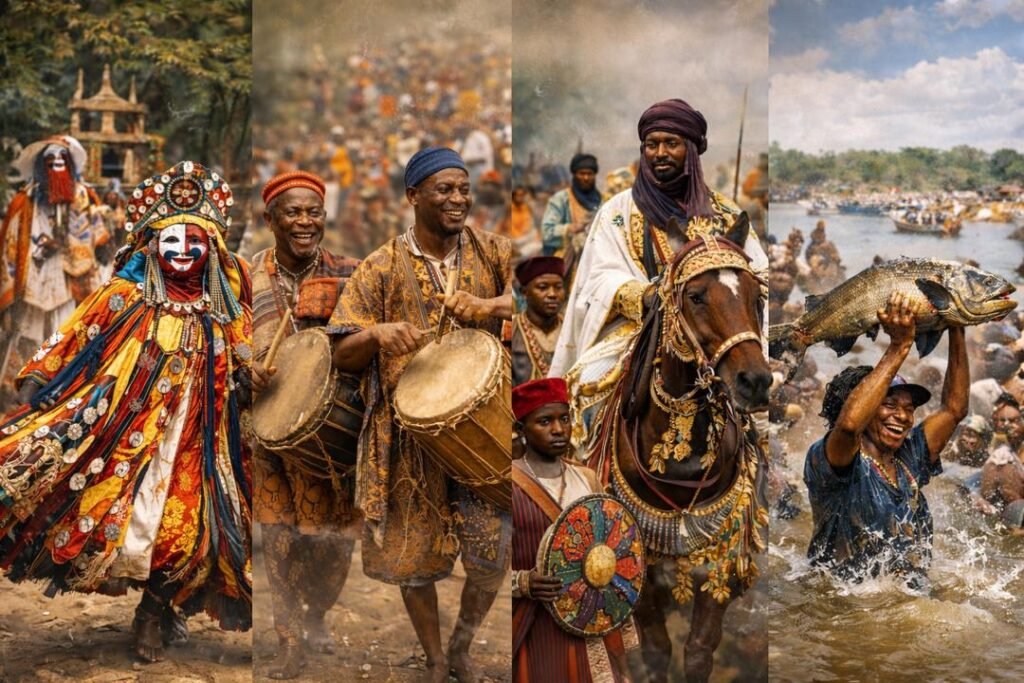
Festivals contribute to the preservation of the Nigerian culture since it does not just preserve it on paper but also in practice. Rituals, songs and dances are passed on and remembered through repetition. Festivals also keep alive such traditional crafts as weaving, carving, bead-making and costume design. The other important advantage is language preservation. Numerous festivals are organized in native languages, which make them be used more by younger generations. During festivals, proverbs, chants and praise poems are very rich in culture and would have been lost.
In addition, the values that are strengthened by festivals include the respect of elders, hospitality, courage, hard work, and moral discipline. The stories and plays that are performed at celebrations have these values.
Advancement to Tourism and Economic Development
Nigeria has started to rely on culture as a tourist attraction. Such events as the Osun-Osogbo Festival, Argungu Fishing Festival and Calabar Carnival receive thousands of visitors each year. The funds that tourists use are accommodation, transport, food, crafts, and entertainment, which generate income to the local communities.
Festivals are now being considered by governments and other cultural organizations as an instrument of economic development and national branding. Through marketing festivals to foreign countries, Nigeria is able to sell its cultural diversity and innovative heritage.
History and Values Intergenerational
Among the most important purposes of festivals is that they are a means of passing cultural knowledge through generations. The elders take the festivals as a chance to educate history, lineage and traditions and teachings. The youth are also taught by watching, engaging, and narration.
Festivals offer continuity and sense of belonging in an ever changing world. It is through them that the younger Nigerians can learn the origins of their culture and feel proud of their culture despite their interactions with other cultures included in the global world.
Conclusion
The celebrations and festivals are important tools in the conservation of the Nigerian culture. The Nigerian festivals and cultural heritage are living symbols of history, belief systems, and social values, through their origins, rituals, and communal value. They reinforce cultural identity, facilitate cohesiveness and offer forums of economic and tourism growth.
This way Nigerians are able to perpetuate and propagate traditional cultural festivals since they are not lost to time but develop to remain in their original meanings. By doing so, festivals have continued to act as potent links in the past, present, as well as the future, which has kept the rich heritage of Nigeria intact to the generation yet to come.
Get more well researched information about Nigeria’s Cultural Heritage here