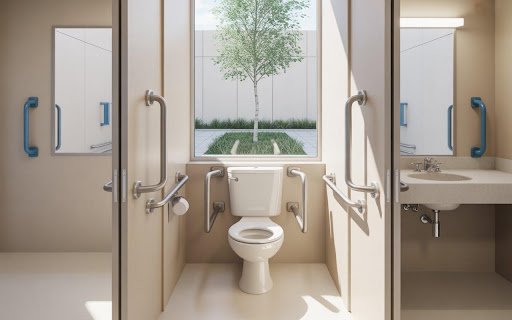
Creating inclusive and accessible spaces is no longer just a commendable goal; it’s a fundamental requirement in modern building design. For professionals in architecture, construction, and interior design, understanding the specific handicap washroom requirements BC mandates is crucial. It’s about more than just compliance; it’s about crafting environments that genuinely serve everyone, reflecting a commitment to equity and usability in every project.
British Columbia has progressive building codes that aim to eliminate barriers for people with disabilities. These codes are regularly updated to ensure that public and commercial spaces are truly accessible. Ignoring these guidelines not only risks project delays and costly redesigns but also fails to meet the ethical standards expected in today’s sustainable construction practices. This article will delve into the essential aspects of BC’s accessibility standards for washrooms, offering practical insights to help you navigate these requirements seamlessly.
The Foundation: Understanding BC Building Code Accessibility Standards
The British Columbia Building Code (BCBC) is the primary document outlining the handicap washroom requirements BC adheres to. It draws heavily from the National Building Code of Canada (NBCC) but includes specific provincial amendments. For washrooms, the key sections focus on everything from clear floor spaces and grab bar specifications to fixture heights and door clearances.
The overarching principle is to ensure that individuals using wheelchairs, walkers, or other mobility aids can navigate, use, and exit the washroom independently and safely. This impacts every stage of building design, from initial conceptualization to the final material selection.
Key Dimensions and Clearances: Making Space for Everyone
One of the most critical aspects of accessible washroom design revolves around spatial considerations. Adequate maneuvering room is paramount.
- Doorways: All washroom doors must have a minimum clear opening width. This ensures easy passage for wheelchairs. Lever-style handles are often preferred over knob handles, as they are easier to operate for individuals with limited dexterity.
- Turning Space: Within the washroom, a clear turning space (typically a 1500mm diameter circle) must be provided. This allows a person in a wheelchair to fully turn around without obstruction. This often dictates the overall footprint of the washroom.
- Fixture Clearances: Specific clear floor spaces are required around toilets, lavatories, and showers. For instance, a clear space beside and in front of the toilet is essential for transfers.
Understanding these precise measurements is vital for your architectural specifications. Miscalculations here can lead to significant revisions down the line.
Fixtures and Fittings: Designed for Usability
The selection and placement of fixtures are equally important in meeting handicap washroom requirements BC.
- Toilets:
- Height: Accessible toilets are typically higher than standard toilets, making transfers easier. The seat height usually ranges from 430mm to 480mm from the floor.
- Grab Bars: This is a non-negotiable. Grab bars must be installed beside and behind the toilet, designed to provide support during transfers. Their specific lengths, diameters, and mounting heights are detailed in the BCBC.
- Lavatories (Sinks):
- Clearance Underneath: Sinks must allow for knee and toe clearance beneath, enabling a wheelchair user to approach comfortably. Exposed hot water pipes should be insulated to prevent burns.
- Height: The rim of the lavatory should be at an accessible height, typically between 810mm and 865mm from the floor.
- Faucets: Lever-operated, push-button, or sensor-activated faucets are required, as they do not require tight grasping or twisting of the wrist.
- Accessories:
- Mirrors: Tilted mirrors or mirrors extending low enough for both standing and seated users are ideal.
- Dispensers: Soap, paper towel, and hand dryer dispensers must be mounted at accessible heights and be operable with minimal force.
- Emergency Call Systems: In larger accessible washrooms, particularly in public buildings, an emergency call system (e.g., a pull cord) that reaches to the floor is often required.
Showers and Bathtubs: Inclusive Personal Care
Where showers or bathtubs are included in accessible washrooms (e.g., in hotels, care facilities, or private residences designed for accessibility), they too have specific requirements.
- Roll-in Showers: These are often preferred as they eliminate curbs, allowing for easy access for wheelchairs. They require specific dimensions, grab bar configurations, and shower seat installations.
- Transfer Showers: For showers with a small curb, specific transfer seats and grab bar layouts are necessary.
- Bathtubs: Accessible bathtubs require grab bars and often a built-in or portable transfer bench.
Considering these details from the outset can significantly streamline your engineering solutions and avoid costly retrofits.
For Digital Marketing Visit Our Promatic Tech
Beyond the Code: Best Practices in Accessible Design
While meeting the handicap washroom requirements BC mandates is the baseline, truly excellent design goes further.
- Contrasting Colours: Using contrasting colours for grab bars, toilet seats, and floor finishes can assist individuals with visual impairments.
- Tactile and Braille Signage: Clear and appropriately placed signage, including tactile and Braille elements, is essential for wayfinding.
- Lighting: Uniform and glare-free lighting is crucial for all users.
- Maintenance: Consider the long-term maintenance of accessible features. Are grab bars securely fastened? Are sensor-activated faucets reliable?
Thinking holistically about the user experience elevates your design from merely compliant to genuinely inclusive. For instance, considering the latest interior design trends in conjunction with accessibility can lead to aesthetically pleasing and functional spaces.
The Role of ATS in Ensuring Compliance
Navigating the complexities of building codes and ensuring every detail aligns with accessibility standards can be challenging. This is where expert guidance becomes invaluable. Companies like ATS specialize in providing comprehensive architectural specifications and technical support to ensure your projects not only meet but exceed code requirements. Their expertise in interpreting and applying the latest BC Building Code amendments, particularly concerning handicap washroom requirements BC, can save you time, money, and potential headaches. Relying on such partners ensures that your designs are robust, compliant, and truly barrier-free from the ground up.
Conclusion: Building a More Accessible British Columbia
Designing accessible washrooms is an integral part of responsible and forward-thinking building design. By diligently adhering to the handicap washroom requirements BC outlines, and by embracing best practices that go beyond mere compliance, architects, builders, and designers play a vital role in creating a more inclusive British Columbia. These efforts not only benefit individuals with disabilities but also enhance the functionality and value of every building for all users. It’s a testament to professional excellence and a commitment to universal design principles.