Introduction
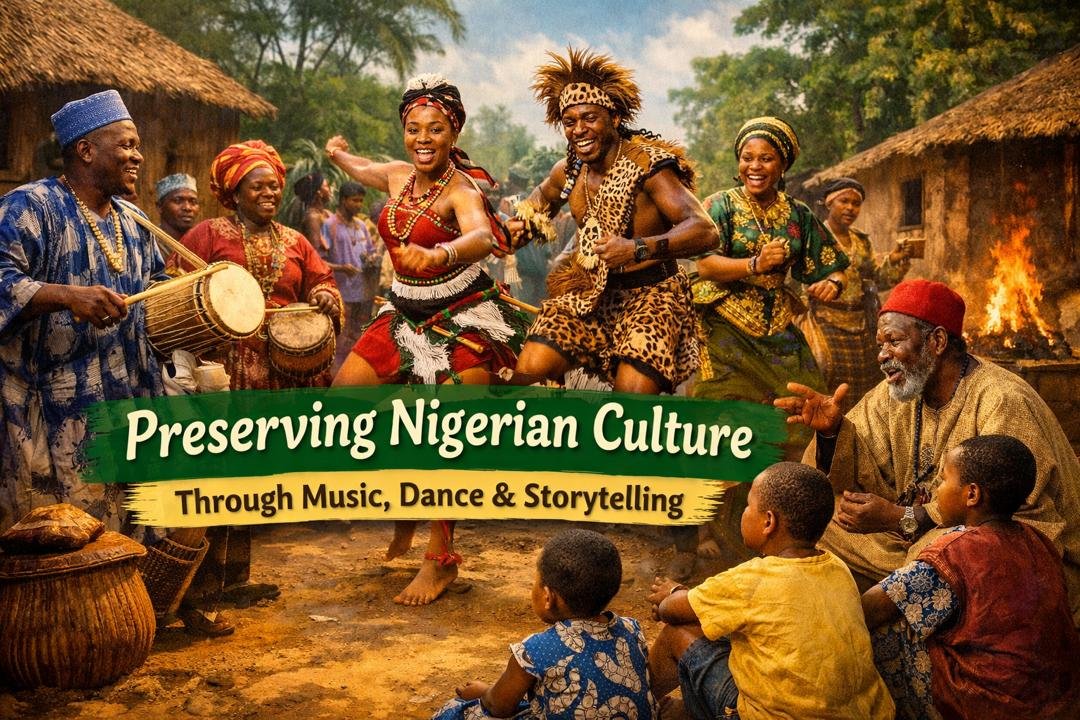
Nigeria is a culturally diverse nation and it has more than 250 ethnic groups and each group has its own unique traditions, language and forms of art. Nigerian music and oral traditions are some of the strongest and oldest instruments of cultural representation in Nigeria. These factors have been important in identity formation, education of young generations, history passing as well as reinforcement of morals even before written documents came into being. In the traditional society in Nigeria, culture does not just exist in classrooms, it is practiced, acted, sang and danced.
Music, dance and oral story telling serve as cultural archives where there is storing of the shared experiences of communities. They are the medium of the transmission of beliefs, social norms, religious practices as well as historical memories. With oral communication being the main method of communication throughout the centuries, these forms of art were critical in ensuring continuity and cohesiveness.
This paper examines the role of music, dance, storytelling and oral history in preserving the Nigerian culture. It discusses their role in education, social and spiritual life and the ways they continue to influence Nigerian identity both in the traditional and modern environment.
The Nigerian Cultural Significance of Music
Music plays a central role in the life of the Nigerians. It is not just entertainment but an effective tool of communication, expression and social organization. Music is present in all life cycles of the Nigerian societies since birth up to death.
Music as the means of Communication
Music is the language in most Nigerian cultures. Examples of communications between villages include the use of drums. The Yoruba talking drum (Gangan) is capable of replicating the human speech patterns so that the drummer could pass praise, warnings or announcements. Knowing the Igbo land, the ekwe drum has the same functions as well as the Hausa who use instruments such as kalangu to communicate and during ceremonies.
There are also social messages that are conveyed through the use of songs. Musicians discuss ethical behaviour, societal injustice, romance, leadership and unity in the community through lyrics. Traditional musicians usually perform the role of a social commentator and commend the good deed and denounce the bad one.
Ceremonies and Rituals Music
Nigerian music and oral traditions is very crucial in ritual like marriage, burials, celebrations, initiation and coronation. Every event is accompanied by certain songs and rhythms. To illustrate, in the customary wedding ceremonies, music glorifies union, procreation and lineage. During funerals, slow rhythmic songs aid in the mourners in the expression of grief and in honoring the dead.
Music is also an important aspect of religious ceremonies. The Yoruba, Igbo and other groups have traditional worship, which is through chants and the beating of the drums which are believed to help in the connection of the physical world to the spiritual world.
Music as a Tool for Education
Old songs tend to have morality and historical storylines. Folk songs are used to teach children values like respect, honesty, hard work and obedience either at home or at a communal gathering. These songs are an informal form of education and they are instructed in an entertaining and catchy manner, educating aspects of the culture.
Dancing as a Cultural Expression and Identity
In Nigeria, dance cannot be separated with music and narrative. It is a pictorial manifestation of the past, feelings, and religion. Each ethnicity has unique dance styles, which are the reflection of their world vision and social organization.
Symbolism in Nigerian Dance
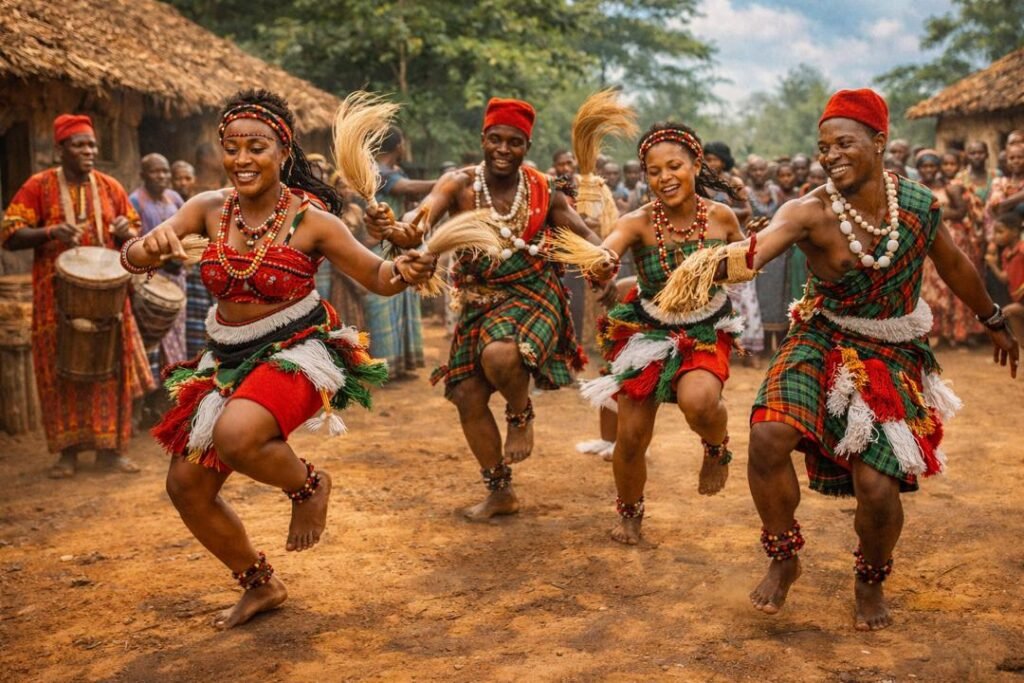
Dances that are traditional in nature are very symbolic. Movements may signify everyday activities like farming, hunting, courtship or war. An example of this is the dance Atilogwu of the Igbo people which has agility and strength, a sign of youthfulness and energy. The Bata dance of the Yoruba is very spiritual, and it is linked to the veneration of gods.
Meaning is present in the costumes and facial expressions as well as body movements. Status, spirituality, or connection with ancestors Colors, beads, and masks used in dances usually represent something.
Dance as a Social Bond
Dance brings about unity and group involvement. People come together during festivals and other celebrations to dance, and this strengthens their sense of belonging. As opposed to contemporary entertainment, traditional dance is not often used to get personal fame; it is a performance of a group that bonds society. Dance is also a part of conflict resolution, healing. Certain societies use dances to heal a relationship once there is a conflict or as part of a purification ceremony.
Culture is Transmitted through Dance
The youths are taught traditional dances through observation of the older generation as well as attending festivals. This guarantees preservation of culture. Cultural troupes and schools are even now teaching the traditional dances to the younger generations and they are still there even after modernization.
Nigerian Culture Storytelling and Oral Tradition
Prior to the introduction of written history, knowledge was largely preserved by means of storytelling in the Nigerian societies. Folktales, myths, legends, proverbs, praise poetry, and historical narratives are all components of oral tradition.
The art of storytelling as an Ethical Pointer
The stories commonly incorporate animals or mythical characters who are employed as morals. The tortoise (Ijapa or Mbeku), such as, can be seen throughout the folklore of the Nigerians as an intelligent yet manipulative figure whose escapades tend to backfire. It is through these kinds of stories that children are taught about honesty, humility and responsibility.
These tales are normally recounted during the evenings, and this ensures that bonding is created among the children and the elders. Listening skills, creativity and critical thinking are also promoted by storytelling sessions.
Oral History and Community Memory
Oral history conserves the history of a people – their origin, their migrations, their wars, and their system of leadership. Griots, praise singers and elders serve as oral archives and they commit genealogies and historical events to memory. Praise poetry (oriki) in the Yoruba community is a history of families and accomplishments. Oral historians of northern Nigeria tell about the deeds of kings and warriors. Such stories make sure that the cultural identity is not forgotten in spite of the fact that the written documents are not present.
Language Weakness through oral Traditions
Telling stories aids in the maintenance of indigenous languages. Numerous proverbs and folktales lose sense when they are brought into other languages. Telling stories in native languages, communities preserve lingual tradition and help to avoid the extinction of languages.
Keeping the Nigerian Culture alive through Art
Nigerian music and oral traditions are important in the maintenance of the Nigerian culture as it pass values, beliefs and historical knowledge across generations. They serve as moving museums that enable them to hold cultural identity through sound, movement, and speech.
Continuity of Culture Intergenerational
Intergenerational transmission of the Nigerian cultural expression is one of the strongest elements. The elders educate the youth using performance, repetition and participation. This will ensure that knowledge of culture is not lost over time. Festivals like Osun-Osogbo Festival, Argungu Fishing Festival and the New Yam Festival can be used to replicate the traditions every year, which strengthens the memory of the people.
Transformation of Tradition to the Modern Society
Although modernization is a deterrent to traditional culture, the Nigerian music and dance has managed to change. Modern musicians tend to incorporate the ancient rhythms with the contemporary trend like hip-hop, Afrobeat, and highlife. Artists such as Fela Kuti, Burna Boy and Flavour are able to integrate traditional aspect of music with the modern music and culture is not outdated to young generations. Likewise, the spoken word poetry and theatre still carry on the oral narration of stories in contemporary forms.
Education and Cultural Preservation
Nigerian music and oral traditions are now part of the school curriculums, cultural centers and university curriculums. There are also cultural festivals and competitions that promote the involvement of the youths. The social media has also emerged as a strong means of presenting the traditional performances around the world.
Oppositions to Cultural Preservation
Irrespective of its richness, the Nigerian cultural heritage has a number of challenges:
- Westernization and globalization, which tend to popularize foreign lifestyle rather than the local one.
- Urbanization, the decline of the cultural practices on the community basis.
- The loss of native language usage.
- Inadequate records on oral traditions.
Nevertheless, these obstacles are also the sources of innovations. The preservation of these traditions can be done through digital archiving, cultural tourism, and education in the creative arts to protect these traditions to the coming generations.
Conclusion
The cultural vibrancy of the Nigerians is still fuelled by music, dance, and oral traditions. They are carriers of history, morality, spirituality and identity. Nigerians have maintained their heritage over the centuries without any written record through rhythm, movement, and telling of tales.
These arts do not merely entertain but they also inform, bring people together and keep their culture alive. In the world of high dynamics, the necessity of the preservation of the Nigerian culture in terms of music, dance and folk traditions cannot be overestimated. They relate the past with the present and make it clear to the upcoming generations of their origin.
Through recognition and encouragement of these cultural expressions, in addition to remembering their ancestors, Nigerians are also enhancing their cultural identity among the world community.
Get well researched information about Nigerian traditions and cultural expressions here.



. thank you