Abstract
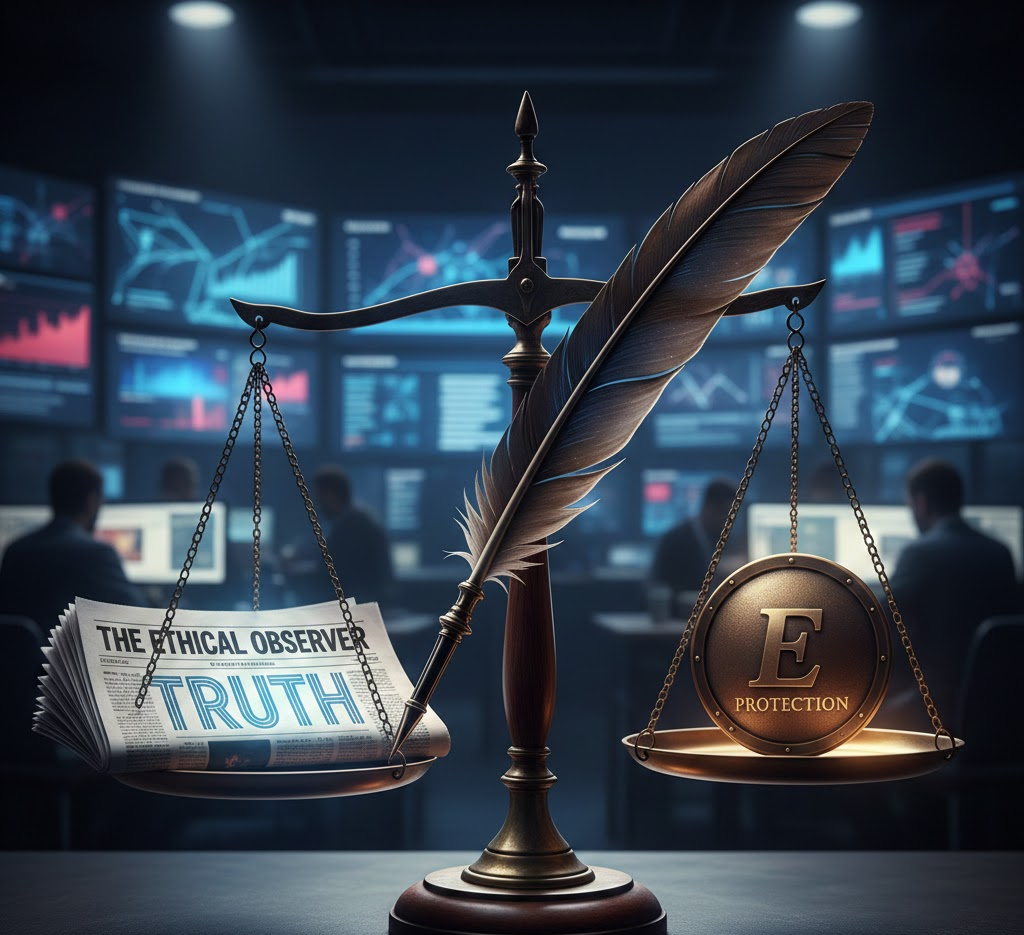
Professional ethics are essential in informing media practitioners on how to behave and to be responsible in communication within society. Professional codes of ethics are becoming more topical than ever in an era of high technological progress, digital journalism and growing public attention to the practice of media. These codes are moral guidelines which govern journalistic conduct, advance accountability, and safeguard the interests of the people (Christians et al., 2016). This paper will look at how professional codes of ethics can be used to control media behavior. It examines some of the widely accepted journalism codes, their major principles, and their practicability in solving ethical dilemmas, handling conflicts, and being a profession in media organizations. Using the available literature and real-life media practices, the paper identifies the importance of ethical codes in enhancing credibility, trust, and democratic responsibility in mass communication (McQuail, 2010).
Introduction
Mass communication is a potent force in contemporary society as it shapes the opinion of the people, shapes political discourses and educates social behaviours. In this power, there comes a major ethical responsibility of journalists and media houses (Kovach and Rosenstiel, 2014). The necessity of ethical control has worsened because of the problems of being wrongly informed, sensationalism, invasion of privacy, and commercial pressure. The codes of ethics for professionals have become important tools that can help journalists to go through such challenges in a responsible manner.
Professional codes of ethics are official documents that have been created by media organizations and professional bodies as guidelines to establish acceptable behavior and create standards of practice. They offer a sense of direction on such issues as accuracy, fairness, independence, accountability, and observance of human dignity (Plaisance, 2014). These codes provide journalists with a common ethical standard to trade off freedom of expression and social responsibility.
Reporting on professional codes of ethics as a means of control of media behavior, one should pay attention to the way these rules are designed, interpreted and implemented in the working conditions of a newsroom. A notable example is the Code of Conduct of the National Union of Journalists, which entails the articulate demands regarding the professional conduct and moral decision-making in journalism (National Union of Journalists, 2023). This paper will discuss the workings and use of these ethical frameworks in theory and practice, and why they are still vital in the integrity of mass communication.
Literature Review
Ethics as Concept in the Mass Communication
Mass communication ethics is the concept of morality that controls the manner in which information is collected, processed and propagated to the masses. Researchers have reached a consensus that ethical reporting is based on the principles of truthfulness, accuracy, and responsibility (Christians et al., 2016). Media ethics is not only about conformity to the regulations but also upholds critical thinking and moral judgment in such complicated scenarios.
Past research highlights that ethical issues in journalism tend to be the result of professional values against external forces. These pressures can be political pressure, financial limitations, audience pressure, and organizational interests (Ward, 2019). Ethical codes are thus viewed as stabilizing forces that assist journalists in sticking to professional ideals despite these challenges.
History of Professional Codes of Ethics
The emergence of professional codes of ethics in regulating media conduct was a reaction to the increasing issue of media credibility and trust. Early journalism did not have a code of ethics, but rather, they resorted to their own judgment (McQuail, 2010). But with the increased media influence, professional organizations realized that there was a need to have some standardized ethical codes.
According to researchers, the majority of journalism codes possess similar principles even though they vary in terms of culture and region. They are obligations to the truth, independence, impartiality, the reduction of harm, and responsibility (Plaisance, 2014). Research also notes that ethical codes are dynamic documents that change as a result of social change, technological advancement, and emerging ethical issues (Ward, 2019).
Proficiency and Disapproval of Codes of Ethics
Although ethical codes enjoy great respect, there has been an argument about their effectiveness. It has been stated that codes are not enforced and are based on the personal conscience (Christians et al., 2016). Other people argue that codes are symbolic promises, but not practical instruments.
Nevertheless, empirical studies indicate that ethical codes do not disappear when it comes to newsroom decisions, particularly those that are confirmed by organizational culture, ethics, and peer accountability (Kovach & Rosenstiel, 2014). According to the literature, ethical codes are best achieved when they are actively discussed, interpreted, and integrated into the day-to-day journalistic practice.
Methodology
The current article is a qualitative analytical study which was carried out in terms of reviewing scholarly literature, professional journalism codes, and media practices that were documented. The secondary sources of data available are scholarly journals, a block of books on media ethics, and journalism establishment publications (Plaisance, 2014). The most popular models of ethics, like national and international codes of journalism, were reviewed to determine fundamental values and practices.
The discussion is based on the way in which professional codes of ethics can direct journalists in the resolution of ethical dilemmas, conflict of interest management, and professional standards. The study presents an informed evaluation of the use of ethics codes to control media behavior by amalgamating knowledge on the topic and by reviewing ethical regulations.
Pivotal Principles of the Codes of Professional Journalism
Accuracy and Truthfulness
The truth is considered to be the backbone of ethical journalism all over the world. The necessity to confirm information, eliminate mistakes as soon as possible, and not mislead is emphasized by professional codes (Kovach and Rosenstiel, 2014). Veracity mandates that journalists ought to state facts in context and avoid the distortion and fabrication of facts.
Ethical standards emphasize that journalists must be able to draw a line between facts, opinions, and speculation, especially in the fast-paced digital conditions, where speed can take precedence over accuracy (Ward, 2019).
Independence and Objectivity
The freedom of the press insulates it against improper influence. Journalists are taught through their ethical codes to act in a way that does not conflict with their financial, political, or personal interests (Plaisance, 2014). Objectivity does not mean that one cannot be neutral about injustice, but demand fairness and balance in reporting.
Ethical codes assist in ensuring that journalism plays a watchdog role in a democratic society by ensuring independence of the editorial (McQuail, 2010).
Equality and Dignity of Human Personhood
The ethics of the profession demand that journalists be fair and respectful to people and groups. This involves the use of non-discriminatory language, stereotyping and unwarranted encroachment into personal lives (Christians et al., 2016). Codes are usually sensitive towards vulnerable populations like children, crime victims, and marginalized populations during reporting.
Accountability and Transparency
Ethical journalism is characterized by accountability. Codes compel journalists to own up to their work, to act on publicly voiced censure, as well as interpret editorial choices in cases where they happen (National Union of Journalists, 2023). Openness will create a sense of trust and credibility in the media.
Applicability of Ethical Codes in Journalism
Ethics: How to find a Way Out
Journalism is full of ethical dilemmas, especially when there is a clash of values. Indicatively, the right of the populace to know can clash with the right of an individual to privacy. Professional codes give a guideline on how to balance such conflicts and make sound decisions (Christians et al., 2016).
The ethical principles are commonly used by journalists to analyze the possible damage, the general interest, and the proportionality of reporting (Ward, 2019). The codes do not have automatic solutions, but they help in reflective judgment.
Solving Newsroom Conflicts
Ethical codes also serve as guidelines in solving intra-organisation conflicts in the media houses. In situations when there is no agreement about editorial decisions, ethical principles provide a common norm according to which the consensus may be achieved, and inconsistent decision-making will be minimized (Plaisance, 2014).
Codes play a central role in justifying choices made by editors, negotiating the rules of professional ethics, and tutoring their juniors (McQuail, 2010).
Fostering Professionalism and Trust in the Communities
The use of ethical codes promotes professionalism as they strengthen the values and norms shared. Journalists can help the institutions enhance credibility and win trust in the community when they adhere to ethical standards at all times (Kovach and Rosenstiel, 2014).
Research has shown that when a media house has a history of ethical responsibility, makes corrections and maintains transparency, the audience tends to have greater trust in the media (Ward, 2019).
Findings
It is observed that professional codes of ethics are influential in controlling the behavior of the media as they aid in moral direction, instill consistency, and facilitate accountability (Christians et al., 2016). Ethical codes are the focus of the journalistic identity and practice despite the criticism of their enforcement.
The results also show that organizational commitment, ethical leadership, and continuous professional education are the key factors determining the performance of ethical codes (Plaisance, 2014).
Discussion
Professional codes of ethics are not just the symbols on paper but the effective instruments that determine the conduct of journalists. The fact that they are still relevant is because they are flexible and have moral authority, not legal authority (McQuail, 2010). Ethical codes can be seen as anchor points in a media landscape that has realized a commercialization approach and digital disruption to maintain journalistic integrity (Ward, 2019).
Nonetheless, codes cannot be used as the basis of ethical regulation. Ethical principles should be complemented with continuous training in ethics, engaging people, and institutional assistance to turn these principles into everyday practice (Kovach & Rosenstiel, 2014).
Conclusion
The professional codes of ethics will never be eliminated in mass communication, as they will provide guidelines to responsible journalism and the social role of the media. These codes can assist journalists in avoiding ethical dilemmas and conflicts and being professional in a complicated media environment by defining common values and standards (Christians et al., 2016).
The ethical issues keep on changing; however, the fundamentals of accuracy, independence, fairness and accountability can never be compromised. Enhancing the practical use of the code of ethics with the help of education and organizational commitment is crucial to maintaining social confidence and democratic communication (Ward, 2019).
References
Christians, C. G., Fackler, M., Richardson, K. B., Kreshel, P. J., & Woods, R. H. (2016). Media ethics: Cases and moral reasoning (10th ed.). Routledge.
Kovach, B., & Rosenstiel, T. (2014). The elements of journalism: What newspeople should know and the public should expect (3rd ed.). Three Rivers Press.
McQuail, D. (2010). McQuail’s mass communication theory (6th ed.). Sage Publications.
National Union of Journalists. (2023). NUJ code of conduct. https://www.nuj.org.uk/about-us/rules-and-guidance/code-of-conduct.html
Plaisance, P. L. (2014). Media ethics: Key principles for responsible practice. Sage Publications.
Ward, S. J. A. (2019). Ethics and the media: An introduction. Cambridge University Press.