Hormones are chemical signals that help in the communication between the body organs, tissues and systems. They control reproduction, sleep, growth, metabolism and mood and immune responses. In order to be effective, hormones should not be over- or under-produced, released, and regulated. Although the genetics and health problems determine the endocrine state, the lifestyle choices in everyday life are essential to the balance of hormones.
The level of physical activity, sleeping behavior, and dietary intake have a direct impact on hormone production and signalization. With proper lifestyle conditions to keep endocrine activity, the body is able to stay in balance and be efficient to internal and external needs. On the contrary, unhealthy lifestyle habits can interfere with hormonal balance, which causes fatigue, weight gain and loss, mood disorders, and long-term health consequences.
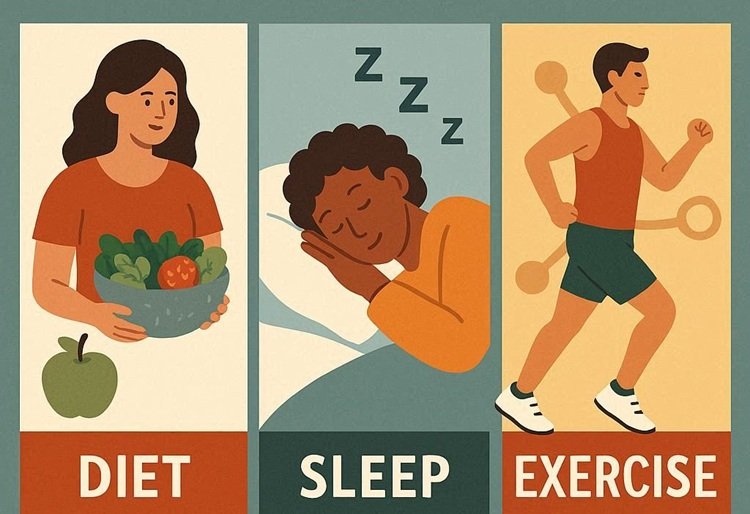
This article discusses the impact of nutrition, sleep and exercise on hormonal wellbeing. It describes the biological processes of lifestyle-based hormonal changes and outlines effective measures that help to maintain healthy endocrine processes and proper well-being.
Boosting Hormone Levels and Endocrine Anatomy
The endocrine system comprises of glands, which produce hormones that are directly released into the blood. The endocrine glands are major and they include the hypothalamus, pituitary gland, thyroid, adrenal glands, pancreas, ovaries and testes. Every gland secretes certain hormones that control the fundamental physiological processes and respond to each other in a feedback mechanism.
The health of the hormones is based on a regular and controlled production of hormones, proper transportation of hormones, and the receptor sensitivity of target tissues. Interferon at any point of this process can cause hormonal imbalance. Since hormones work under very strict ranges, their small disruptions can be observable in terms of physical and emotional well-being.
Endocrine glands are always affected by lifestyle behaviors. The availability of nutrients influences hormone production, sleep influences hormonal cycles, as well as exercise influences hormone sensitivity. This is what needs to be understood about these interactions to ensure there is long-term hormonal balance.
Hormone Production and Lifestyle Factors
Production of the hormones is not constant. It changes in response to nutrition, activity, stress and rest dynamically. Amino acids, fatty acids, vitamins, and minerals are some of the raw materials that the body uses to produce hormones. It is also regulated by circadian cycles and metabolic cues to control hormone secretions.
In order to have a clearer insight in to the synthesis and regulation of hormones, it would be valuable to discuss the biological process of hormone production that describes how endocrine glands turn nutrients into active chemical messengers.
In the case of lifestyle that helps to promote these processes, the hormonal systems are flexible and efficient. During stressful situations in the lifestyle, a hormone production can be dysregulated, making a person more susceptible to illness.
The Nutritional Action in Hormonal Balance
Diet is a basis of hormonal health since hormones are produced as a result of food taken as nutrients. Proper nutrition gives the compounds of endocrine activity as well as the stabilization of metabolism.
Macronutrients affect the levels of hormones differently. Proteins provide all the necessary amino acids needed to produce peptide hormones like insulin and growth hormone. The need of healthy fats is especially due to the fact that the steroid hormones such as estrogen, testosterone and cortisol are produced by using cholesterol. Very low-fat diets can damage the formation of these hormones.
Carbohydrates influence the insulin and energy balance. The complex carbohydrates maintain the normal blood sugar levels, lowering the excess secretion of insulin and avoiding hormonal stress. On the other hand, highly refined carbohydrates can lead to recurring insulin spikes which eventually cause insulin resistance.
The roles of micronutrients are also important. Thyroid hormones require iodine and zinc aids functions of reproductive hormones. Magnesium helps in the regulation of stress hormone and insulin sensitivity. Vitamin D is a hormone-like product which has an effect on immune and metabolic activities.
Hormonal Impact of bad eating habits
There are the hormone production and hormone signaling which can be disrupted by unbalanced diets. Consumption of too much sugar causes an overburden on how insulin is processed, which predisposes a person to metabolic conditions. A large portion of highly processed foods might be deficient in the necessary nutrients and it adds chemical additives that disrupt endocrine activity.
There can be negative effects of caloric restriction and extreme dieting on the hormonal balance as well. Poor energy consumption may inhibit sex hormones and reduce metabolism rate in an effort to save energy by the body. In the long run, such a process of adaptation can cause fatigue, hormonal discontinuities, and compromised immunity.
Regular, nutritionally balanced diets help maintain hormone levels and lower the level of physiologic stress.
Sleep and Hormonal Regulation
Sleep plays a very important role in the regulation of endocrine. There are numerous hormones that are circadian, i.e. they are released in accordance with the sleep-wake processes. Explaining the need to have enough sleep, the body is able to keep these rhythms and help the hormones to balance.
The hormone that controls sleep is melatonin, which is produced when an individual is in darkness. It not only has effect on the quality of sleep, but also on the immune system and antioxidant activity. The disturbed sleep patterns inhibit the production of melatonin, which has an impact on various systems.
Growth hormone mostly is discharged when in deep sleep stages. It helps in repairing of tissues, muscle development and metabolism. The continuous loss of sleep will decrease growth hormone secretion and affect the recovery and energy balance.
There is an overall daily cycle of cortisol, the main stress hormone, as it is high in the morning and low at night. Lack of sleep will disrupt this cycle, causing the levels of cortisol to be very high during the night, which will disrupt relaxation and metabolic well-being.
After Effects of Sleep Deprivation on Hormones
Continuous sleep deprivation could also be the cause of hormonal imbalance due to high levels of stress hormone and low levels of metabolic and reproductive hormone. High coordination levels of cortisol are linked to weight increase, poor immune responses, and poor regulation of glucose.
Sleep deprivation also impacts on appetite-controlling hormones like leptin and Ghrelin. Sleep deprivation lowers leptin that triggers the feeling of fullness, and ghrelin triggers the feeling of hunger. This disproportion can encourage the overeating and gaining weight.
Regular sleeping patterns and sleep time should be among the key measures that can be taken to promote the endocrine health.
Working out and Hormonal Wellness
The effect of physical activity has strong influences on hormone regulation. Exercise affects the insulin sensitivity, hormones balance of stress and reproductive hormones and efficiency of metabolic rate.
Regular moderate exercise increases insulin sensitivity and the cells are able to use glucose better. This lowers the requirement of excessive production of insulin and maintains metabolic stability.
Exercise is another activity that causes the secretion of endorphins that elevate the mood and perception of stress which makes endorphins beneficial. Exercise reduces the level of cortisol at the baseline over the long term, which promotes emotional stability and immunity.
Strength training helps in the secretion of growth hormone and testosterone that are relevant in muscle preservation, bone thickness and metabolic well-being. High cardiovascular activity is beneficial as it enhances the circulation and delivery of hormones to the specific tissues.
Physical Workouts and Hormonal Wellness
Exercise has strong influences on hormones. Exercise affects the sensitivity of insulin, the equilibrium of hormones, the level of reproductive hormones and metabolic performance.
Regular moderate exercising improves the insulin sensitivity thereby enabling the cells to use glucose more efficiently. This lowers the excessive production of insulin and helps in maintaining a stable metabolism.
Endorphins are also released as a result of exercise and they enhance mood and decrease the perception of stress. Regular exercise reduces the basal cortisol concentration over time, which is good in keeping the emotional state and immune system.
Weight training assists in secretion of growth hormone and testosterone which are crucial in muscle preservation, bones density and metabolic well being. Exercise of the heart also enhances circulation, and it is the delivery of hormones to the target tissues.
Intensity of Exercise and Homeostasis
Although exercise is good in maintaining hormonal health, extreme or unregulated training can do the contrary. Extra training in the absence of rest elevates cortisol level and could inhibit the reproductive hormones.
The exercise level should be balanced with rest to achieve endocrine stability. Rest days and more activity level will ensure adaptation of body without overloading hormones.
The problem of physical activity should be perceived as an aid, not an element of physiological stress.
Stress, Lifestyle and Hormonal Disruption
Hormonal balance is closely dependent on psychological stress in combination with lifestyle factors. The hypothalamic-pituitary-adrenal axis is stimulated by chronic stress leading to the secretion of more cortisol.
Once stress is persistent, other hormonal systems, such as thyroid and reproductive hormones, are affected by high levels of cortisol. This can be a cause of fatigue, mood swings, and metabolic imbalance.
Mindfulness, physical activity, balanced nutrition, and proper sleep are the lifestyle principles that are interconnected to support the endocrine system by decreasing the stress hormone load and reestablishing balance.
The Hormonal Health Workbook
Hormonal balance needs to be supported through regularity, and not perfection. All of these activities aimed at maintaining a healthy balance of hormones with food, sleeping schedule, and moderate exercise build up to a healthy environment.
Water helps in maintaining blood volume and transportation of hormones. Hormone signaling can also be further preserved by limiting exposure to environmental endocrine disrupters that are present in plastics and chemical products.
Minimal, life long behavioral modifications tend to yield significant long-term outcomes in endocrine health and well being generally.
Positive Effects of Hormonal Balance Supported by Lifestyle in the Long Run
When the lifestyle is in line with the requirements of the endocrine system, the body is more efficient in metabolism, emotional stability, and immunity. Maintaining a healthy body of any age, reproductive health, and cognition is facilitated by balanced hormones.
In the prevention of chronic disease, preventive lifestyle measures lower the likelihood of lifespan vitality. Hormonal health is not defined by a particular factor but by the daily action effects (cumulative).
Conclusion
Life style choices are closely intertwined with the hormonal health. The hormones are made out of the building blocks of diet, hormonal rhythms maintained by sleep, and hormonal sensitivity and balance maintained by exercise. The combination of these factors has an effect on hormone production and long-term endocrine stability.
With the idea of how lifestyle habits influence hormonal balance, people can make less informed decisions in favor of a resilient, energetic, and healthy self. Ecofriendly living practices are still among the most effective means of keeping the hormones in check and safeguarding the health in the long run.