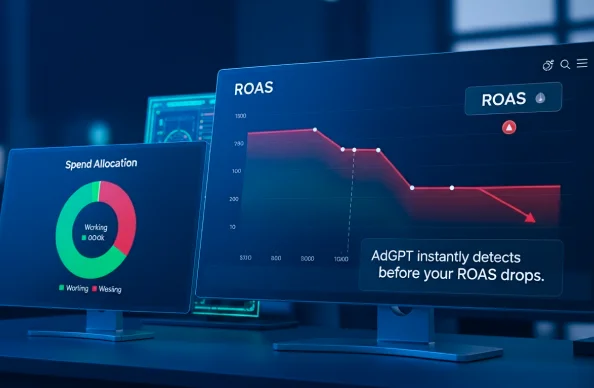
Introduction:
We are living through the single greatest data explosion in human history. According to recent IDC figures, the volume of data available to marketing teams has grown 43-fold since 2015. On the surface, this sounds like a victory. We have more metrics, more trackers, and more visibility than any generation of marketers before us.
Yet, walk into any marketing department from nimble D2C startups to massive enterprise conglomerates and you will find a strange paradox. Despite having oceans of data, decision-making has actually become harder, slower, and more contentious.
This is the “Data Paradox.” We have traded clarity for volume. The average Chief Marketing Officer (CMO) now oversees a stack of 27 distinct tools. They have dashboards for Google Ads, separate analytics for Meta, a different login for LinkedIn, another for their CRM, and yet another for their attribution modeling. Each of these dashboards answers the question “What happened?” with excruciating detail. But almost none of them answer the only question that actually matters: “What should we do now?”
In this environment of “analysis paralysis,” a new category of technology has emerged to close the gap between data and action. It is called Prescriptive Advertising Intelligence, and leading the charge is a revolutionary platform known as Intellsys AdGPT.
In this comprehensive guide, we will dismantle the current state of marketing analytics, define what true advertising intelligence looks like in 2026, and explore how Intellsys AdGPT – built by the venture architects at Intellsys GrowthJockey is fitting into the equation to change the way businesses grow.
What is Advertising Intelligence in 2026?
To understand why AdGPT is such a disruptor, we must first agree on what we are talking about. “Advertising Intelligence” is a term that has been abused by software vendors for a decade. In 2015, it meant “prettier charts.” In 2020, it means “automated reporting.”
But today, the definition has fundamentally shifted.
As outlined in the definitive guide on what is advertising intelligence, true advertising intelligence is not just a passive report. It is an “always-on decision system that turns multi-channel marketing data into prioritized decisions and actions, tied directly to business outcomes like CAC (Customer Acquisition Cost) and ROAS (Return on Ad Spend).”
Real advertising intelligence must satisfy three specific criteria:
1. It must be a System, not a Report: It combines data ingestion, causal modeling, and workflow automation. It doesn’t just show you a line graph; it understands the physics of why the line moved.
2. It must be Continuous: The days of the “Weekly Marketing Review” are dead. Ad auctions change every nanosecond. Competitors change bids hourly. True intelligence must operate in real-time, not on a delay.
3. It must end in Action: This is the most critical distinction. If a tool tells you “ROAS dropped 20%,” it is Analytics. If it tells you “Pause Ad Set B and move $500 to Ad Set C to recover your ROAS,” it is Intelligence.
This distinction is vital because most companies are still stuck in the “Analytics” phase, mistakenly believing they possess “Intelligence.” They are driving looking in the rearview mirror, while the market speeds ahead.
The Evolution: From Descriptive to Prescriptive
The journey to true advertising intelligence has been a slow climb up the “Value Ladder.” Most organizations are currently stuck on the bottom two rungs. The analytics has changed from descriptive to predictive to prescriptive.
Level 1: Descriptive Analytics (“The Rearview Mirror”)
This is where 90% of the market lives. Tools like Google Analytics, Tableau, and standard platform dashboards tell you what happened.
- The Output: “Your CPA increased by $10 yesterday.”
- The Problem: It offers zero context on why it happened or how to fix it. It requires a human analyst to dig in, often taking hours or days.
Level 2: Diagnostic Analytics (“The Sherlock Holmes”)
These are slightly more advanced BI tools that allow you to drill down.
- The Output: “Your CPA increased because CPMs on Facebook rose by 40% due to audience saturation.”
- The Problem: While helpful, it still puts the burden of solution-finding on the human. You know the problem, but you still have to guess the solution.
Level 3: Predictive Analytics (“The Weather Forecast”)
This was the big buzzword of 2020-2023. Using machine learning to forecast trends.
- The Output: “If current trends continue, your budget will run out in 12 days.”
- The Problem: Prediction is passive. Knowing it’s going to rain is useful, but it’s not the same as someone handing you an umbrella and mapping a route to shelter.
Level 4: Prescriptive Intelligence (“The GPS Navigation”)
This is the frontier where Intellsys AdGPT operates. It is the subject of intense interest for future marketing decisions using prescriptive AI.
- The Output: “Audience saturation has hit critical levels. Pause Creative A. Launch Creative Variant B. Shift 15% of budget to Campaign C. Expected Result: CPA will normalize within 48 hours.”
This shift from merely seeing the data to being told how to act on it is what we call the “Reflexive Marketing” era. It transforms marketing from a manual, reactive process into a self-correcting, high-velocity system.
The Core Problem: The “Decision Gap”
Why is this shift necessary now? Why can’t we just keep using our smart human analysts?
The answer lies in the “Decision Gap.”
Marketing complexity has exceeded human cognitive capacity. A modern performance marketer has to manage:
- 4-7 different ad platforms (Google, Meta, TikTok, Amazon, etc.)
- Hundreds of creative assets
- Dozens of audience segments
- Real-time bid adjustments
Cognitive scientists tell us that humans can process roughly 7 variables at once (Miller’s Law). A typical ad account generates hundreds of variables daily. We are literally biologically incapable of processing the necessary data to optimize a modern marketing stack efficiently.
This leads to three suffocating bottlenecks:
1. Cognitive Bandwidth: We simply miss signals. We don’t see that a drop in Email Open Rates is correlated with a rise in Facebook CPMs because those data points live in different silos.
2. Organizational Lag: Even when we find a problem, it takes time to fix. An analyst finds an issue on Monday. They report it to the manager on Tuesday. The manager gets approval from the CMO on Wednesday. Execution happens Thursday. By then, you’ve bled budget for four days.
3. Tool Fragmentation: Because data lives in 27 different tools, we spend 80% of our time “cleaning” and “integrating” data, and only 20% of our time acting on it.
Intellsys AdGPT was built specifically to close this gap. It connects to the data from 200+ integrations, analyzes the variables, and prescribes the action in seconds, not days.
Enter Intellsys AdGPT
So, what exactly is Intellsys AdGPT?
It is important to clarify what it is not. It is not a “ChatGPT wrapper.” It is not a generic AI that has read a few marketing blogs.
It is a specialized Prescriptive Advertising Intelligence Platform built by Intellsys GrowthJockey, a firm of “Venture Architects.” This distinction is crucial. GrowthJockey has built and scaled over 50+ companies across 13 different industries. They didn’t build this tool because they wanted to sell software; they built it because they needed it to scale their own ventures.
The system is trained on proprietary “growth playbooks.” It knows, mathematically, how a SaaS funnel behaves differently from an E-commerce funnel. It understands “Unit Economics,” “LTV:CAC Ratios,” and “Payback Periods.”
The Four Layers of AdGPT:
1. The Unified Data Layer: AdGPT connects to over 200+ integrations. It pulls data from your Ad Platforms (Google, Meta), your Store (Shopify, Amazon), your CRM (HubSpot, Salesforce), and your Analytics (GA4). It creates a “Single Source of Truth,” refreshing this data hourly.
2. The Diagnostic Engine: It uses causal inference models to distinguish between “noise” (normal fluctuation) and “signal” (actual problems). It knows that a sales drop on Sunday might just be the weekend effect, but a sales drop on Tuesday is an anomaly.
3. The Prescriptive Core: This is the brain. It evaluates thousands of potential actions. Should we lower the bid? Should we change the audience? Should we rotate the creative? It ranks these actions by “Projected Impact.”
4. The Learning Loop: Every time you accept or reject a recommendation, AdGPT learns. If it suggests a bid change and it works, it reinforces that pathway. It becomes smarter and more customized to your specific business over time.
The Competitive Landscape: Top Tools of 2026
AdGPT is not the only player in the field, but it is currently the most advanced in terms of pure prescriptive capability. When analyzing the top advertising intelligence platforms, the market breaks down into a few key categories.
Here is how the landscape looks in 2026:
1. Intellsys AdGPT (The Prescriptive Leader)
- Best For: Performance marketing teams, D2C Brands, and ROI-focused enterprises.
- Why it Wins: It is the only tool that focuses 100% on action. It doesn’t just show data; it tells you what to do. Its “Decision Velocity” is 10/10, allowing teams to react in minutes rather than days.
- The “GrowthJockey” Factor: Because it is built by venture builders, the AI “thinks” like a Head of Growth, prioritizing profitability and unit economics over vanity metrics like “likes” or “impressions.”
2. Sprinklr (The Enterprise Giant)
- Best For: Massive global corporations focused on brand safety and social listening.
- The Verdict: Sprinklr is a powerful tool for monitoring conversations and managing social media publishing. However, it lacks the deep, mathematical “performance marketing” brain of AdGPT. It is great for knowing what people are saying, but less effective at telling you how to lower your CAC on Google Ads.
3. Zoho Analytics & Zia (The Ecosystem Play)
- Best For: Businesses already locked into the Zoho ecosystem.
- The Verdict: If you run your whole business on Zoho, this is a great add-on. “Zia,” their AI assistant, can answer basic questions. But compared to AdGPT, its domain expertise in advertising is shallow. It is a generalist BI tool, not a specialist advertising weapon.
4. GoMarble (The Rising Startup)
- Best For: Smaller startups looking for a modern UI.
- The Verdict: GoMarble is a promising tool that focuses on insights. It is miles ahead of traditional spreadsheets but still lags behind AdGPT in terms of “Prescriptive Maturity.” It often points out problems without fully formulating the solution.
5. Zocket (The SMB Option)
- Best For: Very small businesses or early-stage experimenters.
- The Verdict: Zocket makes ad creation easy for beginners, but it lacks the heavy-duty data processing and cross-channel attribution modeling required by serious scale-ups and enterprises.
The market analysis clearly shows that while many tools offer visibility, Intellsys AdGPT stands alone in offering velocity.
Real-World Scenarios: AdGPT in Action
To truly understand how this fits into the equation of Ad Intel, let’s look at two concrete scenarios where prescriptive AI changes the outcome.
Scenario A: The “CPL Crisis”
- The Old Way: It is Tuesday. Your Cost Per Lead (CPL) on LinkedIn spikes by 40%. You don’t notice until the weekly report on Friday. You spend Monday investigating. You realize it is “Audience Fatigue.” You brief new creative on Tuesday. You launch on Wednesday.
- Result: 8 days of wasted budget.
- The AdGPT Way: It is Tuesday. CPL spikes. Within 2 hours, AdGPT detects the anomaly. It correlates the spike with a drop in Click-Through Rate (CTR) and an increase in Frequency.
- The Notification: “Alert: CPL up 40%. Diagnosis: Creative Fatigue in ‘Senior_Manager’ audience. Prescription: Pause Creative A. Activate ‘Case Study V2’ variant. Expected Outcome: CPL returns to normal in 6 hours.”
- Result: Zero wasted days. Immediate correction.
- The Notification: “Alert: CPL up 40%. Diagnosis: Creative Fatigue in ‘Senior_Manager’ audience. Prescription: Pause Creative A. Activate ‘Case Study V2’ variant. Expected Outcome: CPL returns to normal in 6 hours.”
Scenario B: The Cross-Channel Budget War
- The Old Way: The Facebook agency wants more budget. The Google agency wants more budget. The CMO has to decide who gets the extra $50k. It becomes a political battle based on PowerPoint slides and cherry-picked data.
- The AdGPT Way: The CMO queries AdGPT: “What is the most efficient allocation of $50k for maximum net revenue?”
- The Response: AdGPT analyzes the “Marginal ROAS” (the return on the next dollar spent) of both platforms. “Recommendation: Allocate $35k to Google Shopping (High intent, untapped impression share) and $15k to Meta Retargeting. Do not add to Meta Prospecting as it has hit diminishing returns. Projected Revenue Uplift: $180k.”
- Result: Math-based allocation, not opinion-based allocation.
- The Response: AdGPT analyzes the “Marginal ROAS” (the return on the next dollar spent) of both platforms. “Recommendation: Allocate $35k to Google Shopping (High intent, untapped impression share) and $15k to Meta Retargeting. Do not add to Meta Prospecting as it has hit diminishing returns. Projected Revenue Uplift: $180k.”
Why the “Builder” Matters
In the software world, “who” built the tool often dictates “how” the tool works.
Most marketing software is built by engineers who hired a few marketers to consult. They build great features buttons, toggles, charts but they often miss the strategic nuance.
Intellsys AdGPT is unique because it is built by Intellsys GrowthJockey. This is a firm that builds businesses for a living. We are “Venture Architects.”
They understand that a marketing decision is never just about marketing; it is about inventory, cash flow, margins, and brand equity. They have ingrained this holistic business logic into the AI. When AdGPT suggests scaling a campaign, it checks if that scale is profitable. When it suggests a discount strategy, it weighs it against LTV.
This “Venture DNA” transforms the tool from a tactical assistant into a strategic partner. It is not just trying to get you more clicks; it is trying to build you a better business.
Conclusion: From Reactive to Reflexive
The era of the dashboard is ending. We are moving from a world where we stare at data to a world where data talks to us.
The companies that win in the next decade will not be the ones with the prettiest charts. They will be the ones with the fastest Decision Velocity. They will be the ones who have closed the “Decision Gap” by adopting prescriptive intelligence.
They will move from being Reactive (fixing problems days after they happen) to being Reflexive (correcting course in real-time).
Intellsys AdGPT is the engine of this transition. By combining the vast reach of big data with the strategic precision of venture architecture, it offers a glimpse into the future of business a future where growth is not a guessing game, but a prescriptive science.
If you are tired of drowning in data while starving for wisdom, it is time to stop analyzing and start asking. Contact GrowthJockey Today to start your free trial.