Introduction
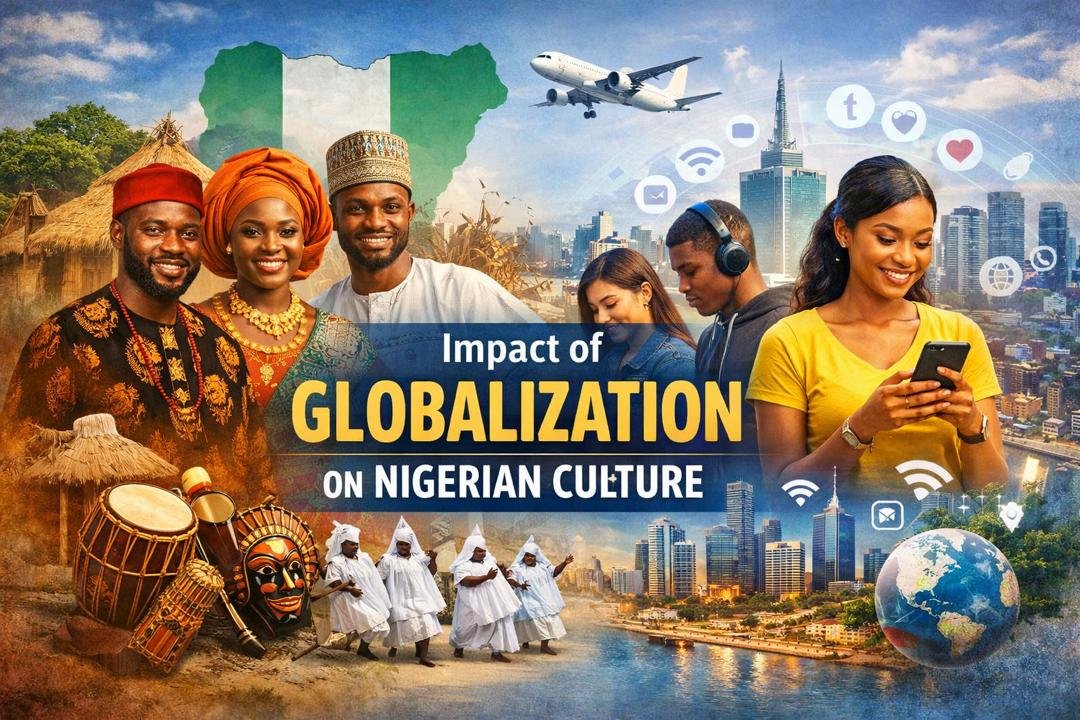
Impact of globalization on Nigerian culture is emerging as one of the most potent factors that are determining societies all over the world in the 21st century. International trade, digital communication, and mass media have increased the integration of cultures as never before because of their advancement in the technology field. As much as globalization has led to an amazing advancement in education, invention and economic growth, it has also led to the issue of cultural dilution and identity loss especially in the developing countries.
Being the most populous country in Africa and, at the same time, one of the most culturally diverse states, Nigeria is the epicenter of this worldwide change. The Nigerian culture is a rich heritage with more than 250 ethnicities, hundreds of indigenous languages and a longstanding tradition full of history, religion and communal philosophy. Nevertheless, increasing the role of Western culture, digital media, and the global way of life has practically changed the way, in which the Nigerians dress, speak, communicate, and even define themselves.
This paper is a critical analysis of the impact of globalization, technology and media in Nigerian cultural practices, language, fashion and values. It also analyses the good aspects and negative aspects of global exposure and also shows the value of cultural conservation in an ever changing world.
Knowing Globalization and Culture
Globalization is the process that has seen greater integration of countries in terms of trade, communication, technology and culture. It facilitates the exchange of goods, ideas, beliefs, and lifestyles that span across the borders forming a common global place. Though globalization leads to connectivity and development, it tends to advance the predominant cultures especially the west, which may dwarf the indigenous cultures.
Culture on the other hand is the general way of life of a people. It incorporates language, beliefs, customs, moral values, dress, food, music, and social institutions. The culture in Nigeria has been maintained through oral culture, community living, festivity, religion and reverence to the elderly.
The impact of globalization on Nigerian culture has thus led to the enrichment and displacement of the cultures or the creation of such a complex relationship which is still in progress.
Globalization and the Nigerian Cultural Practices
The impact of globalization on Nigerian culture practices have been the traditional aspect that has played a critical role in defining identity and social bonding. Marriage, funeral, naming ceremonies, and festivals are the activities that have strong community, respect and spirituality values. Nevertheless, globalization has had a lot of influence on the current practices of these practices in the modern world.
Most of the traditional marriage ceremonies, such as the ones being practiced, have been changed to suit the western wedding styles. White gowns, tuxedos, bridal showers and church weddings have taken over and in some cases such traditional practices like bride price negotiation, involvement of extended family and native attire to weddings has been regarded as part time or even symbolic. Though this integration is an indication of the change in culture, it also diminishes the significance of native practices.
Likewise, these traditional festivals like New Yam Festival, Argungu Fishing Festival and Eyo Festival have undergone changes to include modern entertainment, media publicity and commercial sponsorship. Although it raises awareness and tourism, it at times turns the emphasis not on cultural meaning but profit and entertainment.
To have a more insight on these traditions and their evolution it is worth considering the cultural practices in Nigeria which emphasize the way that customs have changed under the impact of the global world and also preserved the traces of indigenous identity.
The Power of Technology and Media
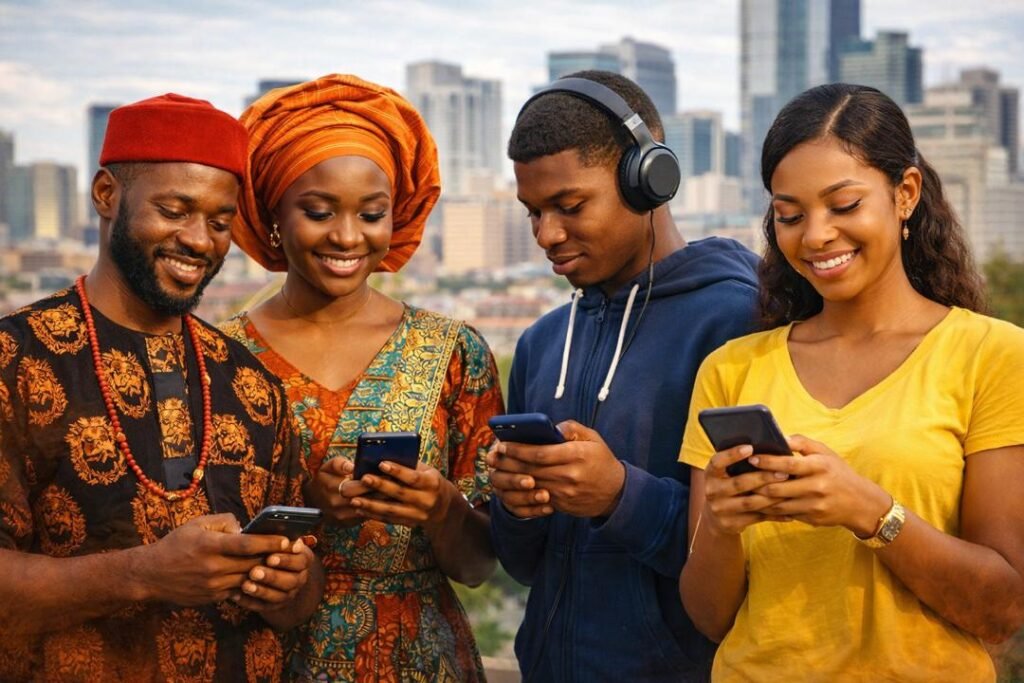
Some of the main forces of globalization in Nigeria are technology and mass media. The emergence of internet, smartphones, social networking sites, streaming service providers, and social media has radically altered the way the people of Nigeria communicate, learn, and express themselves.
Positive Influences
On the bright side, technology has been used to conserve and make the Nigerian culture known to the rest of the world. YouTube, Netflix, Instagram, and Tik Tok are the platforms that have helped Nigerian music, films, and fashion to be known internationally. Nollywood is an example of such films as the industry is now ranked as one of the biggest film industries worldwide whereby Nigerians stories, languages and traditions are displayed to the outside world.
Cultural education has also been facilitated on social media with content creators presenting indigenous languages, folklore, fashion, and food recipes. Digital spaces have helped young Nigerians to reinteract with their own cultures, foster cultural pride and break stereotypes.
Negative Influences
But technology has eroded culture as well. Online spaces are dominated by western lifestyles, slang, fashions, and social values that are affecting the Nigerian youth to discard the old lifestyles. Local languages are being overtaken by English or internet lingo and the trend is gaining momentum amongst the urbanized youths.
Additionally, social media tends to encourage materialism, individualism, and the unachievable lifestyles that are not in line with the traditional values of modesty, communal living, and respect to the elderly in Nigeria.
Globalization and Switch of Language
Language is considered to be one of the most powerful identifiers of culture. Africa boasts of more than 500 indigenous languages, which are Yoruba, Igbo, Hausa, Tiv, Efik, among others. Nevertheless, the issue of globalization has had a substantial impact on the use of language in the country.
English has already become the official language, domineering in education and business, governance and media. Although this has improved unity in the country and brought about international communication, it has resulted in the overtime eroding of native languages. The number of young Nigerians who can speak the native language is at a loss and the languages are becoming extinct.
Nigerian Pidgin and code switching have become the order of the day, particularly in the cities. Although Pidgin is a unifying language it is also a contributor to the erosion of the purity of language among the indigenous languages.
Nevertheless, there is an attempt to restore local languages by use of cultural programs, radio and television broadcasting and in school curriculum. The use of the indigenous languages should be preserved since language is the history, values and identity.
Globalization and Nigerian Fashion
One of the most visible aspects where the impact of globalization on Nigerian culture shows is through fashion. Conservative clothes (agbada, buba, iro, isi agu, Ankara fabrics), have been used to be a symbol of ethnicity and social prestige.
The fusion of traditional and western style of fashion has been brought about by globalization. In contemporary times, the Nigerian fashion is competitive in the world as the designers mix the African fabrics with the modern designs. This has made cultural visible and improved the creative economy.
Nevertheless, the traditional dressing, particularly the use of traditional dresses, has also been deteriorated by western fashion trends, especially among the youths. Jeans, hoodies, and foreign designer labels have been favored by other traditional clothes, which currently are mostly worn when attending ceremonies. The popularity of African fashion in the world proves that the culture identity is not mutually exclusive with modernity when it is marketed in the right way.
Restructuring Values and Social Norms
The one of the greatest impacts of globalization is the shifting of the values. The traditional Nigerian culture stressed on respect to elders, collective life, morality, hard work or work and family attachments. Individualism, materialism and moral relativism brought about by global media are growing to challenge these values.
Due respect to the elders that used to be irrefutable has diminished in certain cities. There is a shift in family structure whereby nuclear families are taking the place of the extended families. Independence as a Western value is at times conflicting with African communality values resulting in generational conflicts. On the bright side globalization has led to emphasis on human rights awareness, gender equality, education and freedom of expression. The developments have empowered women, facilitated youth participation and increased social awareness.
Therefore, globalization has transformed the values of the Nigerians both positively and negatively.
Importance of Preserving Cultural Values
Although globalization is advantageous, the need to preserve of cultures is paramount to national identity as well as continuity. Culture brings about the feeling of belonging, moral principles and historical awareness. It would be a loss of collective identity to lose it. The preservation of the culture can be done by means of:
- Education of the native languages at schools.
- Marketing of cultural sites and festivals.
- Promotion of local content.
- Favoring the establishment of old institutions.
- Incorporating culture in contemporary education and media.
The government, educational institutions, families, as well as the media all have a part to play in making sure that globalization will not eliminate the Nigerian heritage.
Conclusion
The concept of the impact of globalization on Nigerian culture and identity that is reflected in cultural practices, language, fashion, values, and the social organizations. Although it has opened its borders to innovation, international acknowledgement and financial expansion, it has come with its own problems like cultural erosion, loss of language and loss of traditional values. Technology and media have kept on affecting the perception of the Nigerians towards themselves and their culture. Globalization however, does not necessarily imply cultural extinction. Rather, it may be a subsystem of cultural exchanges and promotion provided it is managed.
The future of the Nigerian culture is peace of coexistence between a modernist and traditional culture. Nigeria can preserve its cultural identity in the ever-globalized world by appreciating indigenous culture, embracing the use of local language, and informing the younger generation about the cultural values.
Finally, globalization must not overtake the Nigerian culture but should give them a platform to develop, flourish and be able to represent themselves in the international scene with pride.
Get well researched information on the Globalization of Nigerian Culture here.