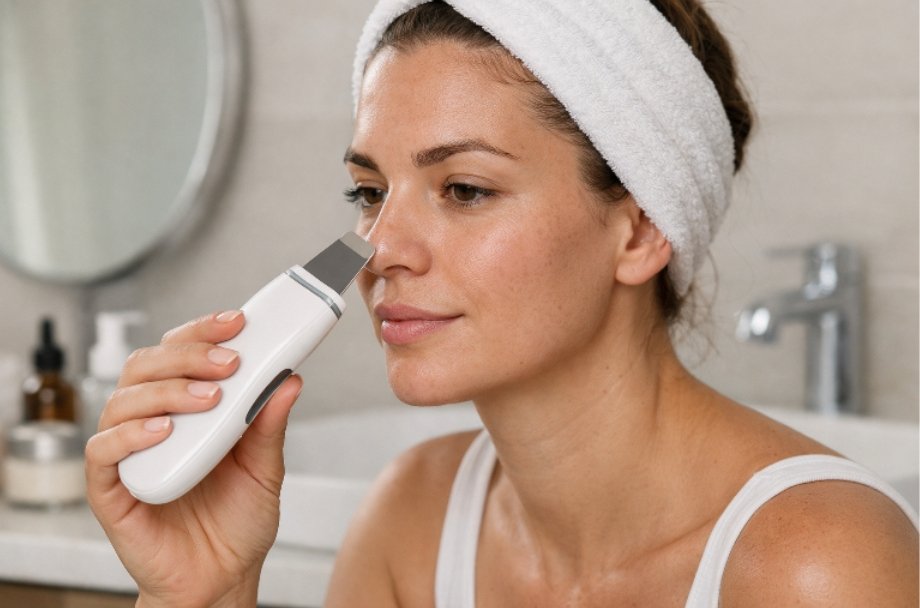
For anyone tired of chasing smooth skin with expensive appointments, an Ultrasonic Skin Scrubber sounds like the perfect shortcut. The appeal is easy to understand. Blackheads, rough texture, and dullness often come from pores filling with oil and dead skin cells, and gentle exfoliation can make skin look clearer and feel smoother. Dermatology guidance also makes one thing clear: exfoliation helps, but too much of it can damage the skin barrier and trigger irritation.
What changed over a 30-day test was not a dramatic, filter-like transformation. The more realistic shift was this: my skin looked cleaner around the nose and chin, makeup sat better, and the rough, congested feel that usually pushed me toward a facial started showing up less often.
That makes sense because an Ultrasonic Skin Scrubber works more like a mechanical exfoliation tool than a full professional treatment. Mechanical exfoliation uses a tool to remove dead skin cells, while chemical options dissolve them.
What an Ultrasonic Skin Scrubber Can Actually Do
An Ultrasonic Skin Scrubber is best thought of as a maintenance tool, not a miracle device. If your main issue is surface buildup, mild congestion, or skin that feels uneven after cleansing, it can help you stay ahead of that dull, clogged look.
Exfoliating safely may also make pores look less noticeable, but the goal is less visible, not gone forever. Acne, oil, and inflammation can make pores stand out more, and dermatologists recommend being very gentle because scrubbing and picking can make them look even larger.
The biggest benefit over 30 days is usually consistency. Weekly facials can give a deeper reset, but most people do not need that level of intervention every few days. A home device fits better into real life.
Used carefully, it can help reduce that heavy buildup that collects around oily areas without forcing you into harsh scrubs or frequent extractions. Mild clogged pores often improve with regular cleansing, non-comedogenic products, and ingredients like retinol or salicylic acid.
Ultrasonic Skin Scrubber vs Weekly Facials
This is where the difference becomes obvious. A weekly facial can include steam, professional exfoliation, and manual extraction. For stubborn blackheads, professional care is still the safer option when extractions are needed, because doing it yourself can irritate skin and increase the risk of marks or scarring.
An Ultrasonic Skin Scrubber cannot fully replace that.
What it can replace is the feeling that you need a facial every time your skin gets rough or congested. For maintenance, it is more convenient, cheaper over time, and easier to fit into a normal routine.
For deeper acne, stubborn comedones, or inflamed breakouts, it is not the smarter tool. In those cases, treatments like adapalene, salicylic acid, prescription acne care, or professional extraction are more evidence-based options.
What Changed After 30 Days
Smoother Texture
The first change was texture. Skin felt smoother, especially across the forehead and around the sides of the nose.
Cleaner-Looking Pores
The second was appearance. Pores did not disappear, but they looked less packed and less obvious in daylight. Safe exfoliation and unclogging pores can improve how pores look, even though it does not erase them.
Better Results With Restraint
The third change was a little less satisfying but more important: restraint mattered. The best results came from not overusing the device.
Exfoliating while already using retinoids, retinol, or benzoyl peroxide can worsen dryness and irritation. Over-exfoliating can also dry skin out and may push it to produce more oil.
That was the real lesson. The Ultrasonic Skin Scrubber worked best when treated as a gentle reset, followed by moisturizer, instead of a deep-clean obsession.
Moisturizing right after exfoliation helps support the skin barrier, which is essential because the barrier helps keep water in and irritants out.
Who Should Be Careful Before Using One
If your skin is already irritated, sunburned, cut, or highly reactive, this is not the right time to use an Ultrasonic Skin Scrubber.
Exfoliating over open cuts, wounds, or sunburned skin is not recommended. Dry, sensitive, or acne-prone skin may also not tolerate stronger mechanical exfoliation well.
People using strong active ingredients should also slow down. If your routine already includes retinoids, retinol, benzoyl peroxide, or other exfoliating acids, adding another exfoliation step on top can be too much.
That is where many skin got worse before it got better stories begin.
Final Thoughts on Using an Ultrasonic Skin Scrubber
After 30 days, the honest verdict is simple. An Ultrasonic Skin Scrubber is good for upkeep, smoother texture, and reducing that congested feeling between treatments.
It is not a replacement for prescription acne care, and it is not a substitute for a professional when you need extractions or customized treatment.
But for someone who wants a cleaner-looking face without booking regular facials, it can be a practical tool when used gently and in moderation.
FAQs About Ultrasonic Skin Scrubber Use
Can an Ultrasonic Skin Scrubber remove blackheads permanently?
No. Blackheads can come back because pores continue to fill with oil and dead skin cells. Long-term control usually comes from the right routine, especially ingredients like retinoids or salicylic acid, not a one-time device result.
Is an Ultrasonic Skin Scrubber better than salicylic acid?
Not really better, just different. The device helps with physical exfoliation and surface buildup, while salicylic acid is specifically recommended to unclog pores and exfoliate within a skincare routine.
Many people get the best results from a balanced approach rather than choosing one alone.
How often should you use an Ultrasonic Skin Scrubber?
Less is usually more. Dermatology sources warn against over-exfoliation, and exfoliating a couple of times a week is usually enough for many people.
Can it replace facials completely?
It can replace some maintenance facials for mild congestion, but not professional extractions or acne-focused treatments.
If blackheads are stubborn or breakouts are persistent, a dermatologist is still the better next step.