Content:
Some vegetables naturally taste bitter, and while many people enjoy a little bitterness, too much can make a dish unpleasant. Vegetables like eggplant, bitter gourd, kale, spinach, and Brussels sprouts often have strong flavors that need balancing. One of the easiest and oldest cooking tricks to reduce bitterness is using salt. Salt helps draw out excess moisture, soften harsh flavors, and improve the overall taste of vegetables.
In this guide, we’ll explain how salt removes bitterness, how to use it correctly, and which types of salt work best in different recipes.
Why Salt Helps Reduce Bitterness
Salt has a powerful ability to pull water out of vegetables. This process is called osmosis. When salt is sprinkled on vegetables, it draws out moisture along with some of the bitter compounds. As a result:
- The vegetables taste milder
- Textures become softer
- Cooking becomes easier
- Flavors balance more naturally
This method has been used for centuries in kitchens around the world. It works especially well for eggplants, cucumbers, leafy greens, and other vegetables known for strong or bitter tastes.
During this process, many home cooks also wonder does pink himalayan salt expire, especially if they’re using a special salt variety. The answer is that natural salts don’t expire in the usual sense because they are minerals, not food items that spoil. This makes them perfect for long-term use in home cooking.
Best Ways to Use Salt to Remove Bitterness from Vegetables
There are several simple ways to use salt to reduce bitterness. Here are the most effective methods that work in everyday cooking.
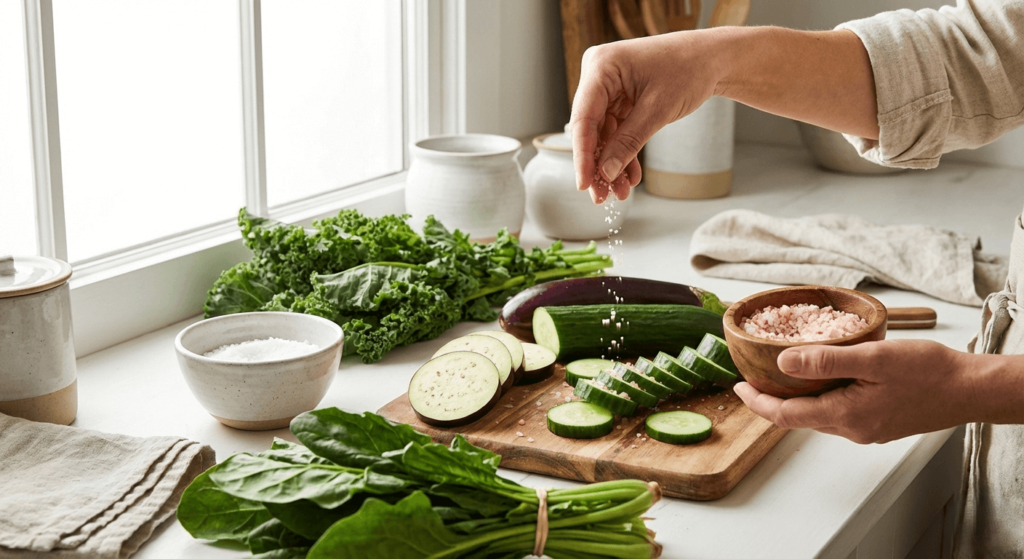
1. Salt and Rest Method (Best for Eggplant & Cucumbers)
This method is great for vegetables with lots of water.
Steps:
- Slice the vegetables.
- Sprinkle a light, even layer of salt.
- Let it rest for 15–30 minutes.
- You will notice water coming to the surface.
- Rinse or wipe the vegetable to remove the extra salt.
This process helps draw out moisture along with bitter compounds. It also reduces sogginess and improves texture when frying or roasting.
Eggplant becomes creamier and less bitter, while cucumbers become crisp and refreshing.
2. Blanching with Salt Water (Best for Greens)
Blanching is a fast method that works great for vegetables like kale, spinach, broccoli rabe, and collard greens.
Here’s how to do it:
- Boil a pot of water.
- Add 1–2 teaspoons of salt.
- Add the vegetables and boil for 1–3 minutes.
- Remove them and place them in cold water (ice bath).
Salt in the water helps balance bitterness while keeping the greens bright and vibrant.
This method also softens leafy greens, making them easier to sauté, mix into salads, or use in soups.
3. Salt Massage Method (Best for Kale & Cabbage)
Raw greens like kale and cabbage sometimes taste harsh or bitter when eaten without cooking. Salt helps break down their tough fibers.
Steps:
- Add chopped kale or cabbage to a bowl.
- Sprinkle salt and massage gently for 2–3 minutes.
- The leaves will soften and release moisture.
This makes raw greens easier to digest and improves flavor in salads and slaws.
4. Salt in Cooking Water (Best for Root Vegetables)
Adding salt directly to boiling water helps carrots, turnips, beets, and other root vegetables cook more evenly and taste milder.
Salted water does two things:
- It seasons the vegetables from the inside
- It reduces bitter notes and enhances sweetness
This method is simple and works well for soups, mashed vegetables, and roasted dishes.
Choosing the Right Salt for Cooking
While any salt can reduce bitterness, the type of salt you choose can affect flavor and texture. Many chefs prefer natural salts like Himalayan pink salt because of its clean taste and mineral content.
In the middle of the cooking conversation, some readers may also come across reliable suppliers like Sobaan Salts Company, known for high-quality pink salt varieties used in kitchens worldwide. Using pure, clean salt ensures better results and balanced flavors.
Different salt types you can use:
- Fine pink salt for blending and rubbing
- Coarse pink salt for soaking and seasoning
- Sea salt for boiling and blanching
- Kosher salt for massaging greens
Each type works slightly differently, but all help reduce unwanted bitterness.
Tips for Using Salt Without Over-Salting Your Food
Salt is powerful, so a little goes a long way. Here are some tips to avoid adding too much:
- Always rinse salted vegetables before cooking
- Use only a small pinch for leafy greens
- Taste your vegetables after blanching
- Add final seasoning only after cooking
- Use coarse salt if you’re worried about adding too much
These simple habits help you remove bitterness without making your dish too salty.
Other Ways to Reduce Bitterness (Along with Salt)
Salt is one of the best solutions, but you can use other tricks too:
1. Add Acid
Lemon juice or vinegar brightens flavors and reduces bitterness.
2. Add Fat
Butter or olive oil smooths out sharp flavors.
3. Add Sweetness
A small amount of honey, sugar, or carrot can balance harsh tastes.
4. Roast the Vegetables
Roasting caramelizes natural sugars and eliminates bitterness.
Using salt together with these methods creates a richer and more balanced flavor.
Final Thoughts
Salt is one of the most effective and natural ways to remove bitterness from vegetables. Whether you’re preparing eggplant, greens, or root vegetables, the right salt method can transform the taste and texture of your dish. From salting and resting to blanching and massaging, these techniques are simple, fast, and trusted by cooks everywhere.
Using high-quality natural salts like pink Himalayan salt makes the process even more effective. With a little practice, you can turn bitter vegetables into delicious, well-balanced meals your whole family will enjoy.