If you’ve been an office worker all your life, the idea of working from home is sure to sound like a dream. That is, until you’re hunched over a dining table with a kitchen chair digging into your back.
Working from home is supposed to make you feel more comfortable. So, if your setup feels more like a compromise than a workspace, it’s time for a change.
A well-designed home office makes it easier to stay focused, meet deadlines, and enjoy the workday a little more. Yes, it starts with the right office furniture, but it doesn’t end there. Comfort, lighting, storage, and a bit of personality all help transform your space into one that truly works for you.
Comfort: Prioritize Movement and Posture
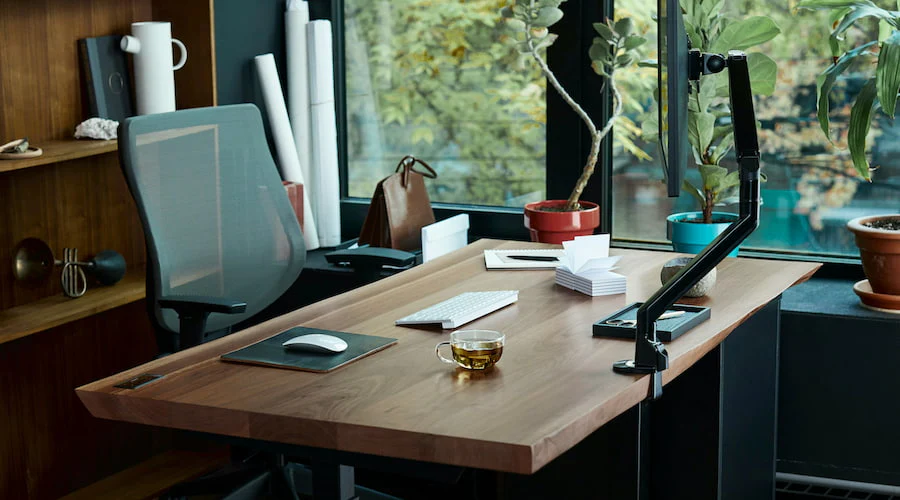
Choose an office chair with proper lumbar support and adjustable height. Pair it with a desk that’s between 28 and 30 inches high.
You must also ensure the desk is wide enough to fit your gear and give your arms room to move. For most people, 60 inches wide is a safe bet.
Now, think about movement. It’s easy to underestimate how much room you’ll need. However, you need to remember that tight spaces will slow you down physically and mentally.
That said, your chair, desk and overall home office layout should allow you to swivel, stand, and shift without bumping into furniture or walls. Give yourself at least 60 inches of width and 84 inches of depth.
Lighting: Illuminate the Space
Your eyes are already working hard when you’re working in front of a computer all day, so don’t make them work harder. Ample lighting helps reduce eye strain and keeps your energy steady.
Combine natural and artificial light where you can. Position your desk near a window, but watch out for glare on your screen. If the sunlight is too intense, sheer curtains can help block it without shutting out the world.
Layer your lighting. Use an overhead light for general brightness, a desk lamp for tasks, and maybe a floor lamp for softer coverage.
Choose full-spectrum bulbs for a more natural feel, especially in rooms that don’t get much daylight. Adjust as needed. Lighting should support your work, not compete with it.
Helpful Fact: Lighting also plays a role in how you feel throughout the day.
Bright, balanced light can help you stay alert in the morning, while warmer tones can reduce fatigue as the day winds down. It’s a small detail that makes a noticeable difference in your daily rhythm.
Storage: Have a Place for Everything
Clutter takes up both your physical office space and mental bandwidth. If your desk is drowning in papers and cables, it’s time to rethink your storage.
Start by keeping essentials within reach. Use standing file holders for paperwork, a tray for incoming mail, and drawers or baskets for supplies you use daily.
If you need more storage, think vertically. Floating shelves keep equipment off your work surface and allow you to easily access reference books or decor.
Tuck your printer and scanner into nearby shelves or low cabinets. Hide cord clutter with covers, clips, or a grommet on the desk. Choose storage that works with your habits, whether that means stacking items in baskets or filing them away.
Design your storage around how you work. Keep current tasks close, reserve a spot for documents in progress, and have a clear place to file finished work. When everything has a home, it’s easier to focus on what matters and requires much less time to clean up when the day is done.
Personalization: Inject a Bit of Yourself
Your home office doesn’t have to look like a showroom. In fact, it shouldn’t.
Think about what makes a space feel good to be in, then add it. That could be a framed photo, a bold rug, or even a plant that doesn’t mind being ignored.
There’s more than comfort at play here. Research shows that when your workspace aligns with your identity, you’re more likely to feel relaxed, stay motivated, and maintain better focus. The little things matter: a favorite mug for your pens, a curated playlist, or a lamp that makes the room feel warmer.
Style your space according to your work habits. If you thrive on color, incorporate it through artwork, accessories, or your organizers. If minimalism enhances your concentration, opt for a clean and simple style.
The point isn’t to decorate for the sake of it. It’s to create an environment where you can do your best work and actually want to spend time. When a space feels right, you’re more likely to enjoy being there and more likely to get things done.
Make It a Space That Works for You
A good home office does more than hold a laptop. When your setup supports comfort, offers smart lighting, stays organized, and reflects your personality, it stops feeling like just another room — it becomes a space where you can (and actually want to) work in.