Iron is among the most required mineral in a human body and it is a crucial component of hemoglobin formation and oxygen transportation as well as keeping the human body upbeat. Amongst people on a vegetarian diet, getting enough iron may be a difficulty since plant foods contain only non-heme iron, which has lower bio-availability than animal-sourced heme iron. Combining plant-based food items with clever food combinations, however, can greatly increase the absorption of iron to avoid deficiency.
This article will look at ways to choose foods strategically to maximize iron absorption, identify some of the most common iron absorption inhibitors, and provide vegetarians and vegans with easily applicable meal ideas in everyday life.
The Truth about Iron in a Vegetarian or Vegan Diet
There are heme and nonheme dietary Iron:
- Heme iron: This type of iron comes in animal products like meat, poultry and fish. Its absorption in the body is easy (15-35 percent).
- Plant-based bacteria: Tuna, sardines, salmon, red meat, meat liver, pork, chicken, beef, and eggs. Its absorption rate is not as high (2-20 percent) and is also affected by other eating factors.
Based on this fact, individuals with a vegan or vegetarian diet should be more deliberate when it comes to matching foods so that they take up iron as much as possible.
Why Choosing the Right Food Pairings Matters to the Availability of Iron
The manner in which we mix foods is either synergistic or antagonistic in enhancing the absorption of iron The absorption of non-heme iron can be augmented by some compounds, such as vitamin C, citric acid, and beta-carotene and inhibited by other substances, such as tannins, phytates, and excessive calcium.
Here the considered strategy food pairings come into play By intelligently pairing iron-rich plant foods with enhancers, the plant-based eaters will no longer need to worry about their low bioavailability rate and are able to meet their daily iron Requirements.
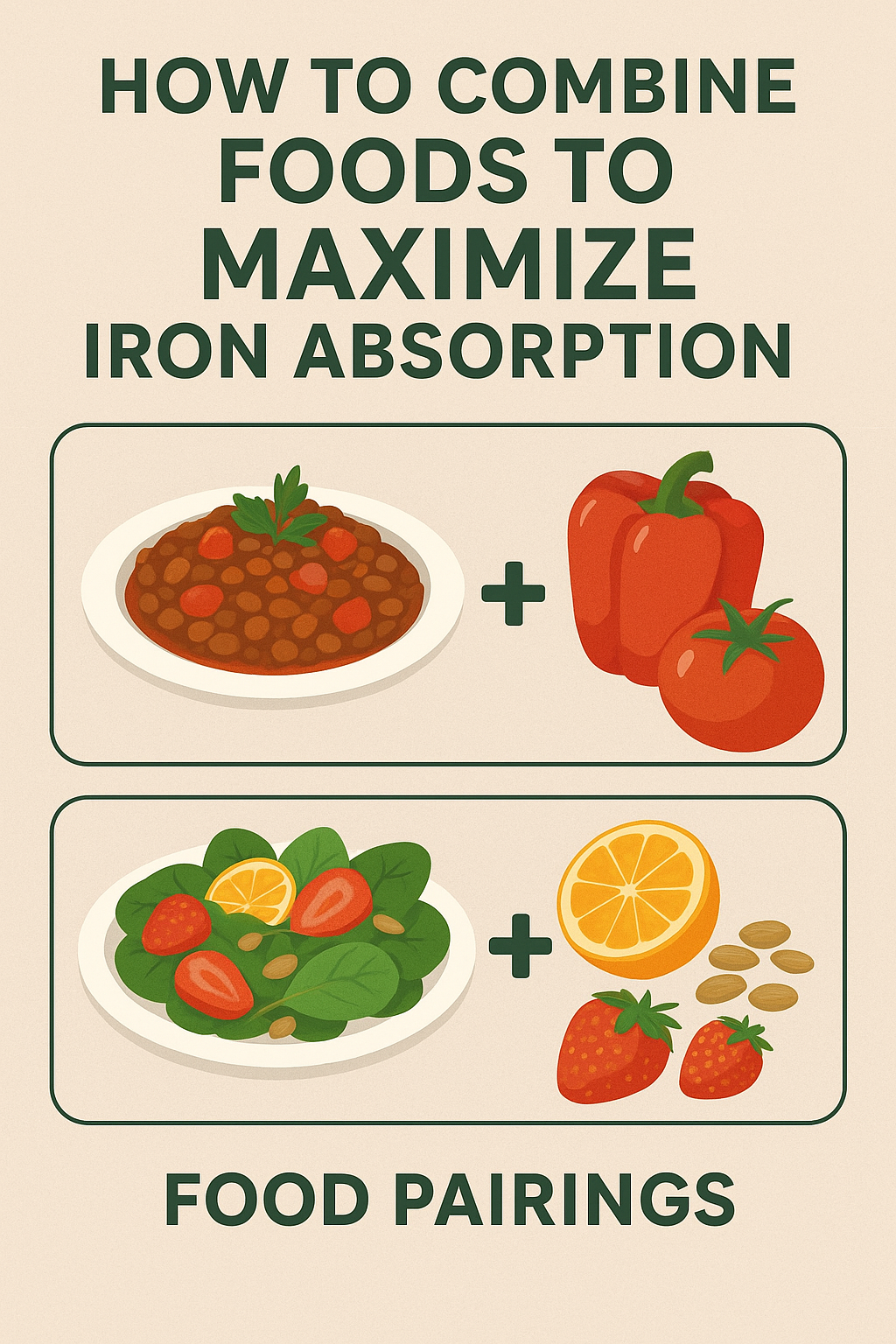
To appreciate further on maximizing meals, check out food pairings to get ideas on how the flavors and nutrients interact.
Food Combination Nutrients that Boost Iron
The following are some of the most effective Iron-enhancing combinations on a plant-based diet learned through research:
1. Vitamin C Sources + Iron- Rich Foods
Vitamin C is among the best enhancers of non heme iron absorption. It makes iron more absorbable to the body.
Illustrations of combinations:
- Lentils and roasted red peppers or tomato
- Oranges or strawberries spinach salad
- Curry made of chickpea with lemon juice
- Stir-fry of tofu, broccoli-pineapple
2. Acidic Foods + Iron-Rich foods
Acidic foods noted; such as citric acid-containing food, enhance the intestinal absorption of iron by dissolving phytates (organic compounds which inhibit the absorption of iron).
Couples:
- Quinoa that is dripped with lime
- Tomatoes, lime juice and black beans
- Whole grain bread with an avocado, lemon dressing
3. Foods with Iron + Beta-Carotene Foods
Beta-carotene (a precursor to vitamin A) improves the absorption of iron that is non-heme especially when combined with legumes and grains.
Couples:
- Carrot Sweet potato Lentil soup
- Brown rice with pumpkin or squash butternut
- Carrots, roasted red peppers and hummus
4. Foods That Are Rich In Iron + The Herbs And Spices
There are also some herbs and spices which might decrease the iron blocker and increase the absorption release and make the meal delightful.
Examples of combinations:
- Curry with spinach, turmeric and garlic
- Cumin, paprika and coriander chili
- Chickpeas with parsley, garlic and lemon
Prevalent Errors That Inhibit Iron Absorption
Strategic food combinations can help in making the absorption process enhanceable but on the other hand, there is a tendency that the absorption process is slowed down due to certain habits. Here are the general traps to avoid:
1. Having Tea or Coffee With Meals
Both drinks have tannins and polyphenols which will decrease the amount of non heme iron that can be absorbed to a key amount. The meals suggest the intake of these products an hour or two after the meals and not during.
2. High Level of Calcium when Meals are Rich in Iron
Calcium is the competitor of iron during absorption. Iron preparations in high doses interfering with effectiveness may occur with high doses of fortified plant milks or supplements with iron-rich meals.
3. Excess Processed Grains
Refined varieties of grains have a good chance of losing most or all of their iron and other minerals during the process. The intake of whole grains will provide more iron and the synergistic minerals to absorb the iron.
Iron-boosting meal ideas vegans can work with
To ensure these strategies are put into practice, these are some examples of nutrient-balanced meals:
Breakfast
- oatmeal with strawberry and pumpkin seeds: oats (source of iron) tossed with fresh strawberries (source of vitamin C) and pumpkin seeds (source of iron).
- Whole- grain toast and hummus, with roasted red peppers: Chickpeas (iron) roasted red peppers (vitamin C).
Lunch
- Spinach and lentil Salad with Citrus Dressing: Spinach and lentils (iron), combined with the flavors of the orange juice dressing (vitamin C).
- Quinoa Bowl with Black Beans, Tomatoes, and Lime: Iron in Black beans and Quinoa is made bio available with tomatoes and lime.
Dinner
- Broccoli and Pineapple Stir-Fried tofu: Tofu with nutrient Iron mixed with pineapple to provide high amounts of vitamin C.
- Chickpea Curry with Sweet Potatoes and Lemon: Iron in chickpea combined with sweet potato containing beta-carotene pigment in combination with lemon juice.
Snacks
- Trail Mix, Dried Apricots and Nuts Almonds
- Carrot Sticks with Beet Hummus
Tips on Meal Timing and Lifestyle
However, food pairings are not all you need to maximize iron absorption: meals with coinciding timing and lifestyle practices are also essential:
- Spacing Out Iron and Calcium: You should not take calcium supplements with foods that are rich in iron.
- Cook with Cast Iron Pans: Iron may increase due to cooking in cast iron pans; acid foods such as tomato sauce shall acidify the cast iron cooking receptacles and this increases iron content.
- Soaking, Fermenting and Sprouting Legumes/Grains: Phytates will be leached by these methods and more iron can be absorbed.
- Variety: alternate beans, lentils, seeds, leafy greens and fortified foods so that no bases are missed.
How Much Iron Do You Require on a Vegetarian Diet?
The dietary allowance of iron differs with age, and gender:
- Adult men: 8 mg /day
- In adult women (19-50 years): 18 mg/day
- Pregnant women: 27 mg a day
- Postmenopausal females: 8 mg/ everyday
Given that the absorption of non-heme iron is less efficient vegetarians and vegans are often told to consume 1.8 times the RDA to get the necessary amount of iron. With strategic food pairings, this goal will be much easier to attain without supplements on the part of many individuals.
Final Thoughts
The complicated part does not lie in maximizing iron absorption on a plant-based diet. With careful food combinations, vegetarians can increase iron uptake considerably through typical iron food combinations (for example, including iron-rich foods with vitamin C sources, acidic foods, and/or beta-carotene-rich vegetables). Simultaneously, the use of absorption blockers such as tea, coffee, and excessive intakes of calcium during meals may cause a significant influence.
The trick is to do it with the right strategy, careful meal planning, and an understanding of the dietary cheats and traps that increase or reduce iron, and energy levels and ensure that a plant-based diet can become more than adequate in maintaining healthy iron levels, energy, and a person.