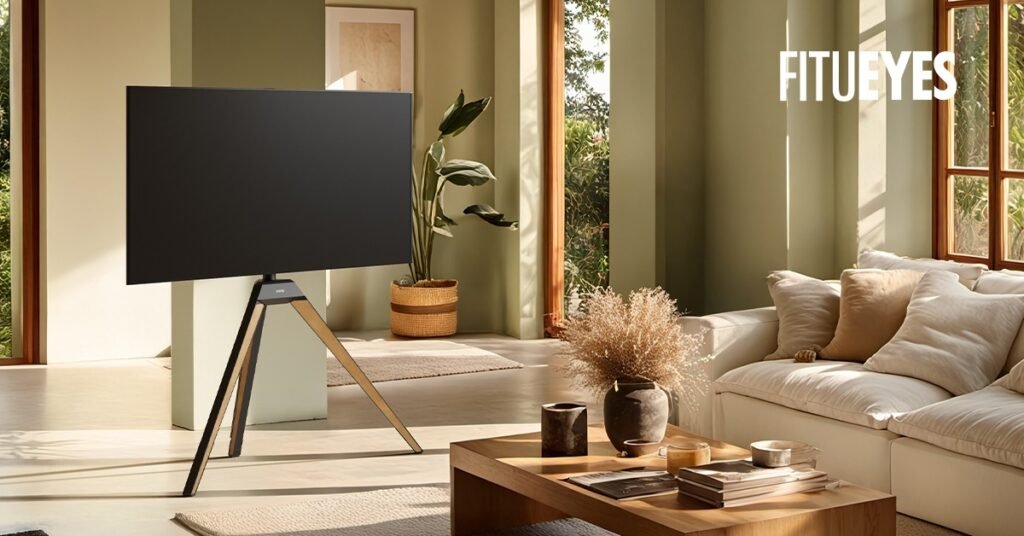
When you have active kids or curious pets, a standard TV cabinet can quickly become a safety hazard. The safest TV stands for families are floor stands that feature a low center of gravity (weighted base) to prevent tipping, a single-column design to eliminate climbing footholds, and internal cable management to hide wires from chewing pets.
Ideally, look for a stand with height adjustability to keep the screen out of toddler reach (above 42 inches) and locking brackets that secure the TV to the frame. We will walk you through exactly how to spot these features and choose a modern TV stand that offers peace of mind by design—without the need for drilling holes in your walls.
Recognizing Hidden Hazards in Traditional Furniture
Before choosing a new setup, look at your current furniture through the eyes of a toddler. Traditional entertainment centers often harbor risks that aren’t obvious to adults.
The “Ladder Effect”
To a toddler, a drawer handle is a ladder rung. Traditional cabinets with horizontal handles or open shelves invite children to climb. Once a child steps on a drawer, the center of gravity shifts forward, significantly increasing the chance of a tip-over.
Top-Heavy Instability
Many standard consoles are made of lightweight particle board, making the base lighter than the massive TV on top. If a large dog bumps the side or a child pulls the edge, the lightweight base cannot counteract the momentum, leading to a fall.
Electrical & Cable Risks
Dangling HDMI and power cables are irresistible chew toys for pets and strangulation hazards for children. “Hiding” cables isn’t just about looks—it’s a critical safety measure to prevent children from pulling the TV down on top of themselves.
The Structural Advantages of Floor TV Stands
Modern floor TV stands are engineered specifically to handle the physics of flat screens, offering a smarter solution for families.
Wall-Mount Stability Without Drilling
For renters, drilling into studs is often forbidden. A high-quality floor stand offers a no drill TV mount solution. It mimics the security of a wall mount—locking the TV to a rigid metal frame—while remaining completely freestanding. You get safety without risking your security deposit.
Inherent Stability & Low Center of Gravity
FITUEYES stands are designed with inherent stability. Unlike wooden cabinets, they use a heavy-duty steel chassis and a weighted base (solid steel or tempered glass). This anchors the weight at the bottom, not the top. The stand naturally resists tipping using physics, not drywall screws.
No Footholds for Climbing
A minimalist universal TV stand with a single vertical column removes the “Ladder Effect” entirely. There are no drawers to pull out and no shelves to step on. Without a foothold, a child physically cannot climb the structure.
Selecting Safe TV Stands: Critical Features
Look for these specific technical features to ensure your stand is truly kid-proof.
Internal Cable Routing
Don’t settle for cheap clips. True safety requires internal cable management. Look for a stand with a hollow central column where you can thread cables inside the metal tube. If your pet cannot touch the wire, they cannot chew it.
Height Adjustability (The “Impact Zone”)
A screen sitting low is in the “Impact Zone”—perfect for flying toys or sticky hands. Choose a stand with height-adjustable brackets and position the bottom of your TV at least 42–45 inches off the floor. This keeps the screen out of reach without compromising your view.
Tempered Safety Glass
High-quality stands use Tempered Safety Glass. Unlike standard glass which shatters into dangerous shards, tempered glass is designed to crumble into small, dull chunks if broken under extreme force. It’s the same safety standard used in car windows.
Base Geometry for Your Floor Type
- Deep Carpet: Use a flat-plate base (like the Master Series). The heavy, wide surface compresses carpet fibers evenly for a wobble-free foundation.
- Hardwood/Tile: A tripod or easel style is excellent. The legs find stability even on uneven floors, and rubberized feet prevent sliding if a dog runs into it.
Best Practices for Secure Assembly
Even the safest product needs to be set up correctly.
The Self-Righting Tilt Test
After assembly (before hanging the TV), place the stand on the floor and gently tilt it back about 10 degrees. A safe, weighted-base stand should immediately “fight” to return to an upright position. If it wobbles, check that your base bolts are tightened.
Use the Locking Brackets
The connection between the TV and the stand is critical. FITUEYES mounts include locking screws or clips. You must tighten these after hanging the TV. They physically hook the screen to the stand, making it impossible for a child to lift or bump it off the rails.
Layout for Large Pets
If you have large dogs, place your stand in a corner or recessed area. A slim corner TV stand profile minimizes the target area, ensuring wagging tails don’t sweep items off shelves or knock the screen.
Modern Design Meets Heavy-Duty Security
Invisible Safety
“Baby-proofing” doesn’t have to mean ugly foam bumpers. The FITUEYES Picasso Series looks like a gallery easel, bringing a modern aesthetic to your home while secretly providing industrial-grade steel stability. It allows you to maintain an “adult” living room that is secretly safe for kids.
Long-Term Value
A quality stand grows with your family. Use the height adjustment to keep the TV high for toddlers now, lower it for a teen gaming station later, and eventually send it off to a college dorm—where wall mounting is strictly forbidden.
FAQ about TV Stand Safety
Q1: Can a floor stand hold a 75-inch TV securely?
A: Yes. Heavy-duty stands are built from heavy-gauge steel and tested for weights far exceeding standard TVs. Always check the VESA and weight rating, but they are engineered specifically for large screens.
Q2: Do I need to anchor a floor stand to the wall?
A: Generally, no. Unlike lightweight bookcases, FITUEYES stands feature a low center of gravity and weighted base that makes them inherently stable and free-standing.
Q3: Is a rolling TV cart safe for toddlers?
A: Yes, if you engage the brakes. Look for carts with industrial-grade locking casters. When locked, it requires significant force to move, preventing toddlers from pushing it.
Q4: What is the safest TV height for kids?
A: We recommend mounting the TV so the bottom edge is 42–45 inches from the floor. This keeps the panel above the reach of most toddlers and toys.
Conclusion
Creating a safe home doesn’t require a renovation. By choosing a specialized floor TV stand with a weighted base, secure locking mounts, and smart cable management, you are choosing peace of mind.
You don’t need a handyman or a drill—just the right design. Explore the FITUEYES collection today to find a stand that supports your TV, and your family’s safety, with effortless stability.