If you’re starting your Japanese learning journey, you’ve probably wondered, “How long is this going to take?”
This question is asked by almost every Japanese learner and it always sparks discussion. Some people say six months, others say five years, and some even claim it’s a lifetime journey. But in reality, how long it takes to learn Japanese depends on a lot of things, like your personal goals, how much time you put in, and how you go about studying.
In this article, we’ll break down how long it generally takes to reach different levels of proficiency and offer a few tips on how to speed up the process.
Understanding the Japanese Proficiency Levels

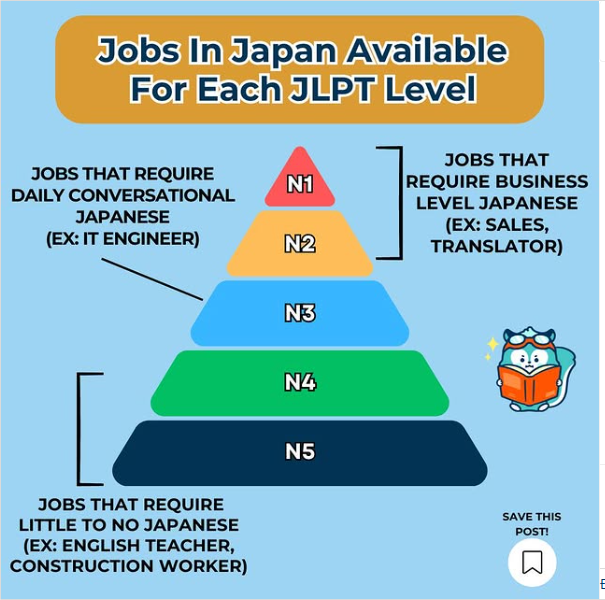
First, let’s talk about the levels of fluency in Japanese, so you have a clearer picture of what to expect. The JLPT (Japanese Language Proficiency Test) is commonly used to measure your level, and it has five levels:
Level
What You Can Do
Time Estimate (Consistent Study)
N5
Understand simple phrases, introduce yourself
3-6 months
N4
Have basic conversations, understand everyday topics
6 months – 1 year
N3
Follow most conversations, watch anime with subtitles
1-2 year
N2
Work in Japan, follow complex conversations
2-3 years
N1
Read newspapers, debate complex topics
3-5+ years
The timeline for learning Japanese varies depending on how intense your studies are and how much you immerse yourself in the language.
Learning Timeline: What to Expect at Each Stage
Phase 1: Getting Started (0-3 Months)
This very first period is time for building a solid foundation. There are several parts that you should learn this beginning:
- Learn hiragana and katakana (the two Japanese alphabets).
- Start picking up basic greetings and essential phrases like “hello,” “thank you,” and “goodbye.”
- Begin understanding the most common grammar structures like “X wa Y desu” (X is Y).
A useful trick is to spend a little time every day reviewing the alphabet and simple phrases. This method is called space repetition. Apps like HeyJapan or Mazii can be super helpful here.

Phase 2: Basic Conversations (3-6 Months)

Once you’ve mastered the basics, it’s time to start speaking!
- Learn N4-level grammar (basic past tense, adjectives, and polite forms).
- Build common vocabulary related to food, directions, and time expressions.
- Start listening to Japanese through podcasts, anime, or beginner-friendly conversations.
💡 Pro Tip: Want to sound more natural when chatting casually? Learn different ways to say “hey” in Japanese, like やあ (Yaa), よっ (Yo), or おっす (Ossu). Each of these expressions carries a different tone and level of formality. Check outHow to say hey in Japanese for a full breakdown on how to use them correctly!
Phase 3: Getting Comfortable (6 Months – 1 Year)
By now, you’ll have a good grasp on basic Japanese and can handle casual conversations in a variety of situations. This is when you really start feeling more comfortable.
- You’ll be familiar with the N3 level grammar (more complex tenses and expressions).
- You can read simple manga or children’s books and understand basic news articles.
- Watching anime and dramas without subtitles will be more manageable, though you might still need a little help with unfamiliar words.
Pro Tip: Make yourself surrounded by Japanese, it means: change your phone language, think in Japanese, try to recall vocabulary related to daily objects anytime you see it. The more you practice, the faster you’ll improve.
Phase 4: Intermediate to Advanced (1-2 Years)
Now you’re getting into the meat of the language. At this stage, you’ll be able to hold longer conversations and engage in discussions about a wider variety of topics. If you just use Japanese for simple work or just want to communicate, there is no need to reach the next phase.
- You’ll know enough kanji to read a good amount of text (probably around 1,000-2,000 characters).
- You can start watching Japanese TV shows and movies without relying on subtitles, though it will still take practice.
- You’ll have a solid understanding of business Japanese if you’re planning to work in Japan..
Phase 5: Fluency (2-5+ Years)
This is the point where you can speak and understand Japanese almost like a native speaker. You’ll be able to express complex ideas, read newspapers, and hold meaningful conversations in both casual and formal settings.
- You’ve mastered most of the N2 and N1 grammar, and you’re familiar with over 2,000 kanji.
- You can comfortably watch TV shows, read books, and even engage in debates or interviews in Japanese.
The key to maintaining this level is to focus on improving 4 skills at the same time. Trying dictation can help you upgrade your listening skills and speaking at once.
How to Speed Up the Process
Although learning Japanese takes time, but if you are too busy or you need to use Japanese urgently, we suggest some ways to shorten your journey:
- Vary Your Learning Methods: Textbooks are not the only material you can use. Try listening to Japanese music, watching TV shows, or reading manga. You can also make use of your smartphone by downloading some apps like HeyJapan, Mazi,…to repeat
- Focus on Kanji Early: Don’t wait too long to start learning kanji. They’re crucial for reading and understanding Japanese texts.
- Use Japanese Every Day: Even if it’s just a few minutes of speaking or writing, daily practice will keep you improving quickly. Leaving language aside for just a couple of days makes it harder to learn when you get back.
- Find Language Partners: Nothing beats practicing with real people. You can look for someone who is Japanese and wants to learn your mother tongue at the same time. Then try to teach them your language, so you can practice speaking Japanese with native speaker in exchange.
So, how long will it take you to learn Japanese?
The answer depends on how consistent you are and how deeply you want to engage with the language. If you study diligently, you’ll probably be able to hold basic conversations within a year and have a strong grasp of the language in 2-3 years.
But remember, the key is to stay consistent. Even just 30 minutes of study a day can lead to impressive progress over time.
💡 Ready to start your Japanese journey? Check out https://heyjapan.net/— the perfect web for structured lessons, fun learning methods, and personalized study plans to help you learn Japanese efficiently! 🚀