Your mouth affects how you eat, speak, and feel each day. You need care that respects that. Modern family dentistry now blends new tools with close, human attention. You see this when a dentist uses digital x rays, clear images, and gentle scanners. Then you also feel it when that same dentist remembers your child’s fear, your tight budget, or your aging parent’s needs. Technology alone can feel cold. Personal service alone can miss early warning signs. Together, they protect your teeth, your time, and your peace of mind. A dentist in Barrie can use new methods to spot small problems early. That same office can offer calm talks, simple words, and clear choices. You deserve both smart tools and real care. This blog explains how family dentistry joins the two and what that means for you and your family.
Why modern tools matter for your family
New tools in dentistry are not fancy extras. They change how early problems show up and how much treatment you need. Early care means less pain, less cost, and less time off work or school.
Current tools help your family in three clear ways.
- They find tooth decay and gum disease earlier.
- They cut down on pain and recovery time.
- They give you clearer pictures and facts so you can choose care.
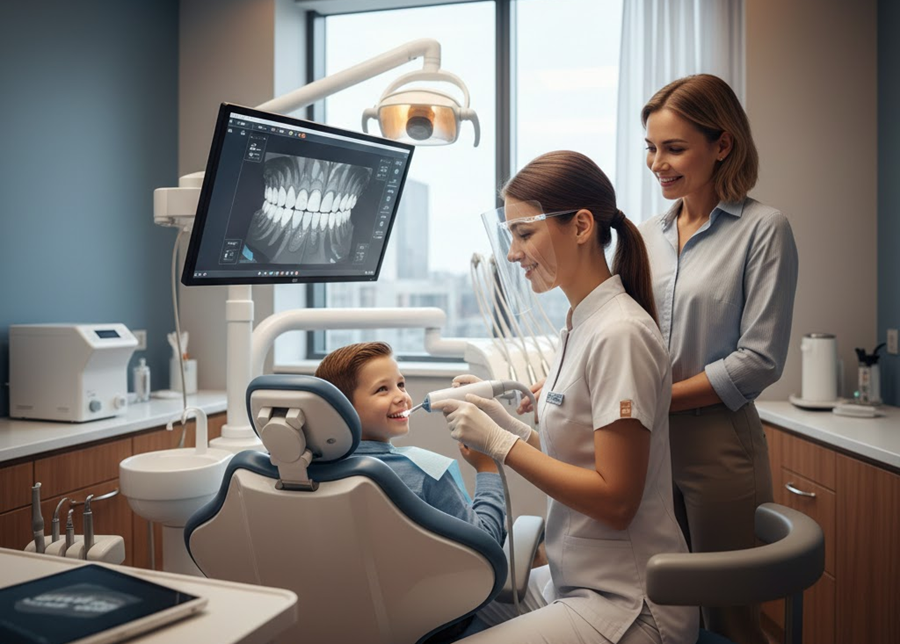
For example, digital X-rays use less radiation than old film X-rays. The Centers for Disease Control and Prevention explains that dental X-rays use low doses when used with care. Many family offices now use sensors that show images on a screen in seconds. You see the same image your dentist sees. You can ask direct questions. You can see a change over time.
Key tools you may see in a family office
Most family practices now use a mix of modern tools. You can expect three main groups.
- Digital tools for exams
- Comfort tools for treatment
- Communication tools for planning
Here is a simple comparison to show how tools and personal care work together.
| Tool or approach | What it does | How personal service adds to it |
|---|---|---|
| Digital x rays | Show decay and bone loss quickly with less radiation | Your dentist explains the image in plain words and checks your concerns |
| Intraoral camera | Takes close pictures inside your mouth | You view the screen together and decide on the next steps as a team |
| 3D or digital scans | Create a map of teeth for crowns, guards, or aligners | Your dentist matches the plan to your schedule, budget, and daily habits |
| Comfort tools such as numbing gel | Reduce pain during cleanings or fillings | Your dentist listens, pauses when you signal, and checks your child’s fear level |
| Secure patient records | Store your history and images in one place | Your dentist tracks patterns over years and adjusts care for each family member |
How personalized service protects you
Technology only helps when someone uses it with care. Personalized service means your dentist knows your story and shapes care around it. Three parts matter most.
- Your health history
- Your daily life
- Your emotions and fears
Your dentist should ask about past health issues, medicines, and family history. The National Institute of Dental and Craniofacial Research notes that some people face a higher risk for tooth decay than others. A caring family office uses that fact. It sets your visit schedule and home care plan to match your risk, not a generic chart.
Your daily life also shapes care. If you work nights, have a child with special needs, or care for an older parent, you need simple plans. Short visits. Clear steps. No pressure. Personalized service respects that.
Emotions matter too. Many adults carry old fears from a rough visit long ago. Many children fear sounds and smells. A thoughtful team speaks softly. It explains each step before it starts. It uses stop signals so you keep control.
Modern tools that help children and older adults
Family dentistry covers every age. New tools help in different ways at each stage.
For children, gentle tools can turn fear into trust.
- Small digital sensors fit tiny mouths.
- Soft toothbrushes and flavored polish feel less harsh.
- Pictures on a screen help kids see “sugar bugs” and learn to brush.
For older adults, tools can spot quiet problems that do not hurt yet.
- Digital X-rays catch bone loss early.
- Cameras show worn edges or cracked fillings.
- Scans help fit dentures or guards that feel steady and safe.
Personal service then fills the gap. Your dentist can talk with your child at eye level and use stories instead of threats. Your dentist can speak slowly with an older parent and repeat key points for caregivers.
What to look for in a family practice
When you choose a family dentist, you can use three simple checks.
- Look at the tools.
- Listen to the words.
- Watch the time they give you.
First, ask what digital tools they use for exams and records. You do not need brand names. You only need to know if the office can show you clear images and track changes over time.
Next, listen to how the team talks. They should use plain words. They should answer every question without rushing. Treatment options should be clear with costs and timing explained before work starts.
Then, see if they give real time for questions. A strong family office will invite you to talk about fears, money, and home life. It will not shame you for missed visits. It will help you plan the next step that feels possible.
Bringing it together for your family
Modern family dentistry is not about gadgets. It is about using the right tools with respect for your story. When technology and personal care work together, you get three gains. You catch problems early. You feel heard. You leave with a clear plan you can follow.
You and your family deserve that mix. You can ask for it. You can expect it. You can choose a dentist who offers smart tools and personal service at every visit.