One of the most important biological processes that keep a human being alive is digestion. All the cells in the body require constant supply of nutrients in order to generate energy, repair tissues, regulate hormones, and immune defences. These nutrients are never found in food in form that can be readily consumed by the cells. Rather, food has to be subject to a sophisticated sequence of mechanical and chemical reaction turning it into absorbable molecules.
As part of it, the digestive system is required to digest complex foodstuffs into simpler ones that may get into the bloodstream and into the cells of the body. This process is linked with a series of working of various organs in a specific order where carbohydrates, proteins, fats, vitamins and minerals are properly processed. When the digestive system is effective, it facilitates metabolism, immunity, growth and the well being of the individual.
The article describes the biological processes involved in digestion and gives the reader an account of how various nutrients are digested, absorbed and carried to different parts of the body. Knowledge of these processes will assist in emphasizing the importance of proper digestion in the human body, which is the key factor in being balanced and alive.
A Description of the Digestive System
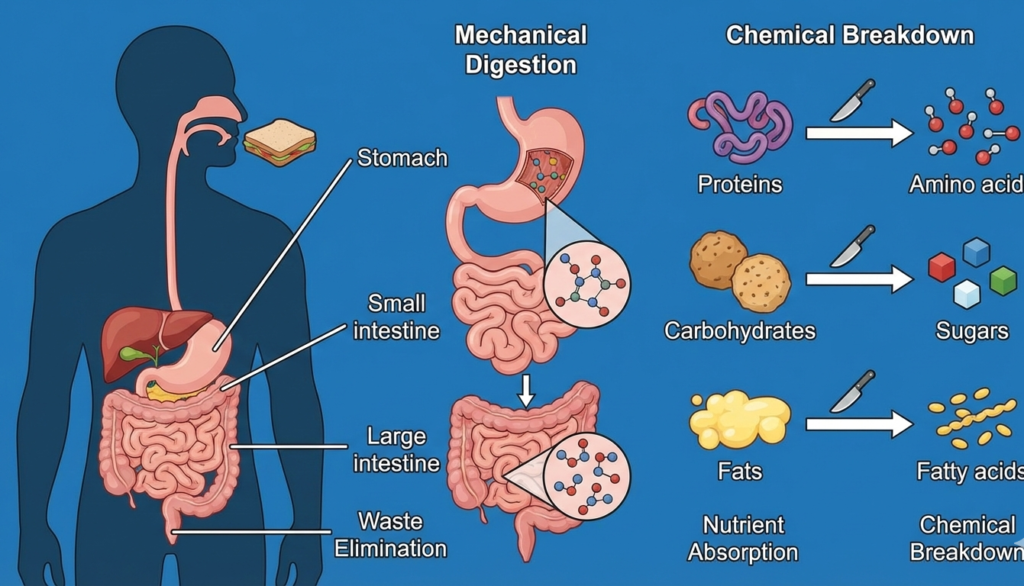
The digestive system is a tubular system that is muscular in nature and is propelled by specialized organs that aid in the digestive and absorption process. It starts in the mouth and terminates at the anus and flows through an oesophagus, stomach, small and large intestine. On the path along, there are other accessory organs like the liver, pancreas and the gall bladder which release digestive assistants.
The parts of the organism or the body have their functions and that no one single part can perform effectively by itself. Digestion depends on the mechanical processes, including chewing and muscle contracting, and on the chemical processes, including enzymes, acids, and bile. This is because these processes interact to see that food is converted into nutrients that the body can absorb.
To have a clear anatomical description of how these organs work in unison, the biological processes in the digestion process are given in a detailed description by the medical anatomy sources.
The Process of Eating Starts at the Mouth
The digestion begins when the food enters the mouth. Chewing is the process that breaks down food into smaller parts by teeth thus providing more surface area on which enzymes can work. This mechanical action is necessary to facilitate an efficient digestion in the later phases of the digestive tract.
The salivary glands produce saliva which is carried by the duct of the salivary gland and contains enzymes that initiate the chemical digestion process on carbohydrates. These enzymes begin to decompose complex carbohydrates into simple sugars. Saliva too coats food and this creates a soft bolus that is easily swallowed.
The tongue aids in the mixing of food and saliva and directs the food to the throat where it is ready to proceed to the next phase of digestion. In spite of the fact that digestion in the mouth is not long, it is important in the process of breaking down nutrients.
Ingestion and Travel Down the Oesophagus
After the food is swallowed it gets to the oesophagus which is a muscular tube connecting the mouth to the stomach. The bolus is transported to the stomach via the oesophagus through a process known as peristalsis which is the contraction and dilation of the muscles that cause the bolus to be drawn down.
The role of the oesophagus in the digestion of chemicals is not important. Rather, it is a means of transportation, which makes food arrive to the stomach without any complications. Swallowing is a reflexive action that keeps the food out of the airway.
This free movement is what ensures that the digestive process is never interrupted since the food gets to the stomach.
The Stomach and Protein Digestion
The stomach significantly contributes to mechanical as well as chemical digestion. The powerful muscular contractions stir up the food in the stomach combining it with gastric juices to create a semi-liquid called chyme. Such mixing is necessary to assure the presence of equal action of digestive enzymes on food particles.
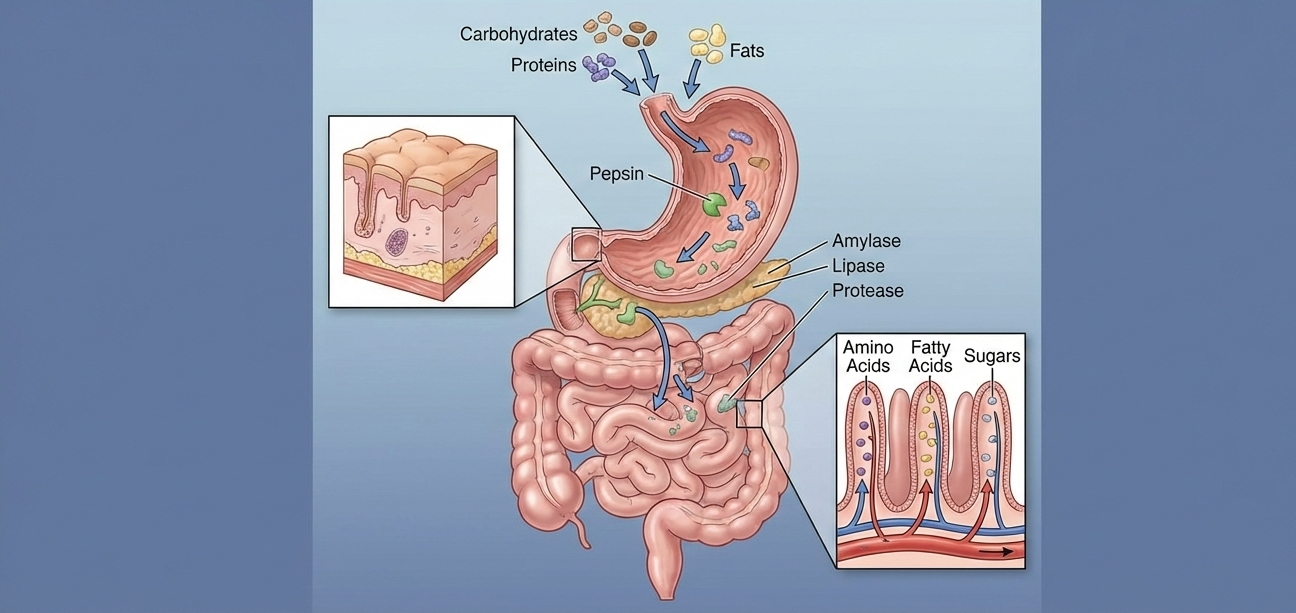
The stomach juices have enzymes and hydrochloric acid which initiate protein digestion. Acidic environment uncovers the structure of the proteins and this structure becomes easily fragmented by the enzymes into simple chains of amino acids. Such an acidic environment also assists in the destruction of harmful microorganisms that can be related to food
The food is stored temporarily in the stomach which releases chyme to the small intestine in a controlled amount allowing effective digestion and absorption.
The Small Intestine: The Refinery of the Nutrient Breakdown
Digestion is completed and nutrients are absorbed on the small intestine which is the major site. It is further separated into three parts known as duodenum, jejunum and ileum. Every section has its hand in the processing of nutrients.
The chyme is mixed with liver bile and pancreatic enzymes in the duodenum. Bile splits fats into smaller droplets, which exposes a greater number of sites to the action of enzymes. Breaking down the carbohydrates into simple sugars, the proteins to amino acids and even the fats to fatty acids and glycerol are broken down by pancreatic enzymes.
The small intestine has a lining composed of millions of minute projections known as villi and this contributes greatly to the amount of surface area used in the absorption. Such structures enable the movement of nutrients into the blood to be facilitated.
Carbohydrate digestion and absorption This process breaks down carbohydrates into glucose and additionally absorbs this molecular form.
Carbohydrates are also a significant source of power to the body. Carbohydrates digester starts in the mouth and proceeds in the small intestine. Complex carbohydrates are broken down into simple sugars like glucose by enzymes.
These sugars are absorbed by the walls of the small intestine after being broken down and are released into the blood stream. The glucose is then transported to cells whereby its energy is produced or stored as a source of energy in the future.
Efficient digestion of carbohydrates will guarantee stable energy levels and provide support of the brain functioning, muscle activity and metabolic balance.
Protein Digestion and absorption of Amino acids
Proteins play a vital role in tissue building as well as repairing, enzyme production, and immune defence. The digestion of proteins starts in the stomach and goes on in the small intestine.
Enzymes decompose the proteins into smaller peptides and subsequently into amino acids. Absorption of these amino acids is done through the intestine lining to the bloodstream and is taken into the various cells all over the body.
After entering the cells, the amino acids are utilized in the production of new proteins or in metabolism. Tissue repair and immune defences are undermined in the event of the lack of proper protein digestion.
Fat Digestion and Transport
Fats are a concentrated source of energy and are essential in cell structure and hormones production. The small intestine plays a major role in the digestion of fats with the aid of bile and pancreatic enzymes.
The fats are dissolved in bile to smaller droplets that can be acted upon by enzymes. Then fats are broken down to fatty acids and glycerol which gets absorbed to the intestine.
These elements enter the lymphatic system before going to the bloodstream where these elements are transported into cells to store energy and form membrane.
Uptake of Vitamins and Minerals
Micronutrients are vitamins and minerals, which facilitate the work of many body processes. There are those vitamins that dissolve in water and there are those that dissolve in fat. Their absorption requires that the fat should be digested right and that the intestinal lining is healthy.
Specialized transportation systems in the small intestine absorb minerals like calcium, iron and magnesium. These nutrients help in the maintenance of bones, carrying of oxygen, nerve conduction, and enzymes.
The body needs nutrients to be well-balanced and prevent deficiency, which can be achieved through competent absorption.
The Water Balance and the Large Intestine
With the absorption of most of the nutrients, the rest of the material flows to the large intestine. The main role of the big intestine is to absorb liquid water and electrolytes converting liquid waste into solid feces.
Additional bacteria living in the large intestine are beneficial and help to further reduce undigested material and generate some vitamins. It is a microbial activity that serves digestion and immunity.
Large intestine is where waste is ready to be removed which shows the final stage of the digestion process.
The role of Digestion in Supporting Metabolism and Immunity
Digestion supplies the raw material required to carry out the metabolism, which involves turning the cells into producing energy. Glucose provides energy to the cells, amino acid helps to repair tissues and fats are the source of long time energy storage.
Immunity is also a factor of the digestive system. The digestive system is healthy and supports good bacteria and avoids the entry of harmful substances into the bloodstream. The absorption of nutrients enhances the immune cells and helps in defending the body.
The body can be effective in the face of stress, infection and physical demand when the digestion is good.
Conclusion
Digestion is a complicated yet very effective process that converts nutrition into life giving food. The digestive system decomposes carbohydrates, proteins, fats, vitamins, and minerals into absorptive forms through well-coordinated mechanical and chemical processes.
The complexity of the biological processes of digestion underscores the importance of appropriate digestion to metabolism, immunity, growth and health in general. The organs are necessary as each plays a critical role in delivering nutrients to cells where they are required the most.
One of the most significant systems in the human body is the one that helps to maintain balance, resilience and long-term well-being as it occurs through effective digestion.