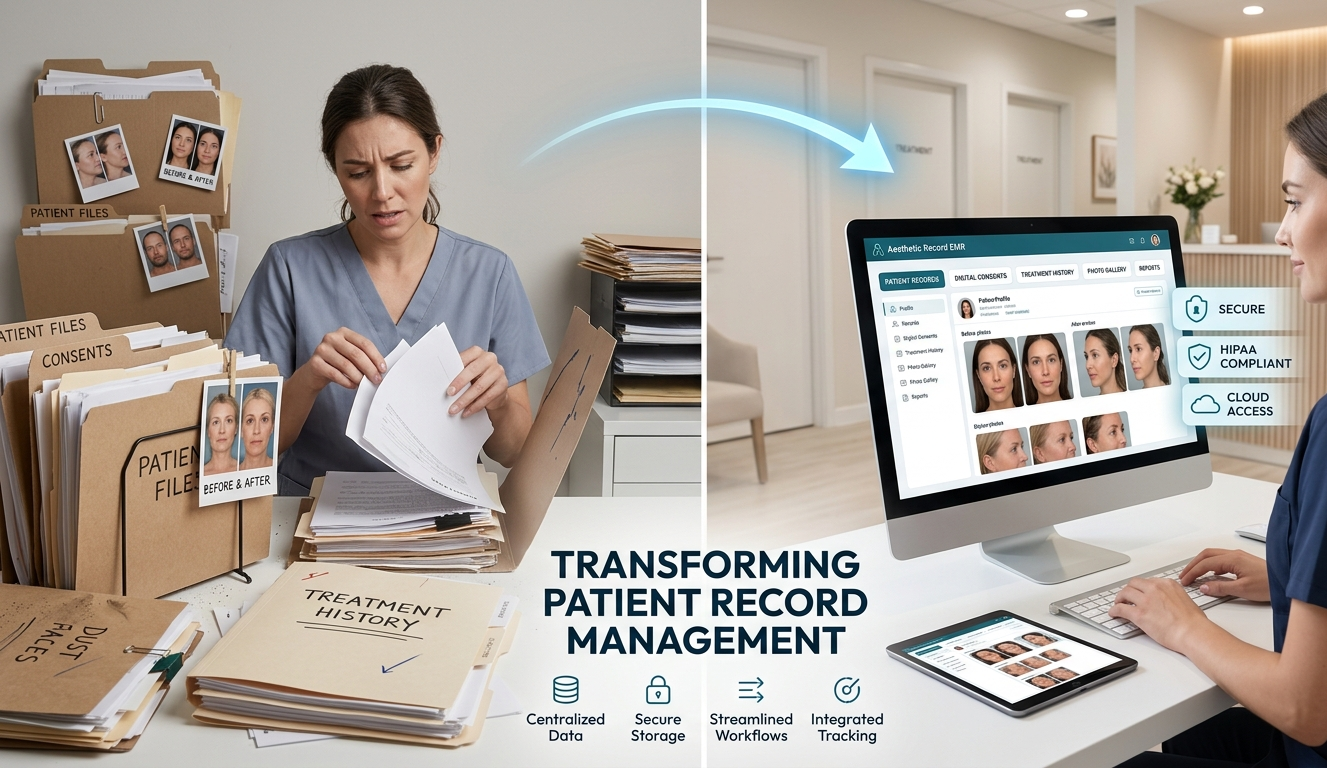
Aesthetic clinics today handle not just treatments or patient consultations. They store before-and-after photographs, handle consent forms, maintain treatment history, patient prescriptions, and appointment records on a regular basis. Manual record-keeping does not fail to meet the growing aesthetic demands. This translates into ineffective workflows and patient records.
Aesthetic record EMR software is a centralized digital solution that streamlines documentation, enhances access to treatment, and reinforces practice workflow. It also helps maintain a safe and orderly medical record.
Key Challenges Clinics Face in Managing Patient Records
Aesthetic clinics that operate under manual systems or outdated systems have a series of problems with patient record management. Ineffective record keeping, intermittent data availability, and inaccessibility not only make work processes inefficient but also hinder the general workflow.
Aesthetic practices usually face such problems as:
- Scattered patient records
- Time-consuming documentation
- Complexity in data retrieval
- Inconsistent record updates
- Limited treatment tracking
These challenges have a tendency to affect the productivity of staff and patient experience. Plastic surgery practice management software implementation can also help the clinics to solve these issues and maintain organized data.
Transforming Patient Record Organization with Aesthetic EMR Systems
Let us now explore how an aesthetic EMR system can help redefine patient data organization.
Centralized Patient Information
Under centralized storage of records, clinics can save the complete patient profile under one secure system. Treatment data, medical records, photos, and consent forms are continually available.
The primary benefits include:
- Unified patient records
- Organized notes on treatment
- Integrated photo records
- Storage of digital consent
Clinics enjoy the benefit of improved visibility of patient histories, offering informed treatment choices and well-documented medical records.
Streamlined Documentation Workflows
Best documentation procedures help save aesthetic practices time on administrative tasks. Also, it helps maintain accurate records of all patient communications and treatments provided.
This includes:
- Custom treatment plans
- Automated record updates
- Structured charting capability
- Quick entries of patient or treatment notes
Employees complete documentation faster and with greater precision. During consultations, it can be noted that structured workflows help maintain patient records that are consistent, detailed, and easily available.
Secure Data Storage and Compliance
A significant concern in the aesthetic practices dealing with sensitive medical information is patient confidentiality. EMR helps with encrypting patients’ information and protecting access to their records.
The main benefits are:
- Encrypted patient databases
- Role-based user access
- HIPAA-aligned safeguards
- Secure cloud storage
There are protective mechanisms to protect confidential data and guarantee compliance. It helps clinics gain the trust of patients by having a conscientious record-keeping policy.
Integrated Treatment Tracking
The treatment tracking features enable clinics to record procedures, used products, and patient outcomes in a single digital platform.
This way it maintains:
- Thorough logs of treatment procedures
- Records of products used
- Tracking of treatment progress
- Notes on treatment outcomes
Clarity in the procedure involved for patients, professionals can seamlessly structure their follow-up appointments and ensure treatment continuity through multiple sessions.
Enhanced Photo and Media Management
Images are crucial in aesthetic treatments. Electronic medical records (EMR) systems that facilitate aesthetic practice for effective storage and organization of patient photographs.
It offers:
- Before-and-after photos
- Secure tagging of images
- Tracking of visual progress timelines
- Organized media libraries
Clinics maintain proper visual records that facilitate consultations, treatment planning, and communication with patients. Also, it stores all images for individual records directly linked to their profiles.
Improved Accessibility for Clinical Teams
Aesthetic practices need immediate retrieval of patient documentation during consultations, procedures, and subsequent check-ups.
EMR systems offer:
- Cloud-based record access
- Multi-device compatibility
- Team collaboration tools
- Real-time record updates
Clinical professionals will have access to the correct patient information in real-time, simplifying the work process and improving communication between clinic workers.
Conclusion
Patient record management offers clinical accuracy and stability of workflows in aesthetic practices. Aesthetic Record EMR systems provide a well-structured setting where data is accessible and secure without increasing administrative workload.
By implementing specific EMR systems, clinics achieve better visibility into patient histories and enhance staff coordination.