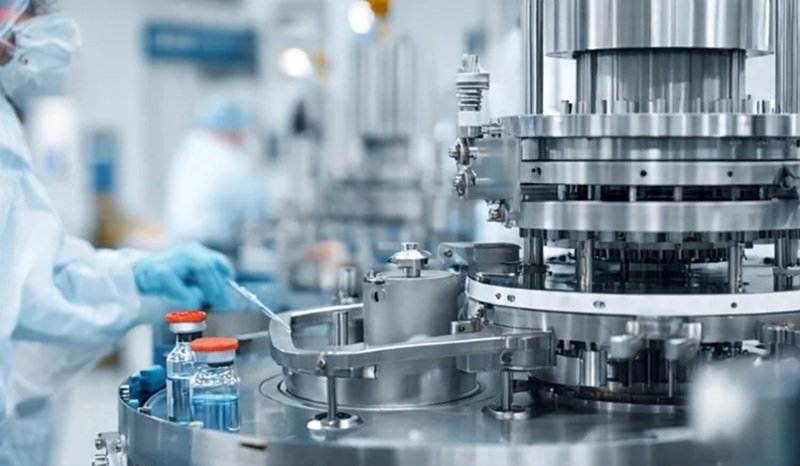
Patients and their safety, as well as regulatory compliance are non-negotiable issues in the pharmaceutical industry. All tabs, capsules and vials released in the market should be of high quality indicative of the safety of the population. It would not be possible to obtain such accuracy and uniformity without highly sophisticated pharmaceutical production equipment. The modern equipment is no longer just a production means, it is a part of the regulation compliance, the product safety, and quality assurance.
Due to the continuous presence of stricter standards and controls aimed at reducing risk of contamination and enhancing efficacy of dosing, pharmaceutical companies are under increasing pressure to maintain traceability, reduce the chances of contamination, and ensure proper dosing. The sophisticated pharmaceutical equipment can have a decisive impact on fulfilling these requirements as it includes precise engineering, automation, data integrity systems, and contamination management in each production phase.
In this article, the role of modern pharmaceutical machinery in drug safety and regulatory compliance is described with the emphasis on how the equipment design, automation and validation can allow manufacturers to comply with universal standards and remain efficient in operations.
Regulatory Environment of Pharmaceutical Manufacturing
The production of pharmaceuticals is regulated by one of the most strict regulations in any sphere. Governmental policies like the GMO, FDA policies, and the WHO standards are in place to make sure that medicines are always manufactured and monitored in accordance with the quality standards that suit their intended purpose.
These policies apply to all the processes of production such as manipulation of raw materials, man-made processes, equipment design, washing, papers, and quality assessment testing. The regulatory bodies require the pharmaceutical firms to prove that they have total control of their operations with elaborate documentation that cannot be challenged by audit and inspection.
Present-day pharmaceutical equipment is not only developed keeping these regulatory expectations in view. The equipment should be able to support validation, reproducibility and traceability with the least chances of human error. Even a properly designed process can not satisfy regulatory requirements without compliant machinery.
The Use of Advanced Machinery in Pharmaceutical Safety
Safety in drugs starts way before the product reaches the patients. It begins at the manufacturing level where machines have to assure that doses have the right dose of an active ingredient, are contamination-free, and of required quality.
High-tech pharmaceutical equipment will promote safety of drugs, as it provides great amounts of precision and uniformity. Automated systems minimize the variation as a result of manual processing, and enhanced sensors and control systems track important parameters on a real-time basis. These will enable manufacturers to detect deviations at an earlier stage and avoid having poor quality products in the supply chain.
Modern equipment serves as a protective measure that helps to ensure patient safety and compliance with regulatory standards by incorporating quality controls into the design of equipment.
Accuracy of Precision Engineering and Dosage
One of the most essential needs in the manufacturing of pharmaceuticals is the correct dosing. Minor changes in the dosage may undermine the effectiveness of a drug or create safety issues. The high sophistication of machinery presupposes the accurate regulation of the process of formulation, compression, filling, and packaging.
An example of this accuracy is a machine which produces high-quality tablets. These tablet making machine are designed to provide uniform weight, hardness and thickness of the tablet in large quantities of production. Automated systems of weight control continuously watch the parameters of the tablet, and in real-time to adjust them to the required standards.
This precision is not only useful in making sure that a patient is safe but it also helps in meeting regulatory standards that need consistency and reproducibility across all the batches produced.
Contamination Control by Designing the Equipment
Contamination is one of the biggest concerns in pharmaceutical production as it may affect the safety of the product and results into expensive recall of products. The production of advanced pharmaceutical machinery is aimed to reduce the risk of contamination by ingeniously developing machinery and the choice of materials.
Contemporary gear is designed with confined areas of operation, clean surfaces and reduced crevices where dirt may settle. The type of material in construction is chosen since it should not be subjected to corrosion and cleaning, and it should be compatible with cleaning agents and sterilization procedures.
Moreover, a variety of machines also accommodate clean-in-place (CIP) and sterilize-in-place (SIP) systems. Such automated cleaning systems bring down the chances of human involvement and the likelihood of contamination, and at the same time the sanitation standards are uniform.
Robotization and Minimization of Human Touches
The danger of human error is a great risk during the pharmaceutical production. In the case of manual work, variability, documentation errors, and contamination risk may emerge. Automation is critical in reducing these challenges.
The modern pharmaceutical equipment incorporates automated controls that command the key activities with little human interventions. Automated systems result in the homogenous implementation of validated processes of ingredient dispensing to tablet compression and packaging.
Another application of automation is electronic batch records and data logging, which is useful in increasing traceability as well as making regulatory audits easier. Reduction of manual input will help manufacturers gain a higher level of consistency, efficiency, and increase adherence to regulatory standards.
Integrity and Compliance Data Document
The regulators are very concerned about data integrity. Manufacturers should have the capability to prove that the production data is correct, full and is not subject to alteration by unauthorized people. This needs are met using enhanced pharmaceutical equipment that includes built in data management systems.
Newer equipment will tend to have digital control interfaces that log process parameters, alarm and deviation in real time. Such records can offer a clear and traceable record of manufacturing operations, which can be used to meet the needs of FDA and GMP.
Data integrity is further enhanced by the use of secure access controls, audit trails, as well as the use of backup systems. These properties make sure that manufacturers will not hesitate to provide documentation when the company is being inspected and build confidence with the regulatory bodies.
Equipment Validation and Qualification
The validation is one of the main preconditions of pharmaceutical production. Regulatory standards will ensure that equipment is always done as per the requirement and deliver products that are of the required quality. Technical machinery such as advanced pharmaceutical machinery is meant to streamline the process of validation and qualification.
Installation qualification, operational qualification and performance qualification are processes that manufacturers undertake in order to ensure that equipment functions properly under specified circumstances. Modern machinery facilitates these processes with the provision of constant operation, patterned outcomes and an all-comprehensive documentation.
Equipment that is friendly to validation saves time and resources to get regulatory approval and offers an assurance of long-term compliance.
FDA, WHO Standards and GMP
Processes, people and equipment must coincide in compliance with GMP, FDA and WHO standards. High-tech pharmaceutical machinery is designed to address these international standards so that the manufacturer will be able to operate in various markets without making numerous adjustments.
Equipment design is in line with the GMP principles which help in ensuring cleanliness, traceability and control of processes. The expectations by FDA on the issue of electronic records and validation are handled in integrated software systems. Good machine performance and documentation facilitate the WHO guidelines that focus on quality assurance and risk management.
Investment in compliant machinery enhances the pharmaceutical companies to align with the expectations of the global regulations and their market penetration.
Strategic Position of a Pharmaceutical Machinery Production Company
The selection of equipment supplier is a strategic move to pharmaceutical companies. A well-built Pharmaceutical machinery manufacturer does not simply provide machines, rather, they should become an accomplice in the regulation and quality assurance.
The veteran manufacturers have knowledge of the regulatory requirements and design equipment. They offer technical support, validation support and documentation that assists pharmaceutical firms to overcome inspections and audits.
The partnership strategy will make sure that the machinery is not only matching the needs of the production but also following long-term compliance strategies and minimize regulatory risks and operational disruptions.
Chain of Command Across the Production Line
The modern pharmaceutical production does not use single machines but unified system. High-tech machines are made to pass over the production line efficiently, starting with raw materials and finishing with final packaging.
Integration will help to improve efficiency and comply with the standards due to regular monitoring of the data flow and process control. Centralized monitoring systems enable the manufacturer to track several production processes and promptly recognize anomalies and take corrective measures.
This holistic solution enhances quality assurance and helps in continuous improvement efforts in accordance to regulatory expectations.
Making Regulatory Audits and Inspections Easier
Pharmaceutical manufacturing can not do without regulatory audits. The use of sophisticated equipment eases the audit process because of clear documentation, traceable records, and a consistent system of performance.
When conducting inspections, manufacturers should prove management of their processes and equipment. Contemporary machinery helps facilitate this need keeping a detailed record of operating parameters, maintenance measures, and deviation.
Compliant machinery is beneficial to manufacturers by minimizing uncertainty and enhancing transparency, which allows them to take audits in their stride.
Pharmaceutical Machinery and Compliance Trends in the Future
With the change in regulatory standards pharmaceutical machinery is also developing. The future of compliant manufacturing is taking the shape of emerging technologies like real-time monitoring, predictive maintenance and improved automation.
Such innovations also lead to drug safety in addition to the fact that they allow identifying problems and optimizing the process at an early stage. With the growing demands to quality and transparency advanced machinery will continue being a key facilitator to regulatory compliance.
Conclusion
State-of-the-art pharmaceutical equipment is in the center of the drug safety and regulation assurance. Modern equipment can be used to manufacture safe effective medicines meeting high international standards through precision engineering, automation, contamination control and data integrity systems.
Investing in noncompliant equipment and small companies can help pharmaceutical firms keep the risk minimum, enhance efficiency, and retain the confidence of the regulating bodies. In a market where quality is the most important attribute, sophisticated machinery is not merely a mere operation tool, it is a pillar to success in the long term.