The human development and growth are complicated processes which are controlled by a highly controlled hormonal system. Since childhood and even in adulthood, the hormones are chemical messengers, which guide physical development, tissue formation and sexual reproduction. These processes are not carried out in a random manner, but they have a well-organized biological blueprint governed by the endocrine system. Hormone dynamics in relation to growth can be used to comprehend the way the body evolves as time goes and why balance is key to healthy growth.
The height, bone development, muscle growth and puberty are all dependent on hormonal activity. In case hormone levels are healthy, the growth will be predictable and healthy. Nonetheless, growth patterns may be distorted in case imbalances are experienced, and this may cause delays in growth or overgrowth. The consideration of growth hormone, thyroid hormones, and sex hormones roles gives an understanding of the period when the body has to shift between childhood and adulthood.
The Growth Regulation and The Endocrine System
The endocrine system plays the role of production and secretion of hormones which control numerous essential functions such as growth. It comprises of glands which include the hypothalamus, pituitary gland, thyroid gland, adrenal glands and sex organs. The glands coordinate each other to manage the secretion of hormones and guarantee that growth should be at the correct age in life.

The hormones move in the blood to the target tissues where they attach to their respective receptors and cause biological reactions. Hormones that promote growth affect division of cells, synthesis of proteins, lengthening of bones and differentiation of tissues. The release of the hormones is highly controlled by time and quantity to ensure order of development.
Physical Development and Growth Hormone
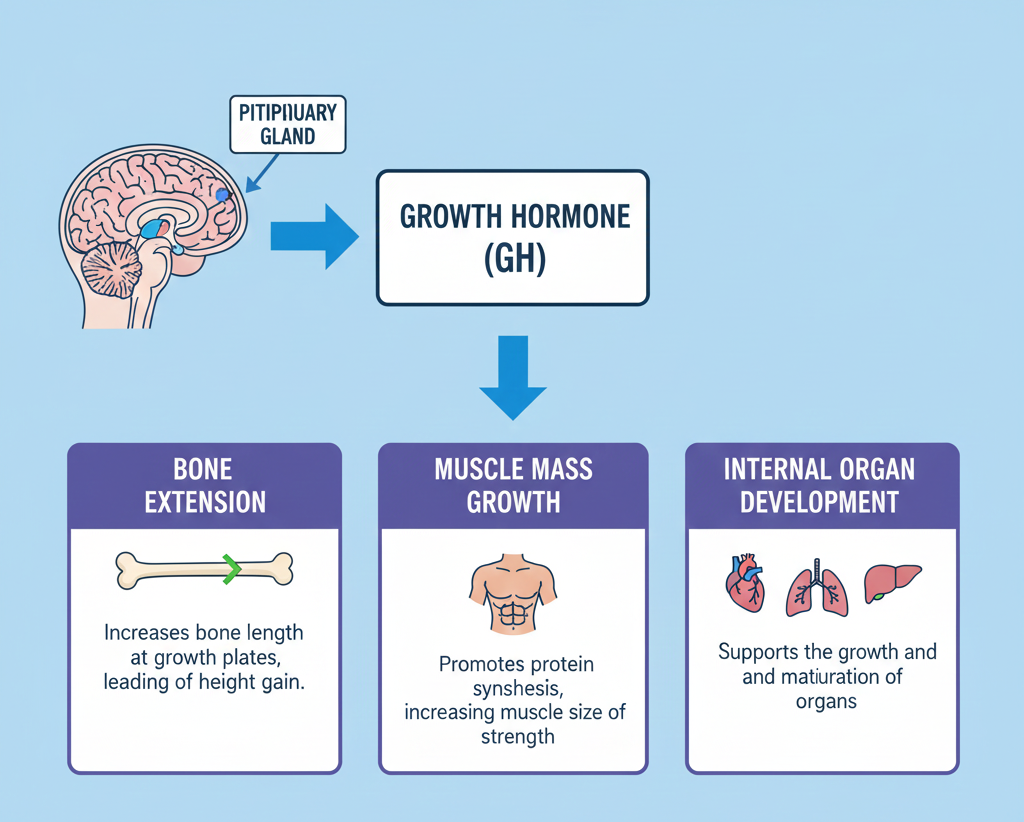
Growth hormone is one of the most important hormones that are engaged in physical development. The pituitary gland produces it, which is the main factor in the growth stimulation in childhood and adolescence. Growth hormone enhances the extension of bones, the growth of muscle mass and development of internal organs.

Growth hormone has direct action on tissues and it also causes the liver to synthesize insulin like growth factors that further stimulate bone and tissue growth. This is the sum of effects which enables the body to gain height and mass within the developmental years.
To gain more insight into the functioning of this hormone in the body, the readers may read this detailed description of the growth hormone which describes the role of the hormone in the development of the human body.
Growth Hormone in Childhood
The level of growth hormone is relatively high during early childhood so as to promote rapid growth. Long bones extend length by growth plates which is a region of cartilage that is found at the ends of the bone. The growth hormone also stimulates these plates to generate new bone tissue which enables children to grow in height in a gradual manner.

Sleep, nutrition and general health is necessary in this stage, with the release of the growth hormone being closely attributed to these. A majority of growth hormone secretion is done during deep sleep and this makes a lot of sense to the role of sufficient sleep in development of a child.
In cases where the level of growth hormone is inadequate during childhood, there is the possibility that growth can be retarded and one may end up being shorter. On the other hand, the abnormal growth patterns can be as a result of excessive production of hormones
The Role of Growth Hormone in Adolescence
Teenagers experience a rapid growth, which is also known as a growth spurt. At this age, the amount of growth hormone grows tremendously and in collaboration with the sex hormones, it stimulates the rapid growth of the body in terms of bone and muscle.
At adolescence the growth plates are open, and bones will still continue to grow in length. Growth hormone helps to increase height, as well as to bring about a modification in body composition, i.e., an augmentation of muscle mass
After the end of adolescence, plates cease to increase in height when growth hormone remains involved in tissue maintenance and metabolism.
Thyroid Hormones and Growth Support
Another necessary result of growth control is thyroid hormones. These hormones are produced by the thyroid gland and affect metabolism, energy production and activity of the cells. They also promote the actions of growth hormone by making sure that the cells possess the energy which is needed to grow and divide.
Through childhood, proper levels of thyroid hormone are essential in healthy bone growth and maturation of the brain. Thyroid hormones also govern the rate of cell growth and cell differentiation and are crucial in the general development.
Lack of thyroid hormones at the growth stages may lead to poor development, height, and cognitive disabilities. Balanced growth therefore requires proper thyroid functioning.
Interaction between Thyroid Hormones and Growth Hormone
The growth hormone and thyroid hormones do not act separately. On the contrary, they collaborate to achieve successful development. Thyroid hormones increase the sensitivity of tissues to growth hormone, and increase its effect on the development of the bone and muscles.
This communication points at the value of hormonal balance. Although the level of growth hormones may be sufficient, inadequate thyroid hormones may inhibit the growth potential.
Sex Hormones and Puberty
The sex hormones have a characterizing role in growth during puberty. Testosterone is the major sex hormone in men, and estrogen in women. The testes and ovaries produce these hormones respectively and the hormones are involved in sexual maturation and secondary sexual characteristics.
At puberty, sexual hormones cause growth spurt, due to their effects of increasing the secretion of growth hormone, and encouraging bone growth. They also affect the body shape, mass of muscles, and the fat distribution.
Female Growth Hormonal Changes
Estrogen in females helps the female in the development of breasts, hip widening, and in the sexual cycle. The estrogen also is important in the maturation of bones and ultimate growth plate closure.
After the closure of growth plates, growth ceases. The process generally happens earlier in women than in men as a result of which there are variations in average adulthood height.
Male Growth Hormonal Changes
In men, the testosterone stimulates the growth of muscles, voice deepening, and facial and body hair. Bone density is also promoted by testosterone, and testosterone also helps with the male growth spurt in teenage males.
The period of growth is generally longer in males because the plate closes later when they can keep growing.
Hormonal Balance and Healthy Development
Normal growth requires the presence of balanced hormone levels. To ensure that the levels are within proper ranges, the endocrine system depends on feedback on the secretion of hormones.
At that point when balance is maintained, growth follows life stages in a smooth progression. But interferences in the hormonal regulation can cause growth disorders.
Hormonal Imbalances Effects during Growth
Hormonal disturbances may be a major influence in physical developments. Growth hormone deficiency is a condition that is encountered when growth hormone levels in childhood are low leading to retarded growth and reduced height. Most of the time, the excessive production of growth hormone results in abnormal increase in height.
The imbalances in the thyroid hormones may lead to either the stunted growth or retarded growth, depending on the level of the hormones being low or high. Likewise, the abnormal levels of sex hormones may influence the age of puberty and abnormal development.
Early intervention and control of these imbalances is relevant to reduce the effects in the long-term
Growth Beyond Adolescence
Even though the growth of height ceases after the adolescent period, hormones remain active in their roles of sustaining tissues and whole health. During adulthood, growth hormone assists in muscle maintenance, bone strength and metabolism.
Sex hormones are also known to have an effect on bone density and body composition. Since the levels of hormones gradually change as we get older, the processes of growth change to maintenance, and not growth.
The Lifestyle and Environmental influences on Hormonal Growth
The level of hormonal development is also influenced by environmental factors in addition to the genetic factors. Hormone production and effectiveness are influenced by nutrition, sleep, physical activity and health in general.
Protein should be taken in adequate amounts to help in the growth of the tissues whereas sleep increases the release of the growth hormone. Hormonal balance can be destabilized by chronic stress and unhealthy diets, which have an impact on development.
These aspects show that good growth requires the biological regulation and lifestyle.
The Hormone Significance in Lifelong Development
With the help of hormones, the body is taken through every phase of development, and a systematic growth takes place between infancy and adulthood. Growth hormone, thyroid hormones, and sex hormones interact to be in control of height, maturation and tissue development.
The role of hormones in growth has shown the importance of taking care of one’s endocrine health in life.
Conclusion
The human growth and development are based on hormones. During childhood and adolescence, the physical growth, metabolic activity, and maturation are stimulated or inhibited by growth hormone, thyroid hormones, and sex hormones respectively. These hormones also work in a highly regulated system that provides a good time and developmental growth.
Efficient and predictable development of the body occurs when the hormone balance is maintained. Growth patterns can be distorted when there are imbalances and it is therefore important to note that endocrine regulation is essential. With a clear understanding of the role of hormones in growth as one grows, the readers can be well informed of the biological basis of human development.