Introduction: Is a Credit Card Cash Advance Ever a Smart Move?
Credit card cash advances have a terrible reputation. And a lot of the time, that reputation is well-earned. High fees, immediate interest, no grace period. Personal finance gurus will tell you to avoid them like the plague.
But here’s the thing: like most financial tools, context is everything.
There are specific situations where pulling cash from your credit card isn’t just acceptable — it’s actually the smartest move on the table. Think of it like a power drill. Dangerous if you don’t know what you’re doing. Incredibly useful when you do.
In this post, we’re going to break down exactly when and how credit card cash advances can become high-return strategies — not reckless decisions. We’ll cover the mechanics, the math, the risks, and the pro tips that separate people who use this tool wisely from those who rack up debt they can’t escape.
What Is a Credit Card Cash Advance, Exactly?
Before we get into strategy, let’s make sure we’re on the same page about what a cash advance actually is.
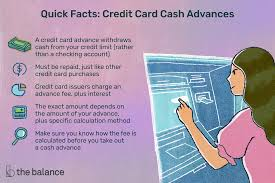
A credit card cash advance is when you use your credit card to withdraw physical cash — either from an ATM, a bank teller, or sometimes via a convenience check your card issuer mails you. Instead of charging a purchase to your card, you’re borrowing cash directly against your credit limit.
Here’s what makes it different from a regular purchase:
- No grace period. Interest starts accruing the moment you take the cash.
- Higher APR. Cash advance rates are typically 24–29%, compared to 18–22% for purchases.
- Upfront fees. Most issuers charge either a flat fee (often $10) or a percentage of the withdrawal (typically 3–5%), whichever is higher.
- Separate cash advance limit. Your cash advance limit is usually a fraction of your total credit limit.
So yeah — the baseline cost is high. That’s not a secret. The question is: can the return on using that cash outpace the cost? In the right circumstances, absolutely yes.
When Does a Cash Advance Actually Make Strategic Sense?
Here’s where most articles stop and just say “never do this.” We’re going to go further.
Scenario 1: Arbitrage Opportunities With a Short Repayment Window
Arbitrage buying low in one market and selling high in another — sometimes requires immediate liquidity. If you’ve spotted a time-sensitive opportunity (buying discounted inventory, flipping goods at a local auction, or reselling limited-edition items), and you’re confident in a quick turnaround, a cash advance can bridge the gap.
Example: You find a pallet of electronics at auction for $2,000. You know you can flip it for $3,500 within a week on a resale platform. A cash advance at 5% fee + a few days of interest might cost you $120 total. Your net gain after fees? Over $1,300. That’s a strong return.
The key here is speed and certainty. You need to be confident in both the sale price and the timeline.
Scenario 2: Real Estate Earnest Money or Down Payment Bridge
In competitive real estate markets, being able to move fast matters. Sometimes a buyer needs to put down earnest money within 24–48 hours before a mortgage wire clears. A cash advance can serve as a short-term bridge for amounts you’ll recover quickly.
This is not ideal for large sums over long periods. But for a short bridge of a few thousand dollars you’ll repay within a billing cycle, the cost might be a fraction of what you’d lose by missing a deal.
Scenario 3: Business Cash Flow Gaps
Small business owners know the pain of waiting 30–60 days for invoices to clear while expenses are due now. If you have a confirmed receivable coming in and need to cover payroll, supplier payments, or inventory costs, a cash advance can keep operations running without disrupting client relationships.
Compare the cost of a cash advance (potentially 5–8% for a 30-day period) against the cost of losing a supplier discount, missing payroll, or damaging a key vendor relationship. Sometimes the math works out.
Scenario 4: High-Yield Short-Term Investments
This one requires serious caution and should only be considered by financially sophisticated users. In rare market conditions, short-term yield opportunities (such as certain Treasury products, arbitrage funds, or structured products) have temporarily exceeded the effective cost of borrowing via cash advance.
The term 신용카드 현금화, which refers to the practice of converting credit card limits into liquid cash, is commonly discussed in Korean financial communities as a liquidity strategy and it illustrates how this practice is viewed globally as a tool, not just a last resort, when used with proper planning and understanding of the costs.
The Real Risks You Need to Understand First
Let’s not sugarcoat this part. High-return strategies only stay high-return if you go in with eyes open.
Risk 1: The Compounding Interest Trap
Because there’s no grace period, even a few weeks of carrying a cash advance balance can be expensive. At 28% APR, a $2,000 advance costs roughly $46 per month in interest alone — before the upfront fee. If your expected return is delayed by even 30–60 days, your profit margin shrinks fast.
Risk 2: Credit Score Impact
A large cash advance increases your credit utilization ratio. If your total credit limit is $10,000 and you withdraw $3,000, your utilization jumps to 30% overnight — which can drag down your credit score temporarily. For most short-term strategies, this matters less. But if you’re planning to apply for a mortgage or auto loan soon, timing matters.
Risk 3: The “Confident but Wrong” Problem
The biggest risk of all is overconfidence. The arbitrage play you were sure about falls through. The invoice arrives late. The resale item doesn’t sell at your expected price. Suddenly you’re holding an expensive loan with no exit ramp.
Rule of thumb: Never use a cash advance for a speculative opportunity. Only use it when you have high-confidence outcomes with a clear repayment path.
How to Minimize Cash Advance Fees and Maximize Returns
If you’ve decided a cash advance makes sense for your situation, here’s how to reduce the cost as much as possible.
1. Know your card’s specific terms. Not all cards are equal. Some charge 3% upfront with a 24% APR; others charge 5% with a 29% APR. Call your issuer before withdrawing — or check the cardholder agreement online.
2. Use cards with lower cash advance APRs. Some credit unions and niche cards offer substantially lower rates on cash advances. If you anticipate using this strategy more than once, it may be worth having a dedicated card with better terms.
3. Repay as fast as humanly possible. Every day counts. If you take a $3,000 advance at 28% APR, that’s roughly $2.30 per day in interest. Repaying in 7 days vs. 30 days saves you over $50 in interest on top of the upfront fee.
4. Don’t take more than you need. Fees are often percentage-based, so withdrawing $3,000 instead of $5,000 cuts your fee proportionally. Always withdraw the minimum required for your strategy to work.
5. Negotiate with your issuer. If you’re a long-standing customer with a strong payment history, it’s worth calling and asking whether they can waive or reduce the cash advance fee. It doesn’t always work, but it costs nothing to ask.
Expert Tips From People Who’ve Done This Successfully
We talked to small business owners, resellers, and financially savvy individuals who have used cash advances strategically. Here’s what they consistently said:
- “Treat it like a business expense, not personal spending.” The moment it feels like you’re just getting cash to spend, you’ve crossed a line.
- “Have the repayment money ready before you take the advance.” If your repayment depends on the strategy succeeding, the risk is already too high.
- “Calculate the break-even before withdrawing, not after.” Know exactly what return you need to cover all fees and still come out ahead.
- “Do it once, prove the model, then decide if it’s repeatable.” Don’t scale a strategy before you’ve validated it with one clean execution.
FAQ: Credit Card Cash Advance Strategies
Q: What is the typical cash advance fee? Most credit cards charge 3–5% of the withdrawal amount or a flat fee of $10, whichever is greater. Always check your specific card’s terms before withdrawing.
Q: Does a cash advance affect my credit score? Yes, it can. Cash advances increase your credit utilization, which is a major factor in your credit score. A temporary dip is possible, especially for large advances.
Q: How quickly do I need to repay a cash advance to minimize costs? Ideally within 7–14 days. Since interest accrues daily with no grace period, every day you carry the balance adds cost.
Q: Are there credit cards with lower cash advance APRs? Yes. Credit union cards and some specialty financial products offer more favorable cash advance terms. It’s worth researching if this is a strategy you plan to use.
Q: Can a small business owner use cash advances strategically? Absolutely — many do. The key is having a confirmed receivable or revenue event that will cover the repayment quickly. Use it as a bridge, not a loan.
Q: What’s the biggest mistake people make with cash advances? Taking one without a specific repayment plan. Without knowing exactly how and when you’ll repay, the fees and interest can snowball fast.
Your Strategy Is What Matters
Credit card cash advances are not inherently good or bad. They’re a financial tool with real costs and real potential utility.
The people who get burned by cash advances are the ones who use them impulsively — to cover lifestyle spending, to gamble on uncertain outcomes, or to delay facing a deeper financial problem. The people who use them successfully treat them with the same rigor they’d apply to any short-term business decision.
If you’ve identified a clear, high-confidence opportunity with a near-term payoff that exceeds your all-in cost fees, interest, and all then a cash advance can absolutely be part of a high-return strategy. The math just has to work in your favor.
Know your numbers. Know your exit. And never take out more than you can repay even if the strategy fails.