Disasters do not provide warnings in tidy timelines. When disasters occur, they are loud, quick, and overwhelming. Injuries occur all at once. First responders enter a scene where multiple patients require immediate assistance. In the first few minutes, there is no question about what needs to be done. Airway. Breathing. And often, bleeding control.
Severe bleeding is one of the most preventable sources of death in trauma patients. In mass casualty incidents, it becomes even more treacherous as resources become stretched thin. One first responder may be responsible for multiple patients. There is no time for techniques that are slow or questionable. This is where hemostatic gauze proves its worth.
It is more than just another dressing in a box. In disaster medicine, it is a tool that provides time.
Why Bleeding Control Takes Priority
In a hospital setting, there are teams, equipment, lighting, and support systems. In a disaster zone, those things may not exist. There may be debris, unstable structures, or limited access to advanced care. Transportation may be delayed.
A person with uncontrolled hemorrhage cannot wait.
Mass casualty triage systems often place heavy bleeding at the top of the urgency list because it can be addressed quickly if the right materials are available. But without proper tools, even trained responders struggle to contain deep or forceful bleeding
This is why hemostatic gauze has become standard in many trauma response kits.
What Makes Hemostatic Gauze Different
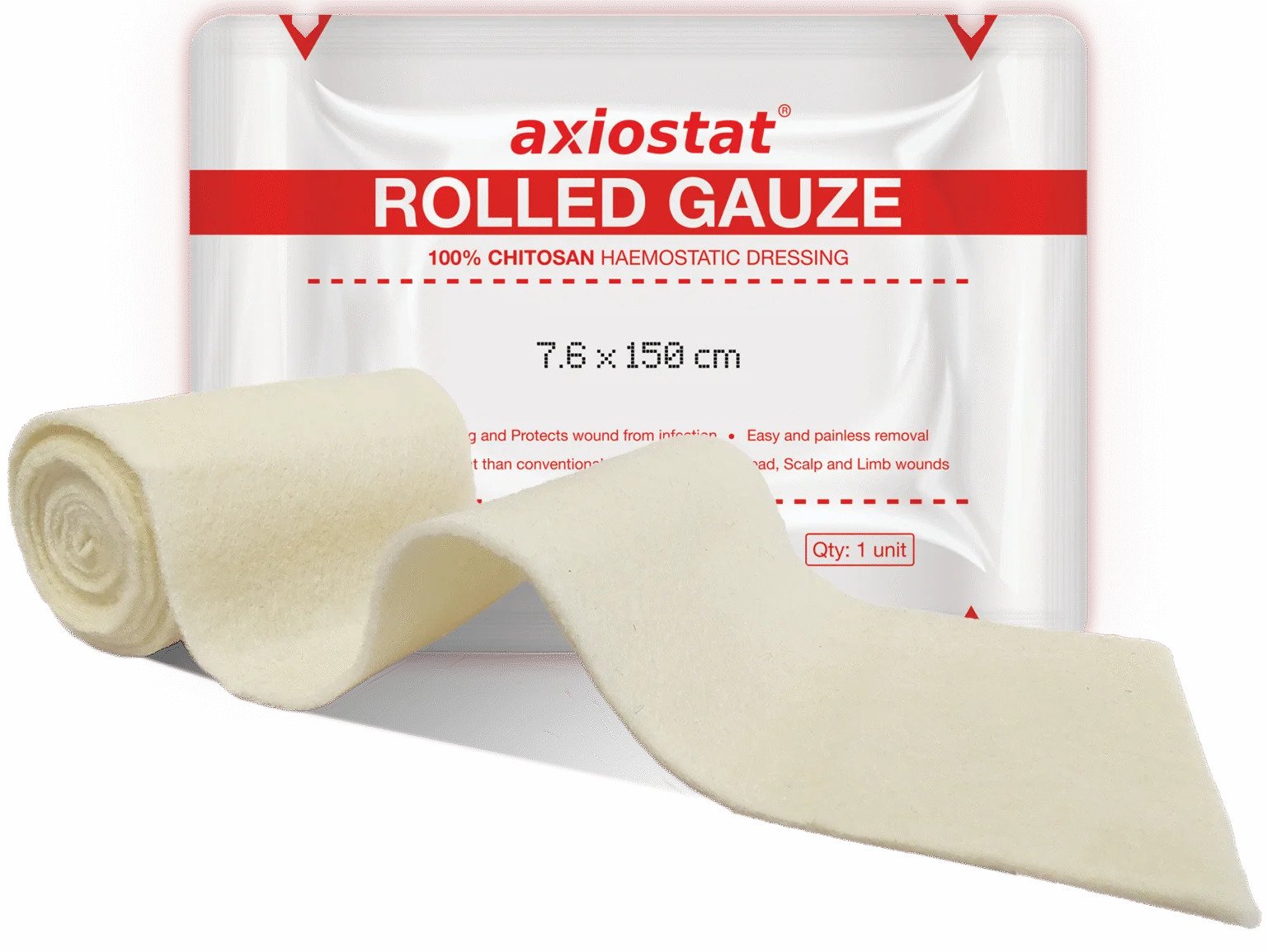
Traditional gauze absorbs blood. That is useful, but in severe trauma it may not be enough. Hemostatic gauze works with the body’s clotting process. When packed directly into a wound and combined with firm pressure, it helps create a stable clot at the injury site.
The key is proper wound packing. The gauze must be placed deep into the bleeding source, not loosely layered on top. Once packed, pressure is applied and maintained. This approach is simple, but in high-stress environments, simplicity matters.
In disaster response, equipment must be easy to use, easy to carry, and dependable. Hemostatic gauze checks those boxes.
The Reality of Mass Casualty Scenes
There is rarely perfect lighting. Rarely quiet. Rarely space to work comfortably.
Responders may be kneeling on uneven ground. They may be moving quickly between patients. They cannot afford complicated steps or devices that require assembly.
Hemostatic gauze is compact. It fits into small trauma pouches. It does not require batteries or external systems. That reliability makes it suitable for unpredictable environments.
When one patient is stabilized, the responder must move to the next. The dressing needs to hold. It needs to stay in place without constant adjustment.
That consistency is critical.
Where Axiostat Fits In
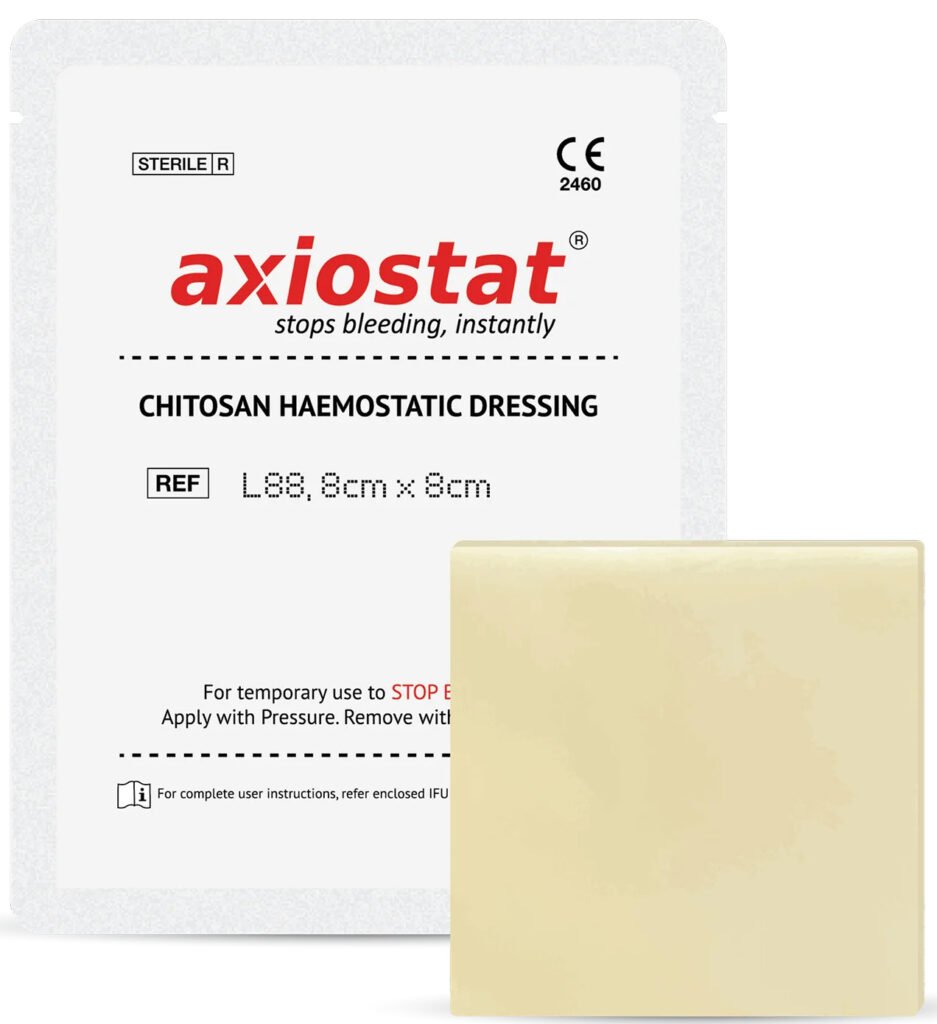
Among the hemostatic agents currently in use, Axiostat has received attention for its chitosan-based technology. This substance reacts with the blood at the surface of the wound and creates a robust mechanical barrier. It is not dependent solely on the natural speed of the body’s clotting response, which can be injury- or patient-dependent.
In large-scale emergency situations, predictability is more important than anything else. It is essential for those on the front lines to know that the agent they are using will behave in a predictable manner.
Axiostat Hemostatic Gauze is intended to stick to the wound site and control bleeding quickly without the generation of heat or further damaging tissue. This is especially important in trauma medicine, where further injury must be avoided.
When disaster response teams build their medical kits, products are selected based on reliability and ease of training. Axiostat has become part of many such protocols because it aligns with both needs.
Training and Preparedness
Having hemostatic gauze available is one part of the equation. Knowing how to use it properly is equally important.
Disaster preparedness programs increasingly include bleeding control workshops. Participants practice wound packing techniques so the action becomes familiar. In real emergencies, muscle memory often guides behavior more than written instructions.
The goal is not perfection. It is effectiveness.
In mass casualty incidents, responders do not aim to complete definitive treatment on scene. They aim to control life-threatening conditions long enough to allow evacuation and surgical care. Hemostatic gauze supports that objective.
A Practical Tool in Unpredictable Moments
No one plans to face a disaster. But emergency teams plan for the possibility every day. Supplies are chosen carefully. Weight matters. Storage space matters. Shelf life matters.
Hemostatic gauze offers practical advantages in all these areas. It is lightweight. It is easy to store in bulk. It does not require special handling.
When multiple casualties present with deep wounds or traumatic amputations, rapid bleeding control becomes the difference between survivable injury and fatal loss. In those minutes, there is no room for hesitation.
That is why this simple roll of treated gauze has become such an important part of modern disaster response strategy.
It is not dramatic. It is not complicated. It is simply effective when applied correctly.
FAQs
1. Why is hemostatic gauze a necessary item in mass casualty incidents?
Because time is of the essence, and the bleeding can quickly get out of hand. Hemostatic gauze allows for quicker control of the bleeding than regular gauze, which is essential when multiple patients are in need of treatment.
2. Is special training necessary for the use of hemostatic gauze?
Basic training in bleeding control is highly advisable. The procedure, which involves packing the wound and applying pressure, is simple, but prior practice will help to boost confidence.
3. How does Axiostat hemostatic gauze differ from standard hemostatic dressings?
Axiostat hemostatic gauze utilizes chitosan-based technology, which creates a tight seal on the wound. It is intended to function well without causing tissue damage due to heat.
4. Can hemostatic gauze be a substitute for surgical care?
No. It is a temporary solution for stopping the bleeding until more advanced medical care can be sought.
5. Should hemostatic gauze be removed once the bleeding has stopped?
It should be left in place until medical personnel can safely evaluate and treat the wound in a controlled setting.