Hey there! Rocky Martinez here, your friendly neighborhood plumber from Denver. After twenty years of crawling through basements during Colorado blizzards and explaining why water heaters always seem to fail on the coldest nights, I’ve got some exciting news to share.
Last month, I helped the Johnson family in Highlands Ranch cut their water heating bill by $35 a month. That’s over $400 a year! How? We replaced their old electric water heater with a heat pump water heater. Mrs. Johnson called it “magic,” but I prefer to call it “smart technology finally catching up to what we’ve needed all along.”
With energy costs climbing faster than a tourist hiking their first fourteener, I’m getting more calls about these innovative systems every week. Traditional water heaters are like that gas-guzzling pickup truck your uncle refuses to replace. They work, but they’re costing you money every single day.
In this guide, I’ll walk you through everything I’ve learned from installing over 150 heat pump water heaters across the Denver metro area. Whether you’re tired of sky-high utility bills or simply want to do your part for the environment, this technology might be exactly what your home needs.
What is a Heat Pump Water Heater?

Picture this: instead of burning gas or using electric coils to create heat, a heat pump water heater works like a reverse refrigerator. It pulls heat out of the air around it and concentrates that heat to warm your water. Sounds crazy? I thought so too, until I installed my first one back in 2018.
Here’s the simple version of how it works. The unit has an evaporator coil that contains refrigerant (the same stuff that’s in your air conditioner). This coil absorbs heat from the surrounding air. Yes, even “cold” basement air contains heat energy. The refrigerant gets compressed, which makes it super hot, then it flows through coils wrapped around your water tank, transferring all that concentrated heat to your water.
The efficiency is determined by something called the Coefficient of Performance, or COP. Your old electric water heater had a COP of about 0.9, meaning it converted 90% of the electricity into heat. Heat pump water heaters typically achieve COPs between 2.0 and 3.5. That means for every dollar of electricity you put in, you get $2 to $3.50 worth of heat.
I remember explaining this to Mr. Peterson in Lakewood, and he said, “Rocky, that sounds too good to be true.” Fair enough! But after a year with his new system, he’s saving $40 a month and telling all his neighbors about it.
You’ll find two main types: integrated units (everything built together) and add-on units (that work with your existing tank). Most of my customers opt for integrated systems because they’re more efficient and easier to maintain over time.
The Real Talk: Benefits and Drawbacks

Let me give you the honest truth about heat pump water heaters. No sales pitch, just what I’ve seen in real Denver homes over the past seven years.
The Good News is Good
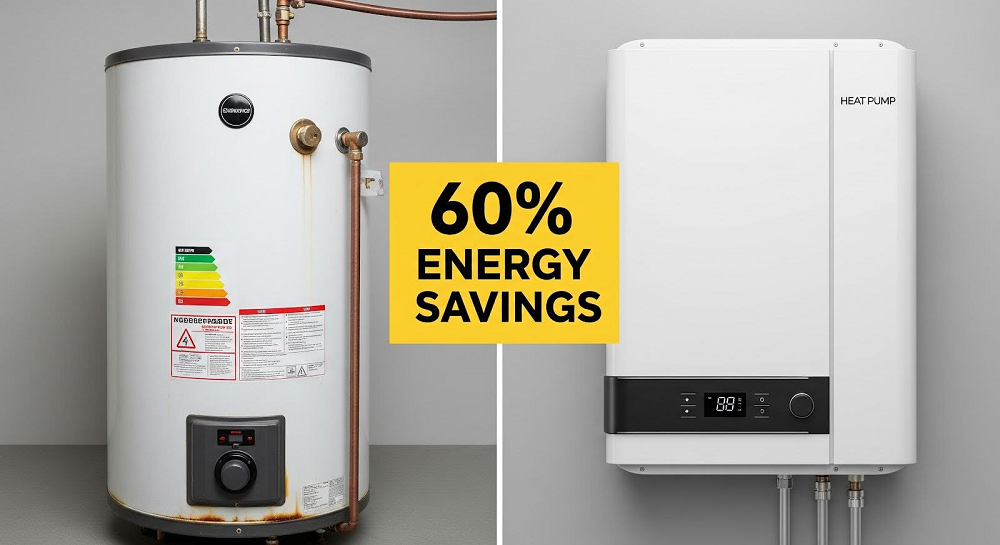
Energy savings are the biggest win. I’ve tracked my customers’ bills, and most have seen reductions of 60-70% in their water heating costs. The Rodriguez family in Aurora was spending $65 a month heating water with their old electric unit. Now they’re paying $22. That’s $516 a year back in their pocket.
However, what gets me excited is that these things help cool your basement in the summer. Remember, they’re pulling heat out of the air, so they make your utility room cooler. The Martinez family in Thornton uses their basement as a workshop, and they love how much more comfortable it is during the summer months.
Environmental impact matters too. Every heat pump water heater I install prevents about 4,000 pounds of CO2 from entering the atmosphere annually. That’s equivalent to not driving your car for 4,500 miles. For families who care about leaving a better world for their kids, that’s huge.
Financial incentives make the deal even sweeter. Right now, you can get a $2,000 federal tax credit, plus Xcel Energy offers rebates up to $1,800. I just helped a family in Centennial get their total incentives up to $3,200, which covered almost their entire installation cost.
The Challenges Are Real, But Manageable
Higher upfront costs are the biggest hurdle. Quality units range from $1,200 to $3,500, compared to $500 to $1,500 for conventional electric heaters. But here’s my perspective: you’re not just buying a water heater, you’re investing in 15 years of energy savings.
Space requirements can be tricky. These units require ample space, approximately 1,000 cubic feet, and ceilings of at least 7 feet. Last month, I had to relocate a system from a cramped closet to the garage, which added $800 to the project. But the homeowner said it was worth every penny when their first utility bill arrived.
Cold-weather performance is a common concern here in Colorado. While these units work great in our climate, I always explain that they might use backup electric heat during our coldest snaps. It’s not a problem, just something to understand. The backup system is automatic, so you’ll never run out of hot water.
Let’s Talk Numbers
For a typical installation costing $3,500 after rebates, annual savings of $450 mean you’ll break even in about eight years. Considering these units last 12-15 years, you’re looking at four to seven years of pure savings. With energy costs rising 2-3% annually, those savings grow every year.
Similar to other energy efficiency strategies for businesses, investing in heat pump technology requires upfront capital but delivers substantial long-term returns.
Pre-Installation Requirements

Before we begin discussing installation, let’s ensure your home is prepared. I’ve learned the hard way that skipping this step leads to surprises nobody wants.
Space Requirements Are Non-Negotiable
Your heat pump water heater needs to “breathe” properly. Think of it this way: it constantly inhales air to extract heat, then exhales cooler air. If it can’t get enough fresh air, it’s like asking someone to run a marathon while breathing through a straw.
The minimum space requirement is 1,000 cubic feet. Picture a 10×10 room with 10-foot ceilings, or a 12×12 room with 8-foot ceilings. I always advise customers to measure twice, as I’ve seen too many units struggle in cramped spaces.
Electrical Requirements Might Surprise You
Most heat pump water heaters need 240-volt service, just like your electric dryer. If you’re replacing an electric unit, you might be all set. However, if you’re coming from gas (which is about 40% of my customers), you’ll need new electrical service.
Last week, I worked with the Thompson family in Westminster. Their gas water heater was located in the basement, but their electrical panel was already at maximum capacity. We had to upgrade their panel, which added $1,200 to the total project cost. It sounds expensive, but they’re saving $45 a month, and the electrical upgrade increased their home value.
Always have a qualified electrician evaluate your setup. Older homes often require panel upgrades, and it’s better to know upfront than to discover problems during installation.
Climate Considerations for Colorado
Our elevation and climate work well for heat pump water heaters. Denver’s moderate temperatures mean these units perform excellently year-round. However, mountain communities above 8,000 feet might see reduced winter efficiency.
For high-altitude installations, I recommend hybrid units with robust backup electric elements. They automatically switch to electric mode when needed, ensuring reliable hot water even during our legendary cold snaps.
Permits and Codes
Denver requires permits for water heater replacement, particularly when electrical modifications are involved. I handle all permitting for my customers because I am familiar with exactly what inspectors look for.
Building codes require earthquake strapping, proper venting (for gas-to-electric conversions), and GFCI protection. Working with certified local contractors ensures that everything is done right the first time and protects your warranty.
Installation Process Overview

Let me guide you through the installation process. Understanding the process helps you prepare and know what questions to ask.
DIY vs. Professional Installation
I’m asked about DIY installation every week. Here’s my take: if you’re comfortable with 240V electrical work, have experience with plumbing, and own the necessary tools, it’s possible. But most homeowners shouldn’t attempt it.
Professional installation costs $500-$1,500, which includes permits, inspections, and warranty protection. It’s insurance against problems and ensures optimal performance from day one.
Real Installation Timeline
Every installation is different, but here’s what typically happens:
Simple electric-to-electric replacements often finish in one day. Gas-to-electric conversions usually take two days. Complex installations, such as those requiring relocation or major electrical upgrades, can take up to three days.
We start by shutting off power and water to your existing unit. For gas units, we safely disconnect and cap the gas line. Old units get drained and removed, along with any obsolete venting.
Electrical modifications happen next. New circuits, GFCI protection, and disconnect switches get installed according to local building codes and permits. We modify water supply lines for optimal flow and install new temperature/pressure relief valves.
The new unit gets positioned with proper clearances and secured to prevent vibration. We connect water lines with appropriate insulation to minimize heat loss. All electrical connections comply with manufacturer specifications and local codes.
After connecting everything, we fill the system, purge air from the lines, and test all safety systems. The unit gets programmed for your specific usage patterns.
Cost Breakdown and Financing

Let’s talk real numbers based on actual installations I’ve completed across Denver.
Equipment and Installation Costs
Entry-level units ($1,200-$ 1,800) are suitable for basic applications but often lack advanced features. I typically recommend mid-range units ($2,000-2,800) that offer the best balance of features, efficiency, and reliability.
Professional installation runs $500-1,500, depending on complexity:
- Electric-to-electric replacement: $500-800
- Gas-to-electric conversion: $800-1,200
- Complex relocations: $1,200-1,500
Available Incentives
Current federal tax credits offer up to $2,000 for qualifying units. Colorado adds state incentives, and Xcel Energy provides substantial rebates. I help customers navigate all available programs through federal and local rebate programs.
The Peterson family in Arvada got:
- Federal tax credit: $2,000
- Xcel Energy rebate: $1,500
- State efficiency rebate: $400
- Total incentives: $3,900
Their $4,200 installation cost them $300 out of pocket. They’re saving $42 a month, so they’re ahead from the very first month.
Real-World Savings Examples
The Rodriguez family (4 people, electric heat) was spending $68 monthly on water heating. After installation, they’re paying $23 monthly, a $45 monthly savings. Over 12 years, that’s $6,480 in savings.
When calculating the return on investment for home improvements, heat pump water heaters consistently rank among the top energy-efficient upgrades for long-term value.
Maintenance and Troubleshooting

Heat pump water heaters need regular attention, but it’s simpler than you might think.
Monthly and Quarterly Checks
Check the air filter monthly. It looks like a furnace filter and slides out easily. Dirty filters reduce efficiency and strain the compressor. In dusty areas or homes with pets, clean the filters monthly to maintain optimal performance. Otherwise, quarterly cleaning works fine.
Clean the evaporator and condenser coils every quarter to maintain optimal performance. Use a soft brush and mild detergent to remove dust and debris. Avoid pressure washers or harsh chemicals that damage delicate fins.
Annual Professional Service
I recommend professional maintenance every 2-3 years for residential units. We check refrigerant levels, test electrical components, calibrate controls, and identify potential issues.
Professional services typically cost $150-$250, but prevent expensive repairs. Think of it like regular oil changes for your car: a small investment for big protection.
Common Issues and Solutions
Reduced hot water supply often indicates dirty coils or failing backup elements. Clean the coils first, then consult a professional for a diagnosis if the problems persist.
Higher energy bills might signal dirty filters, failing components, or incorrect settings. Check basic maintenance items before calling for service.
Most manufacturers require professional installation and regular maintenance for warranty coverage. Maintain service records and adhere to recommended schedules.
Making the Decision
After installing heat pump water heaters for seven years, I can tell you that they’re not right for every situation, but they’re perfect for most homes in Denver.
You’re a Great Candidate If:
- Your utility room has adequate space and ventilation
- You’re replacing an electric water heater, or don’t mind gas line removal
- You want to reduce energy costs and environmental impact
- You plan to stay in your home for at least 5-7 years
Consider Other Options If:
- Your utility space is extremely cramped (less than 500 cubic feet)
- You need instant hot water recovery (commercial kitchens, large families)
- Your electrical panel needs major upgrades, and the budget is tight
Your Next Steps
Ready to explore heat pump water heaters for your home? Begin with a cost analysis using your utility bills from the past year. Multiply by 0.35 to estimate potential annual savings (65% reduction).
Measure your utility room, noting the ceiling height, ventilation, and location of the electrical panel. Take photos to share with contractors during consultations.
Obtain multiple quotes from at least three contractors with experience in installing heat pump water heaters. Ask about total project costs, available rebates, and warranty coverage.
The future of home water heating is here, and it’s more efficient, environmentally friendly, and cost-effective than ever. When you’re ready to make the switch, or when your current water heater decides to call it quits at 2 AM during a snowstorm, remember that emergency water heater services are just a phone call away.
Stay cozy, Denver! And remember, I’ll see y’all at the next Rockies game, warm, dry, and ready for extra innings!
About the Author:
Casey “Rocky” Martinez is the Lead Service Technician at Prime Plumbing & Heat in Denver, Colorado. With over 20 years of experience in HVAC and plumbing, Rocky specializes in energy-efficient heating solutions and emergency repairs throughout the Mile High City. He’s installed over 150 heat pump water heaters and helped hundreds of Denver families reduce their energy costs while improving their home comfort. When he’s not keeping Denver homes running smoothly, you can find Rocky cheering on the Broncos or hiking the Front Range trails. Connect with Rocky on LinkedIn.