Healthy aging is not as much as avoiding age as it is about living life well, being independent, and enjoying good quality of life as one ages. With the growing life expectancy in all parts of the globe, there is a growing number of people posing a vital question of how can we age in a manner that will help keep us active, maintain our mental alertness and stay connected with our society?
This can be dealt with mostly in terms of daily life decisions. Physical activity habits, nutrition habits, mental stimulation habits, and socialization habits are very powerful in determining the way we will live later in life. These are not merely options related to extended lifespan, but quality lifespan. Notably, healthy aging is a life long process. The measures included during early adulthood, middle life and old age all lead to long-term well-being.
This discussion can be divided into two parts, the first part is to assume what the experts are talking of when they refer to healthy aging and why it has become such a significant public health concern. Healthy aging does not just focus on preventing disease, but on the functional ability, or the ability to fulfill basic needs, learn and grow, move around, build relationships and contribute to the society.
In this article, the author discusses realistic measures in promoting healthy aging with emphasis on physical exercise, proper diet, mental challenge, and socialization. Combined, these factors create a very solid premise of long life, self-reliance, and life contentedness.
What to Know about Healthy Aging
Healthy aging involves the act of building and sustaining physical, mental and social capabilities that can promote well being during old age. Although genetics do play a role in the process of aging, studies have always demonstrated that lifestyle and environmental influence on long-term health outcomes are all the more important.
The natural aging process causes alterations in muscle mass, slows down metabolism, and causes changes in cognitive speed. These changes are not however inherently leading to disability and poor health. A good number of the aged are active, productive and satisfied at an advanced age. The distinction is usually in regular, health-promoting habits that are used habitually.
Healthy aging is about capacity and not age. The physical strength, cognitive ability, and emotional health of two people of the same chronological age could be very different. This explains the importance of proactive lifestyle choices at all ages.
Physical Exercise: Going for Long and Healthy
The Importance of Physical Activity
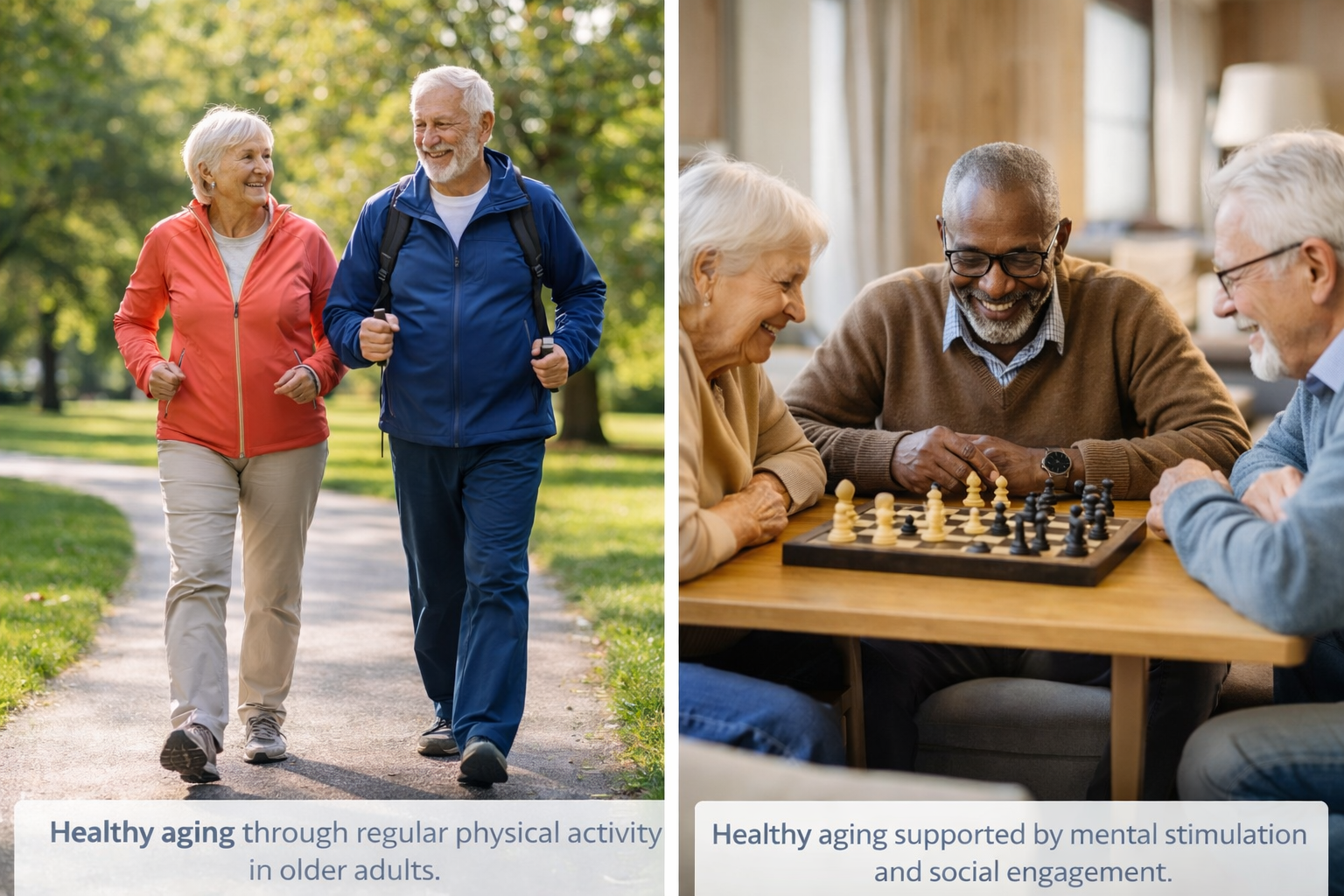
One of the best methods of helping the aging body is regular physical activity. It also assists in maintaining muscle strength, joint flexibility, balance, and cardiovascular health- all things that are important towards independence in late adulthood. Being active also prevents the occurrence of chronic disease like heart disease, type 2 diabetes, osteoporosis and some cancers.
In addition to physical well being, exercise also plays a very powerful role in mental and emotional well being. Exercise elevates mood, decreases anxiety and depression symptoms and helps to sleep better. The benefits grow as the people become older and encounter the challenges of life transitions like retirement or loss of social roles.
Examples of Exercise and Physical Exercises that help in Aging
The combination of various types of movements is the most appropriate to promote healthy aging:
- Aerobic exercise, e.g. walking, cycling, or swimming, will help in the health of the heart and lungs.
- Bodyweight exercises or light resistance are examples of strength training, which prevents muscle mass and bone density loss.
- Balance exercises, including standing on one foot, or tai chi, minimise the chances of falls.
- Stretching or yoga are examples of flexibility exercises that keep the joints moving and upright.
It is consistency and not intensity. Although moderate exercise done regularly may result in serious long-term effects.
The Value of Physical Activity as a Life-long Habit
To most individuals, it is not knowing the benefits of exercising, but continuing with it. Physical activity can be sustainable by choosing pleasant activities, having goals that are realistic, and adding some form of movement into their daily lives. Simple things that can keep a person on the move in life include walking rather than driving over short distances, taking stairs, and being active when doing hobbies.
Balance in Nutrition: Nourishing the Body to Healthy Aging
The Nutritional aspect of Aging Well
Nutrition is a key issue in healthy aging, that is, it helps to uphold energies, fight against or manage chronic diseases, and to stimulate the immune system. Nutritional demands vary with age as people lose metabolism and digestion as well as lose appetite. Food quality is of particular importance in this case.
A healthy diet will supply the nutrients required to upkeep muscle mass, to nurture the brain as well as to prevent inflammation. In contrast, malnutrition may hasten the aging process and expose people to disease.
The Most Important Elements of a Healthy Diet
There is a nutritional trend in which healthy aging is supported and it usually involves:
- Fruits and vegetables which contain vitamins, minerals, antioxidants and fiber.
- Whole grains, which maintain the health of the digestive system and the evenness of energy.
- Proteins that are lean like eggs, fish and legumes to maintain strength of the muscles.
- The healthy fats, especially the ones found on such foods as olive oil, avocadoes, and fatty fish, promote heart and brain health.
- Sufficient hydration because it is possible that the sense of thirst decreases with age.
Restricting high processed food, excess sugar, and excessive salt do also lead to improved long-term health.
Nutrition as a Prevention Method
Balanced nutrition is not only enough to serve the daily needs but a preventive mechanism. High intake of nutrient-dense and whole foods is linked to reduced risks of cardiovascular diseases, cognitive impairment, and metabolic diseases. Good nutrition in conjunction with physical activity helps in resiliency and recovery as the body grows older.
Mental Stimulation: Maintaining the Mental Processes
Cognitive Health and Aging
The development of mental decline is not an unavoidable aspect of aging and cognitive changes can be considered an inevitable consequence of aging. Cognitive activity is an important factor that maintains memory, attention, and problem-solving skills. The brain continues to make new connections even in adulthood which is called neuroplasticity.
The involvement of the mind can develop cognitive reserve and this enables the brain to perform efficiently even in cases where there have been changes induced by aging. This reserve has the capability of pushing off cognitive impairment and enabling further independence.
Things that are Brain-stimulating
Mental stimulation may occur in various forms, and they may be:
- Reading books or articles
- Skill acquisition or acquisition of new languages.
- Strategic game or puzzle playing.
- Once should be involved in creative activities, like writing, music, or art.
- With the help of technology, an individual can use it to discover new things or reach out to others.
Challenging, enjoyable, and varied activities are the best activities to do.
Lifelong Learning and Purpose
A sense of purpose is generally associated with mental stimulation. The ongoing learning and development lead to confidence, flexibility, and also emotional stability. Engaging the mind, be it through formal or informal education, hobbies or volunteering, helps in promoting cognitive health besides satisfying life.
Social Involvement: The Strength of Interrelation
The importance of Social Connections.
Social engagement is a fundamental but overridden part of healthy aging. Good social bonds have been linked to reduced chances of depression, impaired cognitive function and early death. Human beings are social and meaningful relationships lead to emotional strength and a feeling of belongingness.
Social networks could evolve as individuals grow older because of retirement, moving or losing their loved ones. During such transitions, it is particularly crucial to keep and establish relationships.
Forms of Social Engagement
Social interaction does not entail huge social networks. It can include:
- Constant communication with friends and relatives.
- Membership of community groups or clubs.
- Volunteering or mentoring
- Religious or cultural events.
- Intergenerational interactions
The point can be on the quality of relationships as opposed to the quantity. The sense of importance, attentiveness, and care can make a tremendous impact on one’s well-being.
Social Interaction and Self-sufficiency
The ability to be socially active keeps the elderly individuals active in terms of their interactions with the environment. This participation helps motivation, mental wellbeing, and even physical exercise, which strengthen other measures of healthy aging. Sharing learning and emotional support is also possible through social participation.
Healthy Aging: Life Long Habits
The aspects of healthy aging are not attained in one action or a short-term exercise. It is a product of deliberate, long-term actions. It is the close relationship between physical activity, balanced dieting, mental stimulation, and social interaction. Developments in one aspect tend to empower the others.
Notably, one can never be too early or late to change their habits to healthier ones. Minor modifications, over time, can contribute to significant changes in the quality of life. To make aging more successful, one can start walking more, eat more whole food, learn a new thing, and reach out to people.
Conclusion
The concept of healthy aging goes beyond increasing the number of years to life, but enhancing life to years. Giving importance to movement, feeding the body, engaging the mind, and nurturing social relationships help people maintain longevity, independence, and well-being.
Such life patterns help individuals be self-reliant in their lives even into maturity. Although aging is an inevitable process, it is in our day-to-day choices that we determine how we will age. The adoption of healthy aging as a lifelong process opens up a chance to live a more fulfilled and gratifying life regardless of the age.