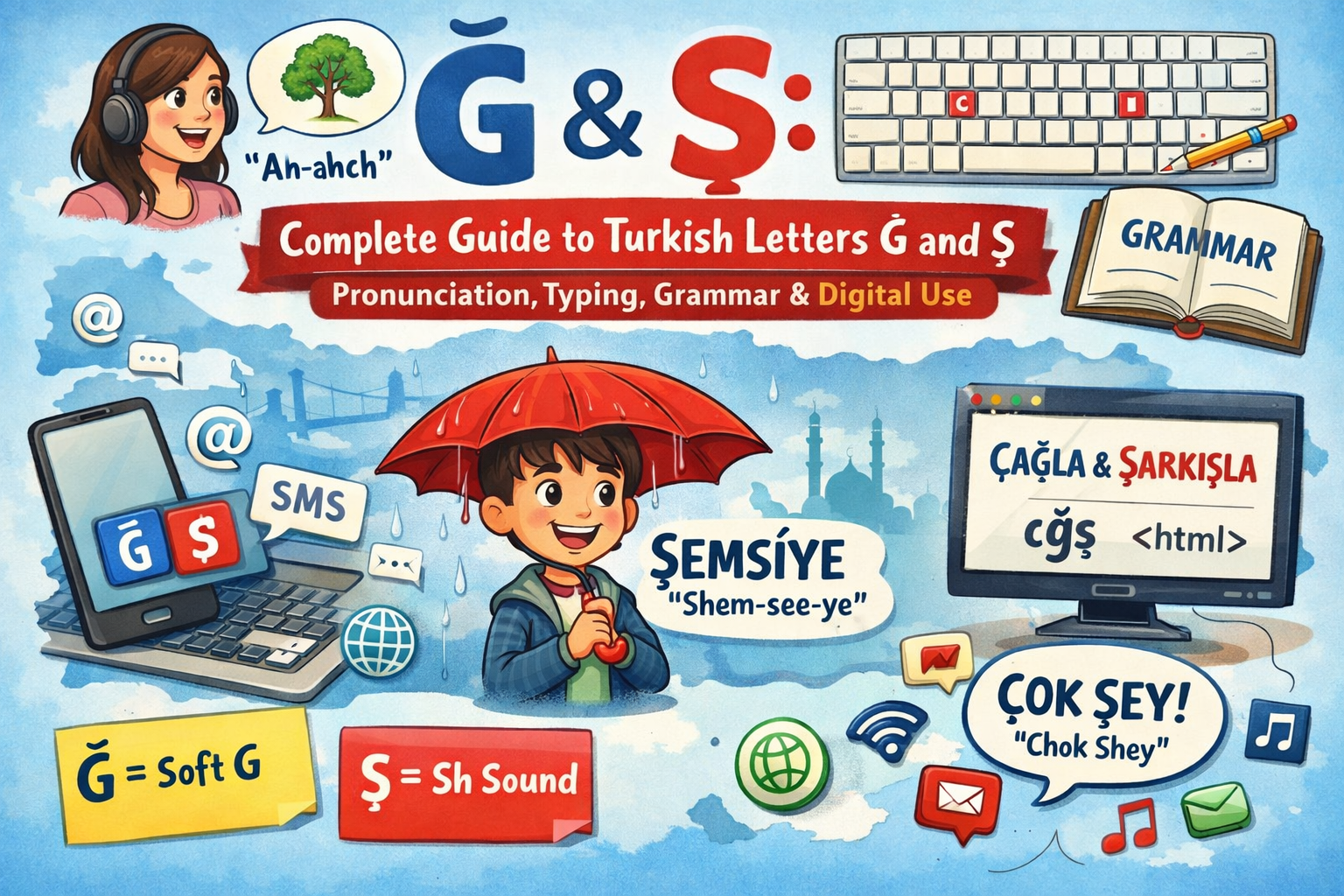
The sequence “ğş” may look like an unusual string of characters to many people, especially non‑Turkish speakers. But for learners, linguists, and digital content creators, this combination represents two of the most distinctive letters in the Turkish alphabet: Ğ (yumuşak g, “soft g”) and Ş (s‑cedilla).
Although “ğş” is not a real Turkish word, it frequently appears in language lessons, keyboard tests, encoding experiments, and search queries — making it a fascinating topic at the intersection of linguistics, technology, and language education.
This comprehensive guide explains what ğş represents, why it appears in searches, how each letter functions, how to pronounce and type them, and why they matter in modern Turkish communication.
1. Introduction: What Is “Ğş”?
At first glance, ğş looks like a random string of letters — but it actually consists of two legitimate Turkish characters:
- Ğ (uppercase) / ğ (lowercase) — known as yumuşak g or soft g
- Ş (uppercase) / ş (lowercase) — s‑cedilla, representing the /ʃ/ (“sh”) sound
The combination ğş doesn’t form a meaningful word in Turkish. Instead, it often appears:
- in linguistic examples,
- as part of typographical or keyboard tests,
- in technical debugging for character encoding, or
- as a search term by people learning Turkish.
Because both Ğ and Ş are distinctive and unique to Turkish among Latin‑based alphabets, understanding their behavior is a necessary step in mastering the language.
2. Overview of the Turkish Alphabet
Total Letters in the Turkish Alphabet (29 Letters)
The modern Turkish alphabet consists of 29 letters, adapted from the Latin script as part of a profound language reform in 1928:
- 8 vowels: A, E, I, İ, O, Ö, U, Ü
- 21 consonants, including special characters such as:
Ç, Ğ, Ş, Ö, Ü, and İ (dotted capital I)
Notably, Turkish does not include the letters Q, W, or X, which are standard in English.
Why Turkish Is a Highly Phonetic Language
One of the most consistent features of Turkish is that each letter typically corresponds to a single sound. Unlike English — where letters can have multiple pronunciations depending on the word — Turkish spelling almost always directly matches pronunciation.
This makes Turkish relatively easier to read aloud once you master:
- the alphabet,
- phonetic rules, and
- special characters like Ğ and Ş.
History of the 1928 Turkish Alphabet Reform
Before 1928, Turkish was written using a version of the Arabic script, which was not well‑suited to represent Turkish vowels and consonants clearly. Many people struggled with literacy due to inconsistent phonetic representation.
In 1928, under the leadership of Mustafa Kemal Atatürk, Turkey adopted a modified Latin alphabet tailored to Turkish phonetics. This reform:
- increased literacy rates,
- simplified learning,
- and modernized written Turkish.
As part of this innovation, special characters such as Ğ, Ş, Ö, and Ü were introduced to represent sounds absent in the standard Latin alphabet.
3. Understanding the Letter Ğ (Yumuşak G / Soft G)
Definition and Role in Turkish Phonetics
The letter Ğ, known as yumuşak g (soft g in English), is one of the most unique elements in Turkish phonology because it rarely produces a hard consonant sound of its own.
Instead of sounding like an English g, it affects the sound of nearby vowels in specific ways.
How Ğ Affects Surrounding Vowels
Unlike other consonants, Ğ often performs three main functions:
- Lengthens the preceding vowel
For example:
- dağ (mountain) → “daa” can feel stretched
- yağmur (rain) → “yaamur”
- dağ (mountain) → “daa” can feel stretched
- Creates a smooth transition between vowels
When placed between two vowels, Ğ facilitates a glide rather than a stop. - Acts as a near‑silent placeholder
Especially at the end of words or before consonants, it influences rhythm without producing a fully voiced sound.
Examples of Turkish Words With Ğ
| Word | Meaning | Phonetic Role |
| dağ | mountain | vowel lengthening |
| yağmur | rain | fluid transition |
| eğitim | education | silent modifier |
| öğrenci | student | vowel influence |
In all cases, Ğ shapes the pronunciation rather than sounding like a typical consonant.
Common Pronunciation Mistakes With Ğ
Beginners often replace Ğ with a regular g; this produces incorrect sounds:
- dag → pronounced like “dog” instead of “dağ”
- ogretmen → should be öğretmen (teacher)
Learning to feel the subtle effect of Ğ is key to sounding natural.
4. Understanding the Letter Ş (S‑Cedilla)
Definition and Pronunciation of Ş
The letter Ş represents the /ʃ/ sound, similar to “sh” in English.
In phonetic terms:
- Ş = /ʃ/ as in shoe, she, shine
Unlike Ğ, Ş always produces a clear, audible consonant sound.
Examples of Words With Ş
| Turkish | English Meaning | Pronunciation |
| şeker | sugar | sheh‑kehr |
| şehir | city | sheh‑heer |
| şarkı | song | shar‑ku |
This sound is not represented in standard English alphabets without a digraph like sh, which makes Ş particularly important.
Common Pronunciation Mistakes With Ş
Non‑native speakers sometimes confuse Ş with S, which represents a /s/ sound:
- sakır (wrong) vs. şakır (could be slang)
- sekil (wrong) vs. şekil (shape)
5. Key Differences Between Ğ and Ş
Although they appear together in ğş, the two letters play very different roles:
| Feature | Ğ | Ş |
| Represents sound | modifies vowels | produces /ʃ/ sound |
| Audible consonant | rarely | always |
| Typical function | phonetic flow | consonantal sound |
| Can appear anywhere | yes | yes |
| Meaning distinction | sometimes | definite |
Understanding this difference is crucial for both reading and writing Turkish correctly.
6. Why “Ğş” Appears in Texts and Searches
Now that you know both letters individually, you might still wonder why ğş often appears as a sequence in searches, online tools, or linguistic examples.
There are several reasons:
Language Learning and Educational Materials
Teachers and textbooks sometimes place Ğ and Ş together to:
- illustrate special characters,
- highlight pronunciation differences,
- aid beginner reading practice.
Even though “ğş” never forms a word, it’s useful pedagogically.
Typographical or Input Errors
On Turkish keyboards, Ğ and Ş are located near each other. Users typing quickly or unfamiliar with the layout might accidentally produce ğş.
Digital Encoding & Unicode Handling
In programming, databases, and Unicode testing, engineers often check:
- whether special characters render correctly,
- how letter sequences behave in string sorting,
- whether fonts support Turkish diacritics.
This makes ğş useful in debugging and software tests.
SEO, Keyword Experiments & Online Searches
Content creators and language learners often type ğş into searches when:
- testing Turkish content indexing,
- checking autocorrect behavior,
- exploring how search engines handle diacritics.
This helps explain why ğş receives search volume despite not being a valid word.
7. How to Type Ğ and Ş on Different Devices
For learners and content creators, typing Turkish letters accurately is essential.
On Windows
- Add Turkish Keyboard in Language Settings
- Settings → Time & Language → Language & Region
- Settings → Time & Language → Language & Region
- Switch to Turkish layout
- Press:
- Ğ = ; (semicolon)
- Ş = ^ (caret)
(Layout depends on keyboard version)
- Ğ = ; (semicolon)
On macOS
- Go to System Preferences → Keyboard
- Add Turkish Input Source
- Hold down:
- G → choose Ğ
- S → choose Ş
- G → choose Ğ
On Android
- Add Turkish to keyboard languages
- Long‑press:
- g → select ğ
- s → select ş
- g → select ğ
On iPhone / iPad
- Add Turkish keyboard under Settings → General → Keyboard
- Long‑press:
- g → ğ
- s → ş
- g → ğ
8. Practical Importance of Ğ and Ş in Turkish
Grammar and Vowel Harmony
Although Ğ doesn’t carry meaning by itself, it influences:
- vowel length,
- syllable flow,
- rhythm and stress in speech.
Ş, on the other hand, represents a distinct consonant that can change both meaning and pronunciation.
For example:
- sapan (slingshot) vs. şapan (shepherd’s cloak)
Influence on Digital Content and SEO
Modern search engines rely on accurate character representation:
- Turkish words with correct diacritics rank higher for relevant queries.
- Without diacritics, search engines might misinterpret meaning and relevance.
Examples:
- şeker vs seker
- öğrenmek vs ogrenmek
Using proper characters improves visibility, user engagement, and linguistic accuracy.
9. Cultural and Historical Significance of Ğ and Ş
The introduction of Ğ and Ş during the 1928 language reform wasn’t accidental — it was part of a deliberate effort to reflect spoken Turkish more accurately.
These letters:
- preserved unique Turkish sounds
- supported widespread literacy
- helped standardize communication across regions
Today, they remain symbols of Turkish linguistic identity and modernization.
10. Tips for Learning and Practicing Ğ and Ş
Mastery comes with exposure and practice:
Listening Practice
Use Turkish audio resources — podcasts, music, news, or language apps — to train your ears on subtle differences.
Reading Aloud
Read Turkish text slowly, focusing on words containing Ğ and Ş. This builds muscle memory and confidence.
Keyboard Training
Practice typing with Turkish layouts to avoid accidental input errors.
11. Conclusion
The sequence ğş may seem odd at first, but it represents an important doorway into Turkish phonetics, writing, culture, and digital practice. Although it’s not a legitimate word, it’s frequently used in:
- education
- keyboards
- encoding
- search testing
Understanding Ğ and Ş individually — how they sound, how they influence words, and how to type them — is key to mastering Turkish literacy and communication.
12. Frequently Asked Questions (FAQs)
Q1: What does Ğş mean?
A: Ğş is a combination of two Turkish letters, not a word.
Q2: Is Ğş a real Turkish word?
A: No. It doesn’t have lexical meaning in Turkish.
Q3: How is the letter Ğ pronounced?
A: Ğ doesn’t produce a direct sound; it modifies the preceding vowel.
Q4: How is Ş pronounced?
A: Ş consistently produces the /ʃ/ (“sh”) sound.
Q5: Why are Ğ and Ş important?
A: They shape pronunciation, meaning, writing accuracy, and digital indexing in Turkish.