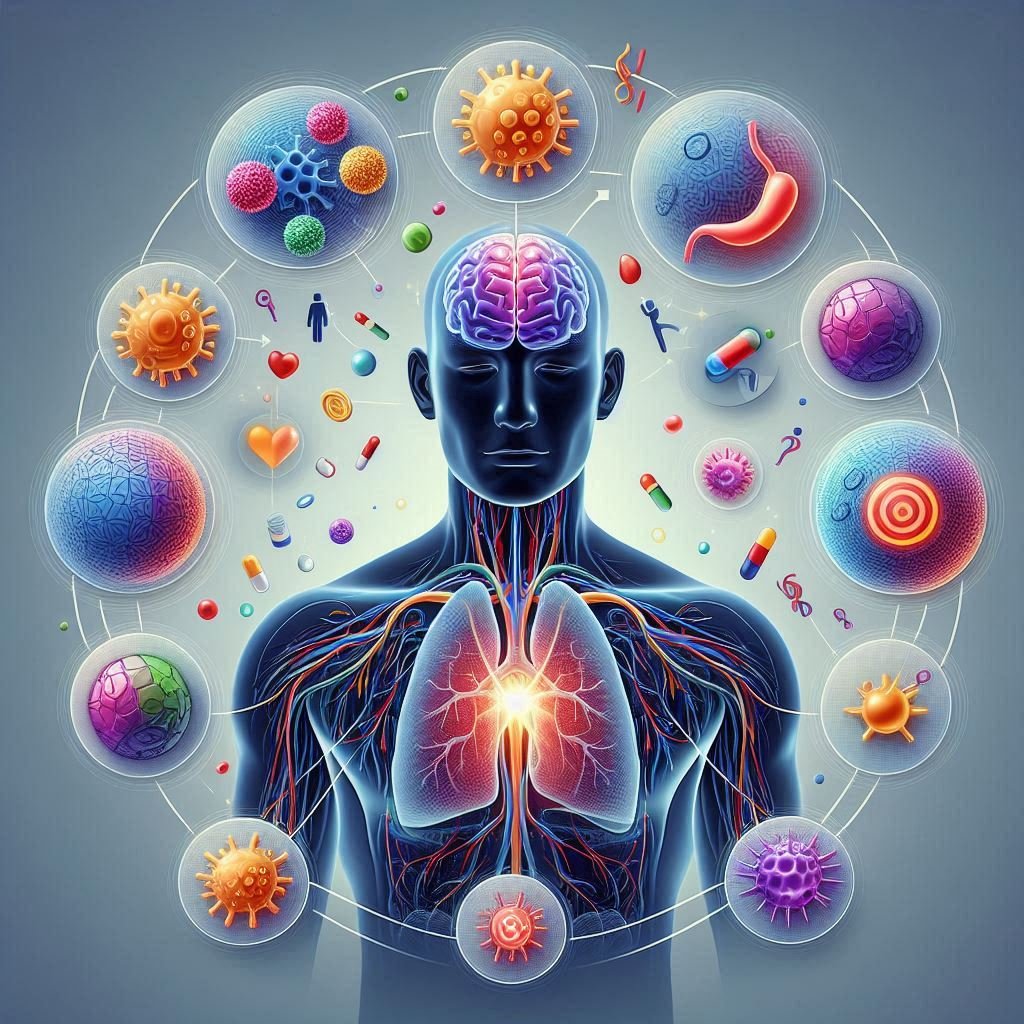
The study of visible structures of the body, known as gross anatomy, is one of the most basic actions in studying human biology, medicine, and healthcare. In comparison to microscopic anatomy, which looks at cells and tissues under a microscope, gross anatomy looks at the parts of the body that you can see with a naked eye; they include bones, muscles, organs, vessels, and regions.
You are about to start your first anatomy course, dissection lab, or even clinical training and knowing how the body is laid out will allow you to learn the structures of the body quickly and how the various systems interrelate. This paper dissects the human body into major systems and regions in order to help you establish a solid background on the study further.
What Is Gross Anatomy?
Gross anatomy explains the structures which make up the human body on a large scale. These include:
- Bones and skeletal shapes
- Muscles and tendons
- Major organs
- Larger blood vessels
- Ligaments
- Holes and spaces in the human body.
- Surface landmarks
These are the movement, protection, and operation structures. Learners tend to start their education by noting these systems when looking at models, cadaver labs or 3D computer programs.
We will examine the division of the human body in general, into parts before examining each of the major body systems.
Large Body Parts in Gross Anatomy
- Head and Neck Region
The head and neck are one of the most anatomically complicated parts of the body.
Head
The head is also home to the large sensory organs and protection structures as follows:
- The skull bone structure consists of cranial bones.
- Mandible and maxilla are the facial bones.
- Muscles that are visible such as the masseter (chewing muscle).
- External characteristics: ears, mouth, eyes, and nose.
The skull supports the brain and the sensory organs and the bones of the face determine the appearance of the face.
Neck
Neck- The neck is a connection that links the head to the torso and has:
- Cervical vertebrae
- Massive muscles like the sterna cleavage.
- Observable ones such as the external jugular vein.
- Larynx and trachea (some of them can be seen as the Adams apple)
This is also where nerves and blood vessels that ply in and out of the brain can be found.
Thorax (Chest)
The thoracic cavity contains the critical organs as well as a skeletal system.
Anatomical Structures that are visible
- Rib cage – The ribs and the sternum formed the rib cage.
- Thoracic vertebrae
- Respiratory muscles such as intercostal muscles and diaphragm (the outline of it can be observed during the breathing process).
Internal Organs
- Heart is in the middle of the mediastinum.
- Filling of the right and left pleural cavities with lungs.
These organs collaborate in terms of exchange of oxygen and circulation. Although you cannot observe them through the surface, their locations would be determined through the use of outside features (such as midclavicular line).
Abdomen
The digestive system and the metabolic organs are numerous in the abdomen. In the gross anatomy, there are quadrants to make its study easier:
- Right Upper Quadrant
- Left Upper Quadrant
- Right Lower Quadrant
- Left Lower Quadrant
Major Visible Structures of the body
- The rectus abdominis and the obliques are abdominal wall muscles.
- Pelvic brim landmarks
- The areas of skin surface like the umbilicus.
Organs Within This Region
- Stomach
- Liver
- Spleen
- Small and large intestines
- Pancreas
- Kidneys (retroperitoneal and can be identified by anatomic association)
These glands play an important role in digestion, absorption of nutrients and processing of wastes.
Pelvis and Perineum
The weight of the human body is placed on the pelvis and this protects various organs.
Key Structures
- Pelvic girdle made up of pelvic bones.
- Pelvic muscles like muscles of the floor.
- Bladder and the reproductive system part.
The pelvis also forms a good attachment point of muscles that connect the trunk and lower limbs.
Upper Limbs
The upper limbs permit movement, grasp, lifting as well as fine motor control.
Major Regions
- Shoulder
- Arm (brachium)
- Forearm (antebrachium)
- Wrist
- Hand
Anatomical Structures that are visible
It is imperative to study visible anatomical structures and not to extricate the data out of them and compile it on a piece of paper since this would be impractical (Cleary, 2013).
- The formation of the shoulder girdle is made of the clavicle and scapula.
- Humerus, radius, and ulna
- The major muscles include the biceps brachii and the deltoid.
- Surface landmarks (e.g. brachial artery, cephalic vein) that can be identified.
The upper limbs are very mobile; hence, they possess a complicated network of joints, tendons and nerves.
Lower Limbs
The legs assist in body weight support and facilitate walking, running and stability.
Regions of the Lower Limb
- Hip
- Thigh
- Leg (tibia and fibula region)
- Ankle
- Foot
Visible Anatomical Structures
- Femur, the body’s longest bone
- Patella (kneecap)
- Quadriceps, hamstrings, gastrocnemius and the gluteal muscles.
- Strategic vessels, such as the femoral artery.
Learning movement, posture and frequent injuries cannot be done without understanding these structures.
Major Body Systems Gross Anatomy
Since the body parts have been identified we can discuss how gross anatomy groups structures into functional systems.
Skeletal System
The skeletal system constitutes the stiff structure of the body.
Major Structures
- There are 206 bones such as long bones (femur), flat bones (skull) and irregular bones (vertebrae).
- Joints, e.g. the knee, hip, wrist and shoulder.
- Stabilizing the joints are ligaments.
The skeleton supports and gives shape to the body, creates protection to organs, and supports the movement of organs through the muscles.
Muscular System
The muscular system consists of anatomically visible structures which are involved in movement and posture.
Gross anatomy Muscles Types
- Skeletal muscles (mostly being studied in gross anatomy)
- The muscles are joined to the bone by tendons.
The examples of major muscles that you can observe are:
- Deltoid
- Pectoralis major
- Rectus abdominis
- Latissimus dorsi
- Quadriceps femoris
These are muscles that work together to produce coordination.
Circulatory System
The blood circulatory system supplies the body with blood.
Observable Anatomy Structures in Gross Anatomy
- Heart
- Arteries e.g. aorta, carotid, femoral, and brachial arteries.
- Veins, such as, jugular and saphenous.
These vessels are commonly referred to in dissection according to size and color and according to its interactions with other muscles and bones.
Respiratory System
This system facilitates inhalation and gaseous exchange.
Primary Visible Structures
- Trachea, palpable in the neck.
- Bronchi (they are seen during dissection)
- Lungs
- Diaphragm
The location and movement of the diaphragm is of particular use in understanding the mechanics of respiration.
Digestive System
The intestines digest the food and absorb the nutrients.
Key Visible Structures
- Esophagus
- Stomach
- Liver
- Intestines
- Gallbladder
- Pancreas
These organs differ in their shapes and size, however, the location in the abdominal cavity is governed by regular anatomical arrangements.
Urinary System
This system filters and eliminates waste.
Major Structures of Anatomy
- Kidneys (they are seen when a posterior abdominal wall is exposed)
- Ureters
- Bladder
- Urethra
Their placements assist the clinicians in diagnosing abdominal and pelvic ailments.
Nervous System
Whereas the microscopic details are concerned with neurons the gross anatomy is concerned with bigger structures.
Key Structures
- Brain
- Spinal cord
- Peripheral nerves that can be observed, e.g. median nerve or sciatic nerve.
These organizations are in charge of sensation, movement, and body processes.
Body Cavities and their Organization
The organs are also grouped into cavities by gross anatomy as a way of safeguarding them and aiding to support them.
Major Body Cavities
- Cranial cavity (brain)
- Heart and lungs Thoracic cavity (heart and lungs)
- Abdominal cavity (digestive organs)
- Urinary and reproduction organs (pelvic cavity).
Learning of cavities makes learners know the arrangement of the organs and their access by the surgeons.
Relevance of Gross Anatomy Study to Clinical Practice.
The basis of: Gross anatomy.
- Physical examination methodologies.
- Surgical procedures
- Radiological imaging
- Understanding injuries
- Locating organs and vessels
Indicatively, the measurement of the exact location of a femoral artery will aid medical practitioners in making pulse measurements or injections safely.
Application of External Resources to Study.
Videos, diagrams and interactive 3D models are commonly used by students to enhance the understanding of gross anatomy.
In case you wish to widen your perspective, go to:
Explore more anatomy resources – as needed.
These sites give further description, practice exams, and bright pictures of the anatomical structures that can be seen.
Conclusion
Gross anatomy gives a good practical study of the visible structures of the human body. The study of the structure of bones, muscles, organs, and vessels into regions and systems would enable the learners to have a solid foundation in medical practice, biological study, and clinical reasoning.
Such organized information will enhance your skills in recognizing parts of the body, grasping the relation, and transferring this information to the real world, either during the classroom, during a dissection lab, or during clinical practice.