Introduction
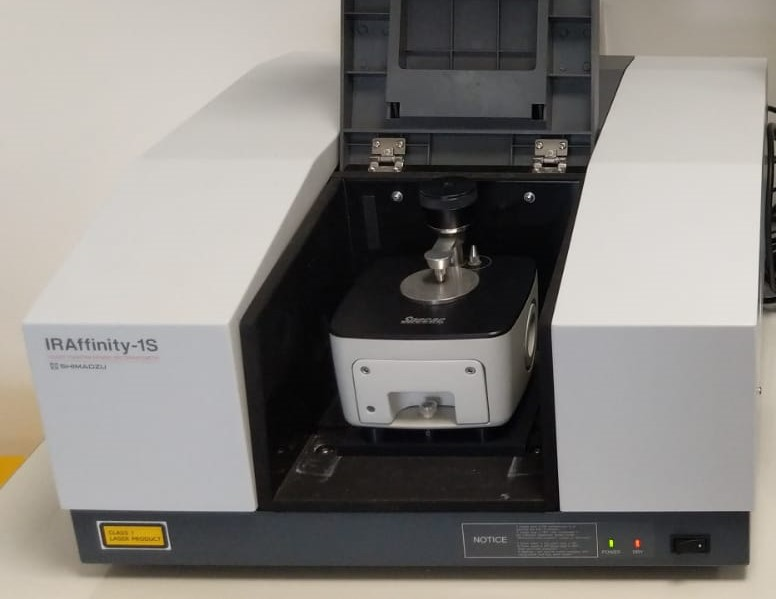
An FTIR machine is a vital analytical instrument widely used in laboratories and industrial applications to study the molecular composition of materials. Fourier Transform Infrared (FTIR) spectroscopy provides precise information about chemical bonds, functional groups, and molecular structures, making it an essential tool for research, quality control, and material characterization.
Industries such as pharmaceuticals, polymers, environmental science, and chemical manufacturing rely on FTIR machines for accurate identification and verification of substances. Its ability to analyze ftir machine solids, liquids, and gases adds versatility and convenience to laboratory workflows.
How FTIR Machines Work
FTIR machines operate on the principle that molecules absorb specific frequencies of infrared light corresponding to the vibrations of their chemical bonds. The absorbed wavelengths produce a unique spectral pattern that acts as a “fingerprint” for the material being analyzed.
The main steps include:
- A broadband infrared light source emits radiation toward the sample.
- The sample absorbs specific wavelengths based on its molecular composition.
- A detector captures the transmitted or reflected light.
- Fourier Transform algorithms convert the raw interferogram data into a readable spectrum.
- The resulting spectrum is analyzed to identify functional groups, chemical bonds, and material composition.
FTIR spectroscopy allows for qualitative and quantitative analysis, providing detailed insights into the chemical makeup of a sample.
Key Features of FTIR Machines
Wide Material Compatibility
FTIR machines can analyze a broad range of materials, including polymers, pharmaceuticals, coatings, environmental samples, and organic compounds.
High Sensitivity and Resolution
Modern FTIR machines offer high spectral resolution, enabling the detection of subtle differences in chemical structure and trace components.
Rapid Data Acquisition
With Fourier Transform technology, FTIR machines generate spectra quickly, significantly reducing analysis time compared to traditional dispersive IR instruments.
User-Friendly Software
Integrated software simplifies spectrum acquisition, data interpretation, comparison with reference libraries, and report generation.
Minimal Sample Preparation
Most samples require little to no preparation, allowing for efficient and straightforward analysis.
Applications of FTIR Machines
Pharmaceutical Industry
FTIR machines are used to identify raw materials, monitor synthesis processes, and verify the composition of finished products. This ensures compliance with quality standards and regulatory requirements.
Polymer and Plastics Industry
FTIR spectroscopy helps characterize polymers, detect contaminants, monitor chemical reactions, and verify material properties.
Environmental Analysis
FTIR machines detect pollutants, hazardous chemicals, and organic compounds in air, water, and soil samples, supporting environmental monitoring and compliance.
Chemical Research and Development
Researchers use FTIR to study molecular structures, reaction kinetics, and chemical interactions, aiding in the development of new compounds and materials.
Food and Beverage Industry
FTIR spectroscopy helps verify food authenticity, detect adulteration, and monitor chemical composition, ensuring product safety and quality.
Advantages of Using an FTIR Machine
- Non-destructive analysis: Samples are preserved for further testing.
- Fast and efficient: Rapid spectrum generation improves laboratory throughput.
- Versatile: Suitable for solids, liquids, and gases.
- Accurate and reproducible: Provides consistent results for material characterization.
- Minimal sample preparation: Reduces labor and saves time.
Maintenance and Operational Considerations
To ensure accurate results and long-term performance:
- Keep optical components clean and free from dust.
- Regularly check and maintain the infrared source and detector.
- Calibrate the instrument using standard reference materials.
- Store samples properly to avoid contamination.
- Maintain a stable laboratory environment with controlled temperature and humidity.
Regular maintenance enhances the reliability and lifespan of the FTIR machine.
Future Trends in FTIR Technology
Modern FTIR machines are integrating advanced automation, cloud-based data management, and improved sensitivity. Innovations include real-time monitoring, remote analysis, and high-throughput screening capabilities.
FTIR technology continues to evolve, providing faster, more accurate, and versatile analysis, supporting diverse industries from pharmaceuticals to environmental science.
Conclusion
An FTIR machine is a powerful tool for analyzing molecular composition and identifying chemical structures in a variety of materials. Its speed, accuracy, and versatility make it indispensable in research, quality control, and industrial applications.
By providing rapid, reliable, and non-destructive analysis, FTIR machines support regulatory compliance, material verification, and scientific discovery across multiple fields.
Frequently Asked Questions
What is an FTIR machine used for?
It is used to analyze molecular composition, identify chemical bonds, and characterize materials in research and industrial laboratories.
Can FTIR machines analyze solids and liquids?
Yes, FTIR spectroscopy is versatile and can analyze solids, liquids, and gases with minimal sample preparation.
How does FTIR compare to traditional IR spectroscopy?
FTIR uses Fourier Transform technology for faster data acquisition, higher resolution, and improved sensitivity compared to dispersive IR instruments.
Is FTIR suitable for environmental analysis?
Yes, it is widely used to detect pollutants and hazardous chemicals in air, water, and soil samples.
What industries benefit most from FTIR analysis?
Pharmaceuticals, polymers, chemical manufacturing, food and beverages, environmental monitoring, and research laboratories.