Bringing a hardware product to market quickly is a complex challenge. It requires a strategic approach and careful planning.
The hardware development cycle is intricate, with many moving parts. Each stage, from prototype to pilot run, demands attention to detail.
Fast product development is crucial for staying competitive. Rapid prototyping techniques can significantly reduce the time-to-market.
Collaboration across teams is essential. It ensures that potential issues are identified and resolved early.
Digital tools and simulations play a vital role. They enhance testing and streamline the development process.
This playbook will guide you through the journey. It offers practical strategies to cut hardware time-to-market effectively.
Understanding the Hardware Development Cycle
The hardware development cycle comprises various stages that are interdependent. Understanding these stages is crucial to reducing time-to-market.
Each phase, from concept to production, requires strategic planning. A well-structured development cycle can expedite the overall process.
A typical hardware development cycle includes:
- Concept and design
- Prototyping
- Testing and validation
- Pilot run
- Mass production
Each stage has its challenges and opportunities. Effective management of each phase helps in maintaining the project’s momentum.
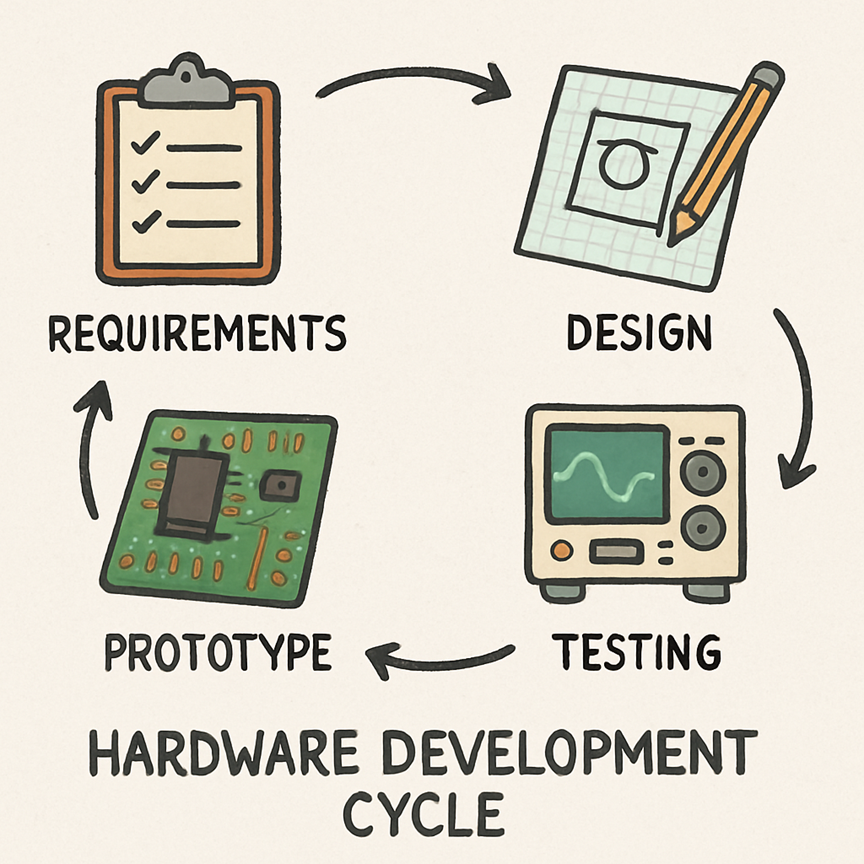
Identifying bottlenecks early in the cycle can prevent costly delays. Techniques such as process mapping and risk analysis can assist in this regard.
Incorporating feedback loops at each stage ensures continuous improvement. This, in turn, enhances the quality and reliability of the final product.
Understanding the intricacies of the hardware development cycle provides a competitive edge. It equips teams with the knowledge to navigate challenges efficiently.
Laying the Foundation: Planning for Fast Product Development
Effective planning is the cornerstone of fast product development. It sets the direction and pace of the entire project.
Thorough market research is essential. Understanding customer needs and industry trends guide development strategies.
Creating a detailed project plan is crucial. Include clear milestones, deadlines, and resource allocation in the plan. This helps in maintaining focus and efficiency.
Cross-functional teams should collaborate from the outset. They bring diverse perspectives, leading to innovative solutions and fast problem-solving.
Key components of a robust development plan include:
- Market research
- Resource allocation
- Timeline and milestones
- Risk management
- Clear communication channels
Regular reviews and updates to the plan ensure it remains relevant. This flexibility is vital for adapting to changing circumstances.
Strategic foresight helps anticipate potential roadblocks. Early identification and mitigation of risks keep the project on track.
By laying a solid foundation, organizations can swiftly navigate the complexities of hardware development. This sets the stage for successful prototype development and beyond.
Rapid Prototyping Techniques: Speed Without Sacrificing Quality
Rapid prototyping is key to reducing hardware time-to-market. This approach speeds up development without compromising on quality.
Begin by employing 3D printing and other cutting-edge technologies. These tools allow for quick iteration and testing of design concepts.
Emphasize functionality during the prototyping phase. This ensures that each iteration serves its intended purpose and aligns with the end goal.
Cost-effective prototyping is possible with digital simulations. These virtual models enable detailed analysis before physical production begins.
When selecting materials, consider manufacturability and durability. The right choice can drastically reduce future complications and costs.
Key rapid prototyping techniques include:
- 3D printing
- Digital simulations
- Iterative design processes
- Feedback loops
- Virtual testing environments
Collaborate with multi-disciplinary teams to refine each prototype. Diverse expertise leads to more comprehensive evaluations and improvements.
Utilize feedback from initial tests to guide subsequent iterations. This continuous improvement cycle is integral to fast product development.
Rapid prototyping also benefits from setting specific goals for each version. Clear objectives enhance focus and reduce the likelihood of deviation.
Ultimately, the goal is to move quickly through the hardware development cycle. By leveraging these techniques, Xinprototype rapid prototyping partner can deliver high-quality products to market faster.
Iterative Design and Agile Methodologies in Hardware
Embracing iterative design helps refine hardware prototypes efficiently. Frequent testing and revisions lead to better product outcomes.
Agile methodologies are not just for software. Adapting them for hardware promotes flexibility and responsiveness to changes.
Iteration involves regular cycles of testing, feedback, and improvement. This approach minimizes risks and aligns development with market needs.
KThese practices foster a culture of collaboration and adaptability. Teams are empowered to make swift decisions and adjustments.
By breaking projects into small, manageable tasks, agile methods reduce complexity. This boosts team morale and enhances productivity.
Moreover, iterative design involves constant learning. The knowledge gained with each cycle informs subsequent efforts, leading to innovation.
Ultimately, merging iterative design with agile methodologies accelerates the hardware development cycle. Teams achieve faster time-to-market with improved product quality.
Effective implementation hinges on clear communication and shared vision. Aligning team goals with customer expectations is crucial.
Cross-Functional Collaboration: Breaking Down Silos
Collaboration across departments is key to cutting hardware time-to-market. When teams work in silos, progress can stall.
Bringing together diverse expertise fosters innovation and speeds up problem-solving. This cross-functional interaction ensures that potential issues are spotted early.
These practices bridge gaps and build trust among team members. Open dialogue leads to more robust problem resolution strategies.
By engaging different perspectives, teams can identify optimal solutions. This approach reduces the risk of project delays and inefficiencies.
Cross-functional collaboration also enhances adaptability. As the market shifts, teams can quickly re-align their strategies, maintaining momentum.
Ultimately, breaking down silos unites teams around a common purpose. This cohesion is crucial for achieving fast product development and bringing successful hardware to market.
Digital Tools and Simulation for Accelerated Testing
In hardware development, testing is a critical phase. Digital tools and simulations can drastically cut testing time.
These technologies offer virtual environments to test prototypes thoroughly. They can identify design flaws early, saving time and resources.
Simulations reveal potential issues that might only emerge during physical tests. This foresight prevents costly revisions later.
Moreover, these tools facilitate simultaneous testing of multiple components. This parallel processing speeds up the development cycle.
By integrating digital simulations, teams achieve more accurate results quickly. These insights directly inform design improvements.
Ultimately, digital tools ensure that prototypes meet quality standards before physical production. This precision is vital in meeting fast product development goals and reducing hardware time-to-market.
Managing Risks and Regulatory Requirements Early
Managing risks in hardware development is essential. Identifying potential issues early can prevent costly setbacks.
Regulatory compliance is another critical aspect. Understanding requirements from the start avoids delays later on. Regulations vary widely depending on product and market.
Key steps for risk management include:
- Conducting thorough risk assessments
- Establishing a response plan for identified risks
- Continuously reviewing and updating risk strategies
It is also important to engage with regulatory bodies early. This ensures all requirements are clearly understood.
Staying informed about regulatory changes is vital. It helps in maintaining compliance throughout the hardware development cycle.
Proactively addressing these factors keeps projects on track. It minimizes disruptions, aiding in the efficient transition from prototype to pilot run. This proactive approach helps reduce the hardware time-to-market and supports smooth product launches.
Supplier Partnerships and Manufacturing Readiness
Establishing strong supplier partnerships is vital in hardware development. These relationships can significantly impact time-to-market.
Reliable suppliers ensure a consistent supply of quality parts. This reduces the risk of production delays.
Key strategies for nurturing supplier relationships include:
- Conducting regular performance evaluations
- Communicating clearly about requirements and expectations
- Building mutual trust and understanding
Manufacturing readiness involves preparing both the production processes and the team. It’s crucial for mitigating last-minute hiccups.
A well-coordinated supply chain ensures smooth operations. This is particularly important when transitioning from prototype to pilot run.
Engaging suppliers early in the development cycle is also beneficial. Their input can optimize design for manufacturability.
Manufacturers should be ready to scale production after a successful pilot run. This readiness accelerates product launch, cutting hardware time-to-market.
Pilot Run Best Practices: Validating for Mass Production
Pilot runs are a crucial step for confirming that products are ready for the market. They emulate the conditions of mass production to identify any remaining issues.
A detailed checklist can be a valuable tool during this phase. It ensures that all aspects of production are evaluated thoroughly.
Key elements to consider include:
- Testing the scalability of your manufacturing processes
- Validating material consistency and quality standards
- Assessing logistics and supply chain effectiveness
- Ensuring product complies with regulatory and safety standards
These steps help in ironing out last-minute issues. They ensure everything is in place for a seamless transition to full production.
A successful pilot run not only proves the product’s capability but also saves time and resources by preventing future errors. Stress testing and customer feedback are invaluable during this phase. Collect and analyze this data for iterative improvements.
A pilot run bridges the gap between prototype testing and market deployment. It sets the foundation for mass production success.
Conclusion: Building a Culture of Speed and Excellence
Cultivating a culture of speed and excellence is crucial for reducing hardware time-to-market. It involves embracing adaptability and consistent improvement. Organizations can achieve remarkable results by fostering a mindset focused on efficiency and quality.
Leaders should promote communication and creativity among teams. Encouraging teams to learn from each prototype and pilot run accelerates development. This collaborative spirit leads to innovative solutions and a streamlined process.
Sustained success requires commitment to key principles. These include fast product development and agile methodologies. By embedding these strategies, companies can not only launch successful products but also maintain competitiveness in an ever-evolving market.