Introduction
At the genesis of biomedical engineering, replacement of sick human organs with artificial ones appeared to be revolutionary. It is becoming common place now. In printed heart valves and synthetic corneas, bioengineered kidneys, and more, we are seeing science move ever faster to address the biological breakdown we all experience with technological replacement. However, as we delve deeper into this new territory, we are developing a new frontier of sorts, which is bringing into question some of the most basic aspects of consciousness, identity and ethical practices that technological evolution can have.
What will happen when it comes to printing the brain? But what happens when the aim is not anymore to just restore a function indeed it is to reproduce it or even optimise it? The combination of a key three technologies increased the possibility that artificial intelligence was not far ahead of the artificial body-artificial minds phase. The ethical consequences of this are enormous and require immediate attention.
This article further sheds light on the future of restorative bioengineering to that of potentially conscious hybrid systems. It looks at how emerging technologies can be used to combine the biological barrier with intelligent systems and whether society can make sharp distinctions now contingent upon the artificial mind becoming something greater than science fiction.
Bioprinting: From Function to Intelligence
The Rise of Organ Fabrication
Bioprinting was initiated as IN fact a form of solution to shortages in the medical field. Scientists waste no time in developing tissues patches by growing living cells in layers on biomaterial scaffolds. How they will create whole organs remains to be seen. Artificial skin to cover people who have been burned, cardiac patches that can beat like regular heart tissue, and cartilage printed to fill in joints are all examples of success.
These applications are still restorative in nature: the goal will be to replace a degenerated biological structure with one which is similar in a mechanical sense. However, with the increasing precision of techniques, the domain of bioprinting is moving beyond repair toward replication of functional procedures at progressively high levels (i.e. to gradually more sophisticated functional replications).
From Bioprinted Brains to Cognition
The ultimate goal of bio printing is the brain. There is the ability to print neural tissues, which provide a high degree of spatial fidelity and derive their human-derived stem cells, which develop into neural cells and glial cells. Those structures are not mere passive imitations, they are dynamic. Some printed brain organoids have exhibited spontaneous electrical firing, the formation of synapses and responses to chemicals.
This change creates a whole new question, can we print something that thinks? With the scaffold in the right place, and the inputs in the right place, would a bio printed brain grow conscious- or at least able to learn? The concept is no more hypothetical.
Neural Scaffolding: Structural Path to Intelligence
Scaffolding is occupied in the center of tissue regeneration as well as neurological modelling. In neural engineering the scaffolds are not only developed to promote the growth of cells, but also to influence the connections of the synapses and the neurochemical interactions. Such scaffolds are able to:
- Direct axonal growth
- Copy intracellular structure of central nervous system
- Control signal propagation and electrical conductivity
This functional application of neural scaffolding potential specifies the opening of the possibility of not only shaping structure, but also function. When such neural networks are intentionally organized to carry out any information processing function, learn anything based on stimuli or emulate anything relating to decision-making then where lies the difference between these artificial and biological tissues.
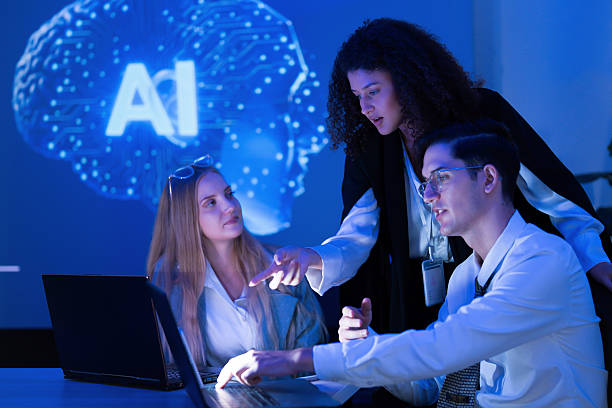
As more advanced input of AI algorithms, printed neural system will perhaps someday acquire the ability to work on its own–to process and to make judgments, and even acquire memories.
Synthetic Biology and Machine Intelligence: A converging Frontier
Redefining “Natural” Intelligence
Synthetic biology takes this further by allowing, in turn, the design of novel biological systems that have a programmed behavior. Cells can be rewritten or built completely to release certain genes, detect environmental signals, communicate with digital devices.
Mixed with machine learning, such programmable biology establishes feedback loops in which artificial systems not only consume data generated by biological tissue but also affect its behaviour. As an example, the artificial intelligence cells may be trained to absorb any incoming AI, by crossing the barriers between human and artificial intelligence.
When printed neural tissue is reached at this intersection, it is no longer. It attains functional status, psychologically. Out of this emerges a cyborg: a machine-biological hybrid brain-person, a machine-biological, in which the dividing line between the man and the machine becomes problematic, increasingly hard to draw.
Consciousness in Hybrid Constructs: A Philosophical Challenge
What Defines a Mind?
Three features Neuroscience and philosophy neuroscientists and philosophers have commonly defined consciousness as having three features:
- Wakefulness: system which is activated and “on,” reacts to inputs.
- Awareness: it can sync experience and data
- Self Awareness: it can reflect and it knows it exists in that fact
Should a printed neural construct start to show the first two traits, we would already have to question what we think of mind. The fact that the stillborn would have perception and learning would require moral and perhaps even legal attention even in the absence of complete self-consciousness.
Could We Create Digital Sentience?
Hypothetically, were a hybrid system composed of bioprinted neural tissue and AI networks to attain recursive processing (a way of dealing with feedback on their inputs, developing abstract thinking and acting on it), it could feasibly pass the standard of a basic kind of sentience. It might sound unrealistic at present; nevertheless, such development can not be rejected in the next few decades.
It does not matter whether this can be done here and now or not, the question of our readiness to accept the implications of it being possible should be addressed.
Ethical Implications: Drawing the Line Before its Too Late
The Problem of Emergent Properties
Emergent complexity is one of the greatest threats of intermingling artificial and biological intelligence. A system that was constructed to recognise simple patterns or to store data could be one designed with simple pattern recognition or data storage, but once equipped with the capacity to rearrange itself, or alter its inputs, it could form new behaviours.
Could we identify this emerging mind when it takes place? More to the point, should we then be morally honoured to protect it?
Rights and Protections for Artificial Minds
Suppose that some bioprinted neural system turns out to be conscious in a functional sense, do they then have rights? Do we subject it to the use of a test subject, or abort it without ethical considerations?
These are not hype. As it is, there are arguments over whether a souped-up AI should be given the status of a legal person. The threat is more urgent with the case of the biological constructs since they consist of human material and they are capable of suffering.
Ethical boards, law institutions and policy organizations of the society need to start regulating the following:
- Sentience in hybrid systems What is sentience
- Who cares about their well being
- In what circumstances they may be used, improved or damaged
Scientific Responsibility and Societal Oversight
The Burden of Knowledge
Scientists are pioneers when it comes to innovations- however, scientists are also blamed of foresight. Bioengineers will need to face the reality of their work in the same sense that nuclear physicists in early years had to face the reality of the power of atomic energy.
Procedures should be put in place not only as per safety and effective outcome, but as per moral impact. This includes:
- Separate ethics committees of neuro bioprinting
- Psychological modelling, required of such constructs that imitate cognition
- Obligatory publication of the projects aimed at touching on the thresholds of consciousness
Public Engagement and Democratic Control
Artificial minds are not something that should only be ruled by the laboratory or boardroom. Common society has to be involved to set the limits of practice that is acceptable. An education campaign, legislative hearings, and forum can assist in shaping or providing a group vision of balancing innovation and humanity.
Are We Replacing Life or Creating It?
Restoration or Redefinition?
Bioprinting started with a laudable idea that led to bringing life back by replacing the lost. However, what put us past the restoration is the overlap with neural scaffolding, synthetic biology, and AI. It means we now are headed into a time of redefinition- not replacing life, but possibly defining it differently.
This brings about one of the most basic philosophical questions today:
By being able to make a mind, something that thinks, feels or remembers, are we playing god or carrying out the next stage of evolution?
The response can not simply define the future of technology but it can even define the future of humanity.
Conclusion
It is not only the next step in science to go from artificial organs to artificial minds; it is a moral turning point. The healing technologies that emerged as effective tools are now moving in the same direction leading to systems that in the not so far future may end up replicating, simulating or even creating consciousness. With bioprinting growing both precise and finer grained, neural scaffolding directing synaptic development and synthetic biology programming behavior the distinction between the machine and the mind will blur.
It is what we do now that will make us cross that line responsibly or not. The society needs to establish its ethical limits before science imposes those on us perhaps too late to reverse it.
The technological challenge is not so much ahead. It is a philosophical, political and very human work. The ultimate question now begging an answer is not anymore, “Can we?” in a world that soon may turn machines and cells into minds. but rather:
“Should we?”