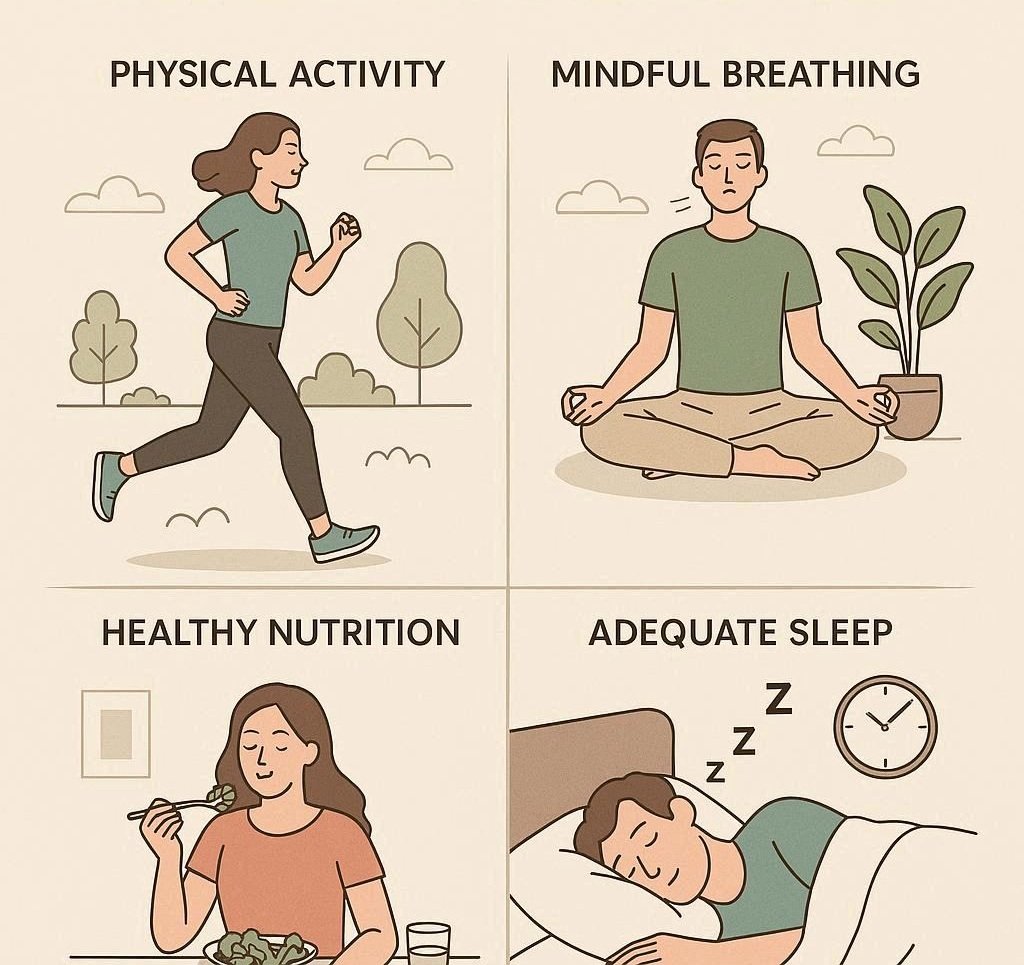
Stress happens to be an unavoidable aspect of life in the contemporary world, yet, the way people approach it may make it an easily solvable task or a life-threatening condition. Although stress is usually talked about in the lifestyle or inspirational context, it is essentially a biological phenomenon that is controlled by the complex interactions of the brain, nervous system, and the endocrine system. Chronic stress when left uncontrolled disturbs hormonal balance, suppresses immunity, as well as predisposing to both physical and mental illness.
Stress management tips throughout the decades have been a mixture of well-meaning word encouragement, to just relax more, to unproven trends in wellness. Nevertheless, scientific studies have positively determined the existence of certain interventions that are consistently proven to decrease stress when they trigger the physiological stress systems of the body. These are methods that are non-opinional or non-preferential but determined by some measurable biological effect and especially their capability to suppress the hypothalamic-pituitary-adrenal (HPA) axis and normalize internal functions.
This article looks at the scientifically proven methods of managing stress and the mechanism behind them on a biological level. Knowing the impact of evidence-based strategies on hormones, brain activity, and regulation of the nervous system, the readers might make informed decisions that can really contribute to resilience and health in the long run.
Stress Response and the HPA axis
In order to comprehend the stress management, one needs to know the process of regulation of stresses in the body. When the brain detects a threat, the hypothalamus triggers the HPA axis causing a hormonal cascade leading to the secretion of cortisol and adrenaline. The hormones ready the body to take action, elevating the heart rate, energizing it and enhancing concentration.
This is a response that is short term and adaptive in acute conditions. When the stressor is removed, this is countered by negative feedback mechanism that inhibits release of more hormones thus restoring the body to equilibrium. The feedback loop is interrupted by chronic stress, which leaves the levels of cortisol high and does not allow recovery.
The effects of the effective stress management strategies are that they help to restore this balance. Instead of completely inhibiting the stress, they minimize unneeded HPA axis stimulation and increase the recovery capacity of the body following exposure to stress.
Importance of Evidence-based Approaches
Not every stress management strategy is effective. Such techniques have been proven to have significant effects on cortisol levels, the balance of the autonomic nervous system, and the activity of the brain by means of scientific studies. The strategies address the biological causes of stress and not just cover up the symptoms.
Evidence-based practices decrease the load of physiological stress, enhance emotions management, and build resilience. They are of special value, as their positive effects do not only relate to subjective well-being but also objectively to better sleep, immune activity, metabolic processes and heart.
A review of scientifically-supported stress management strategies emphasizes the fact that evidence-based interventions are always better as compared to unstructured or purely motivational strategies.
Mindfulness and Its Biological Impact
Mindfulness practices are characterized by non judgmental awareness of the Present. Despite the mindfulness meditation being considered a mental exercise, there is profound physiological change that leads to a direct effect on stress regulation.
Constant mindfulness training slows down the amygdala, the threat-detection center of the brain, yet improves the functioning of the prefrontal cortex. The change will enhance emotional regulation and minimize unwarranted stress reactions. Mindfulness reduces cortisol levels at baselines and increases the sensitivity of the feedback mechanism of the HPA axis.
Mindfulness also helps in the activation of the parasympathetic nervous system, which helps in the promotion of relaxation and reversal of the fight-or-flight responses. These effects clarify the reason why mindfulness always decreases symptoms of anxiety, emotional reactivity and stress-related physical discomfort.
Physical Exercise as a Stress-Managing Resource
One of the most accessible and best strategies of stress management is physical activity. Exercise has a variety of biological mechanisms of stress regulation, which include hormonal, neurotransmitter, and adaptive changes in the nervous system.
In response to physical activity, the increase in cortisol is temporary and then restored to the baseline at a better rate. This gets the HPA axis to be more proportionately responsive to stressors over time. Exercise also elevates the secretion of endorphins and dopamine which elevates mood and perceived stress.
Frequent exercises increase adaptability in the autonomic system, and the body is more adaptive to changing between activation and rest. This is a crucial measure of ensuring that stress does not develop into a chronic condition.
Regulation of Sleep and Stress Recovery
The role of sleep in the management of stresses is central since it is the major time when the body is able to repair the damage caused by stress. Cortisol has a circadian pattern with maximum in the morning and the lowest in the night. Disturbed sleep disrupts this rhythm causing continued stress hormone release.
Chronic sleep deprivation predisposes stress sensitivity because of the disruption of emotional regulation as well as heightened inflammatory signaling. Even a moderate increase of the sleep duration and regularity can decrease the stress levels at the baseline.
Sleep is conducive to memory lesions, immunity repair, and the hormonal system. It is not a passive but an active process which helps in the restoration of physiological balance once exposed to stress.
Stress Perception and Cognitive Behavioral Strategies
Cognitive behavioral approaches are aimed at determining and altering thought processes that enhance the effects of stress. The methods are effective since perception is a crucial part of the stress activation. The brain does not react to events but it reacts to their perception.
Cognitive behavioral methods minimize the unnecessary HPA axis activation by re-processing unhelpful ways of thinking. The result of this is reduced cortisol production and better control of emotions. With time, people become more psychologically flexible and the chances of everyday challenges prompting them to react with disproportionate amounts of stress are minimized.
The strategies are especially useful in handling work-related stress and anxiety as well as chronic worry whereby cognitive patterns dominate.
Breathing Meditations and Balance of the nervous system
Breathing exercises involve breathing exercises which act directly on autonomic nervous system. The vagus nerve is stimulated by slow, rhythmic breathing, which intensifies the parasympathetic and weakens the sympathetic dominance.
This position decreases the heart rate, blood pressure, and cortisol secretion. Breathing techniques unlike other interventions can quickly alleviate stress responses within few minutes, hence they are effective in times of acute stress.
With time constant practice increases the baseline autonomic balance that increases general stress resistance.
Social Bond and Buffering Stress
Human beings are made in such a way that they are socially fitted. Social interactions decrease stress through increasing oxytocin (bonding and emotional safety), and decreasing the level of cortisol.
Positive relationships serve as shielding factors against stress because they modify the brain to perceive things differently. Social bond works against perceived threat; it lowers the level of stress responses in stressful circumstances.
Isolation on the other hand enhances stress signaling and puts one at risk of chronic stress related diseases.
Stress Physiology and Nutrition
Nutrition is also supportive in management of stress and it affects energy availability, inflammation and neurotransmitter production. Stress does not dissipate easily, it elevates nutrient requirements, especially those of vitamins and minerals that participate in the workings of the nervous system.
A proper diet maintains the level of blood sugar and avoids the effects of stress on hormones. The anti-inflammatory diets aid in maintaining the immune system and decreasing the physiological load of long-term stress.
Although nutrition is not the solution to stress, it will increase the efficacy of other evidenced-based interventions.
Combining a Number of Evidence-based Strategies
Combination of different evidence-based methods is the most effective way to manage stress. Mindfulness leads to better emotional awareness, physical activity leads to increased resilience in physiology, sleep leads to hormonal balance, and cognitive approaches lead to the reduction of the unnecessary activation of stress.
These approaches, combined, will deal with stress on its biological causes instead of individual symptoms. Integration is flexible and the individuals can adjust strategies to various stressors and life stages.
The important aspect of stress regulation is consistency and not intensity over time.
The Dynamics of Generic Stress Advice Failure
There is a tendency of generic stress advice which is not biological and specific. Recommendations that are not in the context of the HPA axis regulation or balance in the nervous system can offer short-term relief but not decrease the physiological load of stress.
Evidence-based methods are effective since they are based on quantifiable results. They lower cortisol, normalize autonomic tone, and enhance brain regulation, and their effects are long-lasting and not short-lived.
Evidence-Based Stress Management and Long-term Health Benefits
Proper management of stress prevents a broad spectrum of chronic diseases such as cardiovascular disease, metabolic disease, depression, as well as immune dysfunction. Evidence-based strategies enhance the quality and lifespan of an individual by reestablishing physiological equilibrium.
Stress management is not an option or luxury activity in self-care; it is a fundamental part of preventive health care.
Conclusion
Stress is a biological phenomenon which demands biological solutions. The reason why scientifically supported stress management techniques are effective is due to their direct effect on the systems that govern stress, especially, HPA axis and the autonomic nervous system.
Due to the knowledge of how mindfulness, physical exercise, sleep management, cognitive and interpersonal connection can be used to help people reduce stress biologically, individuals can have practical skills that can help them remain resilient in the long run. Evidence-based stress management enables individuals to stop coping and to commence the physiological balance and health that is sustainable.