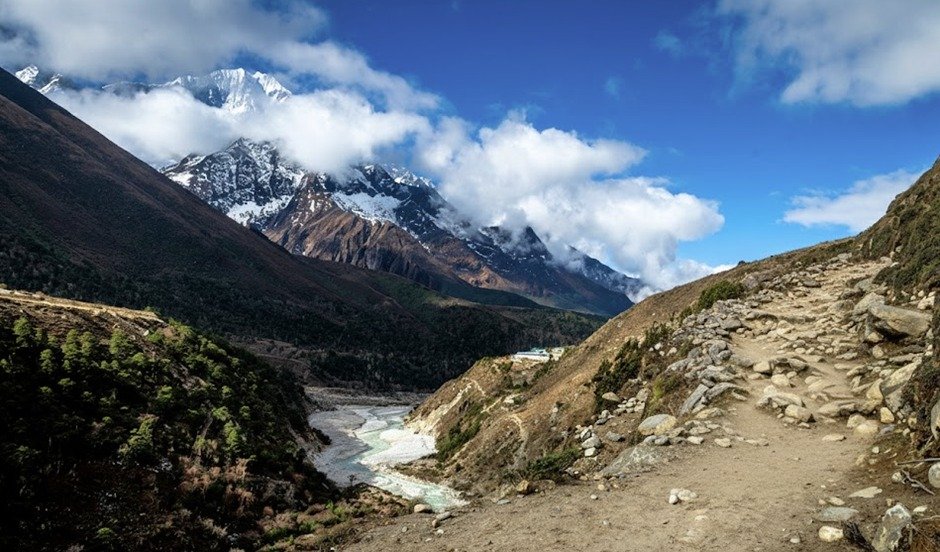
Everest Base Camp Trek is one of the most renowned treks in the world that attracts people from all corners. The trek is not only difficult physically but also very reliant on the weather conditions since the Everest Base Camp is at an altitude of 5364m (17598ft). The Everest Base Camp Weather by Month is important in planning your trek because it will influence the trekking conditions, safety conditions, and the whole experience.
The Everest weather changes drastically according to seasons, and each month presents a different view of the Himalayas. This guide will assist you in knowing what to expect in each season, so you will be prepared to have the trek to maximum enjoyment.
January and February: The Cold Heart of Winter
The coldest months of the Everest Base Camp Trek are January and February. In Lukla at 2,860m (9,383ft), the temperatures could be as low as -5°C (23°F) at night and during the day, they might reach 5°C (41°F). When you are up, the air is very cold. Night-time temperatures near Namche Bazaar (3,440m / 11,286ft) are down to -10°C (14°F), and at the base of Everest (5,364m / 17,598ft) they are as low as -20°C (-4°F) or lower.
It is a season of snow, and deep snow may cover the trail or make it slippery, resulting in a more complicated trekking journey. Skies during the daytime are usually clear and present spectacular views of Everest, Lhotse and Nuptse. This is, however, because it is winter season, and the days are short, and strong winds are also frequent at high altitudes. Trekking in these seasons needs nice cold-weather apparel, such as insulated jackets, down jackets, and heavy boots.
January and February are the least crowded months despite the fact that the weather is rough during those months. Winter can pay off in case you are an experienced trekker who needs some personal space, with clear, snowy scenery. Nevertheless, the danger of frostbite and hypothermia should be considered because of the high temperature of cold and wind.
March and April: Spring – The Best Time for Everest Base Camp
The months of March and April are the spring season, which is generally considered one of the best months to go to the Everest Base Camp Trek. At the low altitudes, temperatures begin to increase, and the snow begins to melt. Daytime temperatures in Lukla are 12-15°C (54-59°F), and night temperatures are about 0-2°C (32-36 °F). Up in Namche Bazaar, it is a little colder; at night it goes down to -3°C (27 °F) and during the day it goes up to 10°C (50°F).
The month of April is very popular as it falls in the season of the rhododendron flowering. The path beneath 3,500m (11,483ft) is flanked by bright red, pink, and orange rhododendron flowers, which makes the walk spectacular to look at. The weather is usually stable, and the skies are clear with moderate winds. Snow will still be found at altitudes of 4500m (14750ft) and above in areas like Dingboche and Lobuche, though it can be crossed with good trekking shoes and gaiters.
The visibility during spring is great, and this is the best time to do any photography and sightseeing. Acclimatisation is not as difficult due to moderate temperatures, and trekking is not as dangerous as in winter.
But, since this is the high season of trekking, most of the trekking stops, such as Namche Bazaar and Tengboche, are likely to be busy, and teahouses need to be booked in advance. In general, March and April are the months of the perfect mix of beauty, accessibility and safety.
May: Late Spring and Pre-Monsoon
May is in spring, although it slowly starts shifting to the pre-monsoon climate. In this month, the temperature is warmer, and rainfall may occur. Lukla has a daytime temperature of 18 °C (64°F) and night time temperature of about 5°C (41°F). In the higher altitude like at Dingboche (4,360m / 14,304ft) and Lobuche (4,940m / 16,207ft), the temperature will reach as low as -2°C (28°F) at night and 12°C (54°F) in the daytime.
It is the best season for those who desire more daylight and warmer temperatures. The snow in the elevations is melting, and the trails are not very slippery. Nevertheless, with the monsoon gradually coming closer, one may expect the occasional rainfall and the increase of humidity, particularly at lower altitudes.
Although trekking is not too risky, a light waterproof jacket and trekking poles should be carried. Clear weather combined with the blossom of flora and the low temperatures makes the Everest Base Camp Trek comfortable, particularly in May when the trekkers want to avoid the crowds in the peak season of April.
June, July, and August: Monsoon Season
The Everest region has the monsoon season from June to August. During these months, there is excessive rain, heavy clouds, and low visibility. Temperatures in Lukla are 20-22°C (68-72°F) during the day, and 10°C (50°F) during the night. The temperatures at Namche Bazaar are high in the range of 15°C (59°F) and low in the range of 5°C (41°F). Higher in altitude, such as at Dingboche and Lobuche, the temperatures are lower as they could drop to -1°C (30°F) at night and up to 10°C (50°F) during the day.
The lower areas will receive high levels of rainfall, whereas the higher altitudes might experience snowfall. Trails get slippery and dirty, landslides are widespread, and crossings over rivers may be risky. The heavy clouds cover the sights of Everest, Lhotse and other mountains, and this may be disheartening to trekking enthusiasts who expect to see a clear picture of the mountains.
Completing the trek during the monsoon is beautiful in itself. It is green everywhere with hills and valleys; rivers full, waterfalls at their most spectacular. Nevertheless, beginner trekkers should not trek in this season because of the presence of high risks of landslides, slippery trails, and a lack of teahouses. Monsoon trekking involves the use of waterproof equipment, extreme care and flexibility in the schedule.
September and October: Autumn – Peak Trekking Season
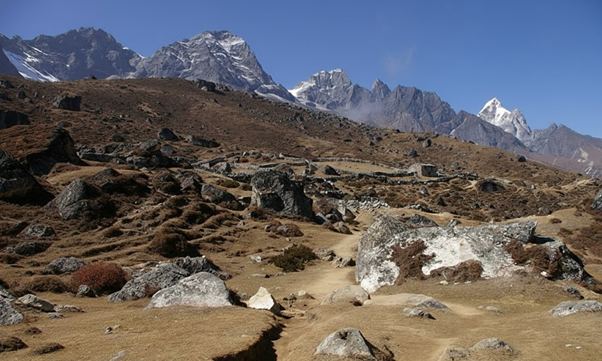
The Everest Base Camp Trek is said to be best during the seasons of September and October with consistent weather, clear skies and moderate temperatures. The temperatures in Lukla during this season are 15-18°C (59-64°F) during the day and 5-8°C (41-46°F) during the night. Namche Bazaar fluctuates between -0°C (32 deg F) at night to 12°C (54 deg F) in the daytime. On higher altitudes like Dingboche (4,360m / 14,304ft) and Everest Base Camp (5,364m / 17,598ft), the temperatures vary between -5°C (23°F) at night to 8°C (46°F) in the day.
The most popular season is the autumn, as there is no longer monsoon, and the trails are clean and the skies are generally clear. The Himalayan mountains stand high and sharp, which offer good photography and trekking opportunities. The season has fairly stable temperatures that help in acclimatisation. There is moderate wind and little snowfall, and thus the dangers of winter or monsoon trekking are minimised.
The Everest Base Camp Trek has the largest number of trekkers during September and October, and therefore, booking of accommodation in teahouses should be done early. This is a season that is associated with the ideal weather, breathtaking scenes and a vibrant trekking experience that can suit beginners and experienced travellers.
November: Late Autumn
November is the month which completes the autumn and starts an early winter. The Everest Base Camp Weather by Month in November is also quite conducive to trekking, but with low temperatures.
The daytime temperature in Lukla is between 10-15°C (50-59°F), and the night temperatures are approximately around 2°C (36°F). At night, Namche Bazaar may fall to -5°C (23°F), and during the day the temperatures are about 10°C (50°F). The altitude areas above 5000, like Lobuche and Everest Base Camp, can have temperatures as low as -15°C (5°F) at night.
The trails are generally clear, making the skies blue, and thus giving a good view of the Himalayan range. The number of trekkers going in November is lower than that of September and October, hence the trails are not as congested, giving a trekking experience that is serene and quiet.
It is important to pack warm clothes, gloves, and a good sleeping bag when the temperatures decrease, particularly at night. November is a good season to be in, as it is neither too cold nor very busy, and therefore is a good month to be on the Everest Base Camp Trek seeking comfort and solitude.
December: Early Winter
The winter in the Everest region starts in December characterized by cold weather and occasional snowfall. The daytime temperatures of Lukla are approximately 8-10°C (46-50°F), and nighttime temperatures are approximately -2°C (28°F). Temperatures in Namche Bazaar drop to -10°C (14°F) overnight, and 5°C (41°F) during the day. The altitude of higher elevations, such as the Everest Base Camp at 5,364m (17,598ft), may decrease to -20°C (-4°F) or may even be lower at night.
Studying the Everest Base Camp Weather Month, the weather in December is clear, hardly precipitates, and is cold in the higher altitudes. There are fewer people in the trails, so it is a good time to walk, although frostbite and extreme cold are still a risk. The snow cover may also cause trekking to be more difficult at higher altitudes and may necessitate further equipment to get through the trek, like crampons and insulated clothing.
December is a reward to the seasoned trekkers ready to face cold weather, as it has clear mountain views, less traffic on the trails and the added advantage of having a winter trek in the Himalayas.
Conclusion
Knowing the information about the Weather in the Everest Base Camp by Month is very important in terms of having a safe and enjoyable trek. The months of winter (December to February) are cold and snowy, spring (March to May) months are good with blooming rhododendrons and moderate temperatures, monsoon months (June to August) are wet and risky, and the months of autumn (September to November) are the best ones with clear skies and stable weather as well as manageable temperatures.
A different experience is provided in every season, but when trekking, you need to prepare, acclimatise, and equip yourself, no matter the time of year you decide to go trekking.
Doing the Everest Base Camp Weather by Month, the trekkers will be able to optimise their safety, enjoyment, and comfort in the process of enjoying one of the most stunning trips in the world. The right month will depend on you, depending on your choice of season, crowd preference, and scenery. With the right month, the Everest Base Camp Trek will be a trek to remember.