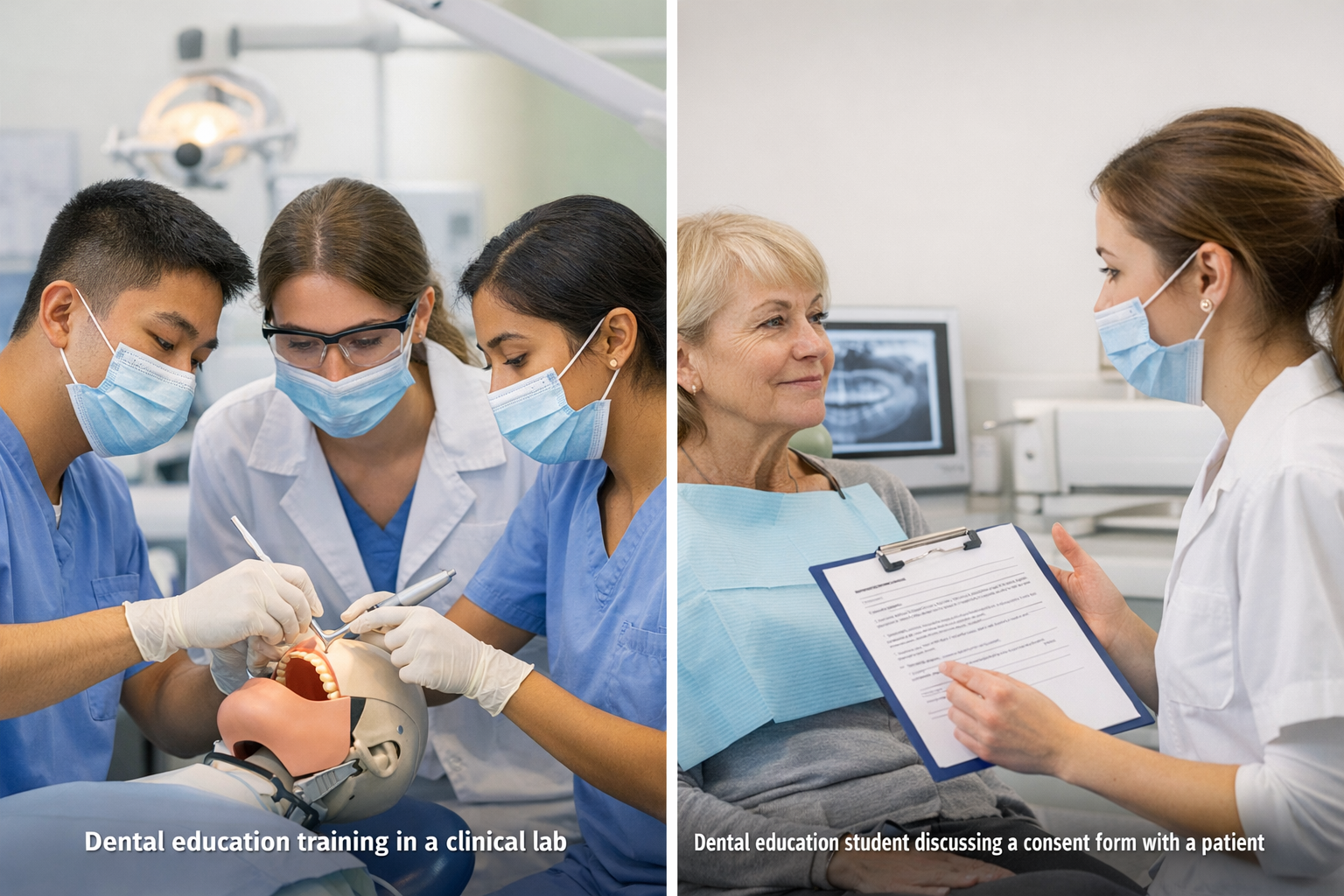
Dental education does not just involve acquisition of technical skills and clinical practices but rather an intensive process which develops professional judgment, ethical awareness and responsibility. In the case of dental training students, ethical values should be learned early in the practice so that the welfare of the patients, the morality of the profession, and personal growth of the future health practitioner can remain intact. This article discusses the ethical dilemmas of dental students, which include academic honesty, patient confidentiality, informed consent, and professional behavior, and offers an insight into the possible ways to work around such issues.
The Uses of Ethics in Dental Education
Ethics is the holyboon of healthcare careers and dentistry is not an exception. Although in other academic disciplines, students do not have direct contact with patients in both real and simulated settings, this presents real-life ethical issues to dental students. Moral thinking is thus not only necessary to meet the rules but also to build the trust between the practitioners and patients. The basis of developing a credible and professional reputation is the ethical behavior, which ultimately influences the quality of care provided.
These values need to be instilled in the mind of dental students as they train to prevent misconducts and guarantee that their subsequent practice will conform to professional standards. Dental education institutions also play the role of ensuring that they offer organized mentoring and tutorial in making ethical decisions to instill a culture of responsibility.
Academic Honesty & Professional Integrity: the Pinnacle of Academic Honesty
The first area that ethical responsibilities present in dental training is academic integrity. Cheating, plagiarism, or forgery of clinical records does not only put the student at risk of his or her education, but also patients and trust towards the profession at large. The students have to understand that their competency and skills are directly related to their competency to offer effective care.
Difficulties in Sustaining Academic Honesty
Dental learners are under specific stresses, such as a busy timetable, challenging examinations and clinical evaluations. At times these pressures may lure the students to take short cuts, but the effects of academic dishonesty are not only limited to the schools. Such falsifications of records, among other things, can cause clinical errors that could be detrimental to patients and legal consequences to the students and supervising institutions.
Academic Ethical Conduct Strategies
- Demonstrate Personal Integrity: Build honesty in all academic and clinical work because shortcuts may adversely affect the learning and patient safety.
- Use Mentorship, Tutoring or Counseling: Use the services of a mentor, tutor or counselor when the academic pressure is too much.
- Honest Documentation: It is always important to document clinical procedures and interaction with patients accurately so that the supervisors and patients can be transparent.
Academic honesty will enable the dental students to establish a basis of ethical practice during their careers.
Confidentiality of Patients in Training Clinics
Human patient privacy is an essential concept of medical ethics, and dental students need to realize their obligatory role in ensuring the confidentiality of patient information. Clinics usually have a number of students, instructors, and staff and this increases the chances of unwanted disclosure in case ethical standards have not been strictly observed.
Confidentiality Ethical Problems
The students can find themselves in circumstances where information about patients is shared informally among them or in discussions in the classroom. Though it may be informative to use cases, it is a confidentiality breach to discuss cases without patient consent or anonymity. Moreover, electronic health system records make it more challenging; students should make sure that logins are locked and data is used within the limits of the actual educational needs.
Best Practices of Confidentiality
- Anonymize Patient Data: Do not provide cases recognizable when discussing the cases in a classroom or group study.
- Adhere to Institutional Policies: There is a data access, storage and sharing protocol on any dental program-students are required to follow them to the letter.
- Teach Back: It becomes even more ethical as students become collectively engaged in keeping the standards of confidentiality.
Respecting patient privacy at all times will help students build a culture of trust and professionalism, which will be transferred to their future professions.
Informed Consent: Educating Patients in the Learning Environment
Ethical practice in clinical practice is based on the principle of informed consent which accentuates respect to the autonomy of the patient. In the case of dental students, this can apply to all transactions in training clinics even to the procedures that are carried out under supervision. Patients should have full awareness of being treated by students and their care might include an educational goal in addition to the treatment goal.
Common Ethical Dilemmas
- Partial Disclosure: In some situations students can undermine their own trainee status or the educational character of a procedure to alleviate the anxiety of the patient.
- Complex Procedures: There are complex procedures which patients can agree to undergo, but they might not be fully aware of the risks of more complex procedures done to train them.
- Vulnerable Populations: When interacting with a patient who could have a limited level of understanding or decision-making capabilities, such as children or people with disabilities, special attention is to be given.
Informed Consent Ethical Approach
- Effective Communication: Provide a clear explanation of the procedure, risks, advantages and student participation in a language comprehensible to the patient.
- Voluntary Agreement: It is essential to ensure that the patients know their rights not to be treated without fear of jeopardizing their future.
- Document Consent: Be accountable and ethical in keeping proper records of consent as a way of meeting the moral and regulatory requirements.
Informed consent also strengthens the ethical value of the patients as partners in their care, which students uphold by prioritizing informed consent, even during a learning environment.
Impression Management: Developing the Persona of a Dentist
Professional conduct refers to the behavior, communication, and attitudes that demonstrate the ethical issues of dentistry. Not only are students assessed in terms of clinical skills, they are also tested in terms of their capacity to exhibit professionalism in various situations.
Aspects of Professional Conduct
- Respect and Empathy: Be polite, sensitive and understanding to patients, colleagues, and employees.
- Responsibility and Accountability: Be accountable in actions, correct errors promptly and consult where necessary.
- Dedication to Lifelong Learning: Ethical professionals understand that they are limited in knowledge and take initiatives to improve themselves.
Student Ethical Dilemmas
- Time Management: A combination of clinical work, academic obligations and personal life may result in stress-induced lapse in behavior.
- Interpersonal Conflicts: Conflicts with the instructors or peers shall be dealt with in a respectful way without affecting the ethical standards.
- Managing Misjudgments: Students may be afraid of being judged, which may prevent them from reporting mistakes, which is not a good idea because transparency is an important requirement in patient safety and education.
Professional conduct would be developed in dental education whereby students would be able to make a smooth transition into ethical competent practitioners who would not compromise the integrity of the profession.
Incorporating Ethics in Everyday Life
The concept of ethical responsibilities in dental training can only have a meaning when the students in training put them into practical use. Ethics is not a theory but a guideline towards making decisions in the real world.
Ethical Incorporation Practical Tips
- Reflective Practice: Fine-tuning judgments and actions by comparing them with ethical considerations on a regular basis to see in which aspects improvement is necessary.
- Ethics Rounds and Discussions: Attend ethics rounds or case-based discussions to analyze complicated situations in a formal setting.
- Mentorship: Find advice with trained dentists who demonstrate ethical practice, learning to put the theory into practice.
- Peer Accountability: Develop the culture of peers reminding and supporting each other to adhere to the standards of ethics.
This aspect makes students more coherent and moral in their approach to complex clinical situations by instilling ethics into all the areas of their training.
Conclusion
Ethical obligations constitute the main focus of dental education, which forms the professional identity and decision-making abilities of the students even before they get into independent practice. Academic honesty to patient confidentiality, informed consent, and professional conduct, every ethical principle teaches students to provide competent care, respect, and safety.
Ethical standards are one of the principles that will allow a person to cope with the pressure of a rigorous educational period and earn the confidence of others as a justified student and a professional. It also creates personal integrity, strength, and the desire to continually learn-all of which are the main features of not only good dentists but superior healthcare providers. Dental students can form a foundation of responsible, compassionate, and professional career once ethics are incorporated into daily practice.
Ethical consciousness is a life-long process, and the learning experience throughout the dental training will remain relevant towards professional practices, outcomes and the reputation of the dental professional as a whole. Accepting these roles can not only guarantee that the students excel in academics but also make a positive contribution to the ethical practices in the medical field.