
Cybersecurity is an important issue in the digital era to ensure the protection of sensitive information, systems, and networks against unscrupulous individuals. Nevertheless, as technology develops rapidly, and it is integrating itself into our personal and professional lives, ethical issues in cybersecurity have become a major issue. In the act of surveillance, even in the case of ethical hacking, it is quite easy to cross the boundary of legal security actions and unlawful intrusions. This paper discusses the ethical issues presented to cybersecurity experts, which is surveillance, penetration testing, and ethical hacking. We will examine how the ethical standards will inform these practices and provide a balance between security concerns and considerations of privacy and legal precincts.
How to Identify Ethical Dilemmas within Cybersecurity
The issue of cybersecurity is mainly related to securing digital systems against unauthorized access, interference, and use. Nevertheless, the ways of reaching these objectives may cause serious ethical concerns. The main ethical issues in cybersecurity are how to strike the right balance between the necessity of having well-developed security issues and consideration of individual rights, privacy, and the rule of law. These ethical issues are particularly complicated due to the presence of both technical and moral aspects.
Among the significant ethical issues in cybersecurity one can list:
- Surveillance: To what extent is it acceptable, and when will it become an invasion of privacy?
- Penetration Testing: To what extent can a cybersecurity specialist go to detect vulnerabilities in the system without breaking the law or ethics?
- Ethical Hacking: What is the difference between ethical and malicious hacking, and how are the ethical hackers able to guarantee that they do not go beyond the ethical threshold?
Such dilemmas are usually based on the inherent contradiction of providing the security of digital content and maintaining the freedoms of individuals. Cybersecurity professionals must also possess a concise knowledge of ethical rules and follow them in the discharge of their duties.
Surveillance: Striking a Balanced Scorecard
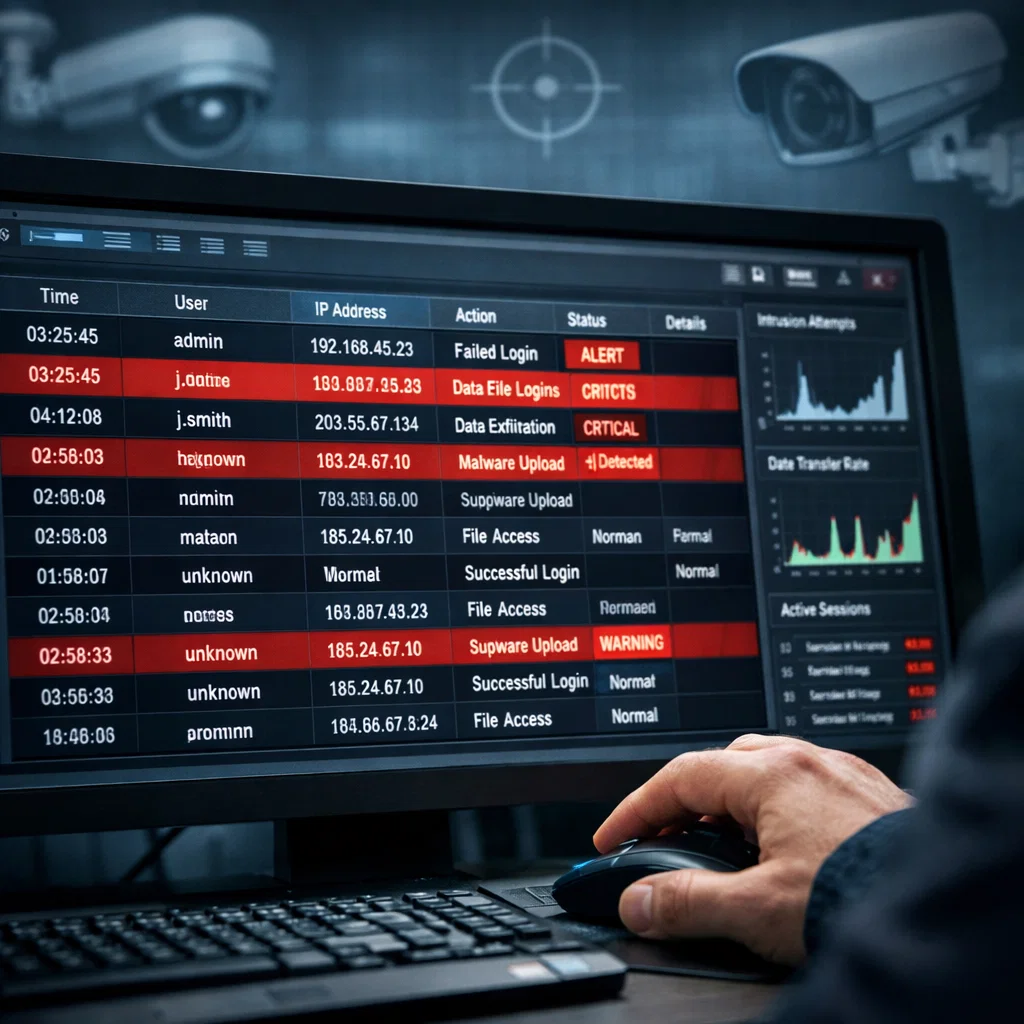
One of the essential technologies of cybersecurity is surveillance that is applied to identify, prevent, and react to attacks as well as supporting exposure management solutions. Nevertheless, the moral aspects of the surveillance practices may be considerable. Under the circumstances of cybersecurity, surveillance can be related to tracking network traffic, user behavior, or online activity of people to detect possible threats.
The ethical issue is that the surveillance should not turn into an invasion of privacy, as it was initially a safeguard. An example of this is where companies monitor the activities of employees on the internet through surveillance devices in order to identify frauds or the use of organization resources without authorization. Although it might be required due to security, it brings a question of how much monitoring can be done without violating the right of privacy of an individual.
The moral standard applied to surveillance is openness. Organizations should also explain to people the surveillance processes happening and the information taken should not be misused as this will lead to failure in protecting the system. Also, the surveillance ought to be commensurate with the risk. Surveillance, being overdone too, can cause a chilling effect; people will feel as though they are being looked into at every single moment, which will interfere with their independence as well as freedom of expression.
Besides organizational issues, government surveillance has given rise to ethical issues in recent years especially in such programs as mass data collection. Although most governments believe that they need to spy to ensure national security, opponents maintain that spying could interfere with the privacy and civil liberties of individuals. The most important ethical problem in this aspect is whether the positives of surveillance have more weight than the negatives it may have on the right to privacy.
Penetration Testing: Research Ethics and Professional Accountability
Ethical hacking or penetration testing is the result of simulating intrusions into a system to establish the vulnerabilities that could be exploited by a malicious hacker. To enhance security of the system, ethical hackers are contracted to carry out these tests with the clear approval of the organization.
The moral quandary in the case of penetration testing is defining the degree of testing to be suitable. The penetration testers have to make sure that they do not go beyond the scope of the mission or inflict damage to the system. In other instances, a penetration test could result in unwanted service disruption, loss of data, or security vulnerabilities in case it is not done properly.
The code of conduct demands professional responsibility whereby the penetration testers adhere to codes of conduct. It involves seeking authorization in writing to the organization before the tests are done, the clear identification of the scope of the engagement, and avoiding malicious practices. Ethical hackers should also report responsibly and the organization should have time to solve the problems in question before the vulnerabilities are reported publicly. This will make sure that their work is used to enhance security and not increase the risks.
Moreover, the ethical hackers are required to be upright in their actions. Although they may come across sensitive information or security vulnerabilities which are not within the scope of their testing they have the moral responsibility of safeguarding that information and communicating it using the right channels. The border between white hat hacking and criminal activities is usually a fine line, yet it is separated by permission, disclosure, and ethics.
Hacking with Social Responsibility: The Good and the Evil

Ethical hacking involves cybersecurity experts probing systems and networks to identify vulnerabilities so that they can withstand attacks by ill-minded hackers. Ethical hacking is not, however, always definite. This is because the line between ethical hacking and cybercrime is blurred, which leads to the ethical dilemma.
The major difference between the examples of ethical and malicious hackers is intent. Ethical hackers operate with the authorization of the company or a person to enhance security whereas malicious hackers use the vulnerability to gain personal interests or create harm. Legal and ethicality of hacking activities are often dependent on this basic difference.
Ethical hacking rules also focus on ensuring that there is explicit consent, transparency, and accountability. Ethical hackers should be given a clear permission to proceed with their tests and they have to observe rigorous procedures to ensure that they do not damage the systems or individuals involved. They are also supposed to ensure that they do not go beyond the boundaries of their activities to establish the vulnerabilities that they might not be overstepping their mandate or infringe on the privacy rights.
In addition, the ethical hackers are under the law that regulates their operations. Legal limits to hacking are defined by laws like the Computer Fraud and Abuse Act (CFAA) in the United States and other related laws in other countries. To ensure that they do not get caught by the law, ethical hackers have to be knowledgeable of these laws and be able to work within them.
Professional Responsibility and Ethical Standards
The ethics surrounding cybersecurity professionals is of high standards due to the sensitivity of their job. Cybersecurity and information protection need not only a well-developed technical background but also a proper sense of morality. Cybersecurity practices are based on ethical guidelines and professional codes of conduct.
The ethical considerations of cybersecurity practice are based on some of the fundamental principles, namely:
- Confidentiality: It is necessary that sensitive data cannot be accessed by unauthorized parties.
- Integrity: The accuracy and reliability of system and data.
- Accountability: Accepting responsibility of actions performed within the realm of duties performed.
- Transparency: Be candid and transparent regarding security practices, surveillance practice and testing operations.
Cybersecurity specialists should also keep up with emerging ethical issues. Due to the increasing technology and threatening opportunities, the ethical consequences of cybersecurity practices keep on changing. Professionals should be flexible in their methods to make sure that they become ethical and legal in their actions.
Conclusion
Cybersecurity ethical dilemmas demand professionals to stay in a complicated environment where security requirements should be addressed without violating privacy and other legal considerations. Whether conducting surveillance or ethical hacking, the border between legal and unethical intrusions is usually slim, yet by following ethical code and professionalism, one can direct cybersecurity-related actions towards the right ethical direction.
It is the responsibility of professionals in the cybersecurity industry to not just know and apply technical skills in the field but also have a clear vision of the ethical code that governs their profession. They can make the digital world a safer place by abiding by ethical principles and ensuring transparency, as well as respecting the privacy rights, without infringing the basic liberties.
These are the most crucial ethical principles and challenges that should be understood by anyone who is in the cybersecurity industry because it would guarantee that the security of digital resources is not compromised at the cost of the rights of individuals.
This will allow practitioners to make decisions that are both ethically appropriate and legally acceptable since ethical frameworks will be part of cybersecurity practices. The digital world is ever changing and with it, we should change how we think about the ethical issues that accompany us in securing our digital future.